



Back
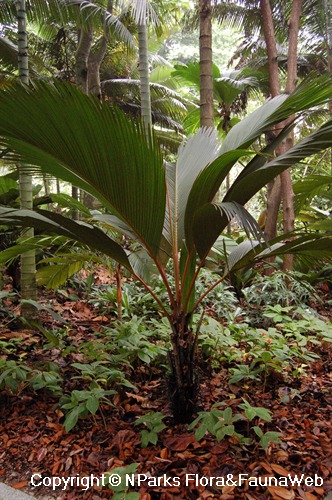
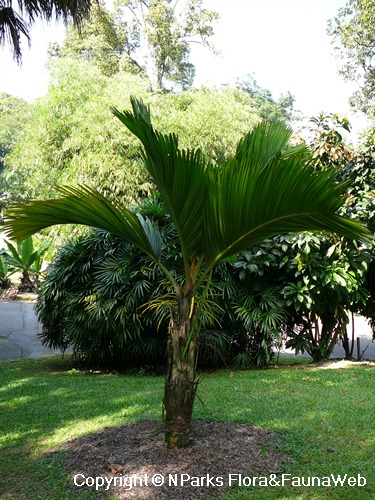
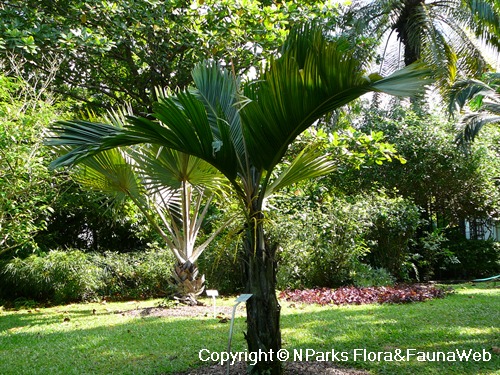
Phoenicophorium borsigianum
| Family Name: | Arecaceae (Palmae) |
| Synonyms: | Acanthophoenix grandifolia |
| Common Name: | Latanier Palm, Stevensonia Palm, Latanier feuille, Thief palm |
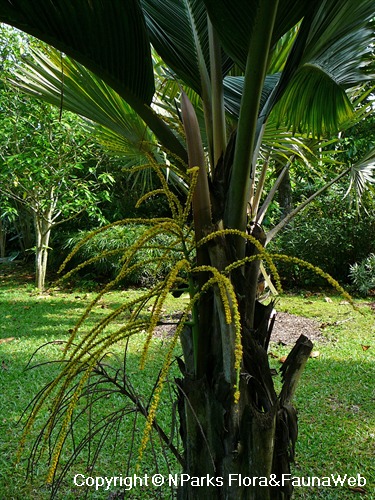
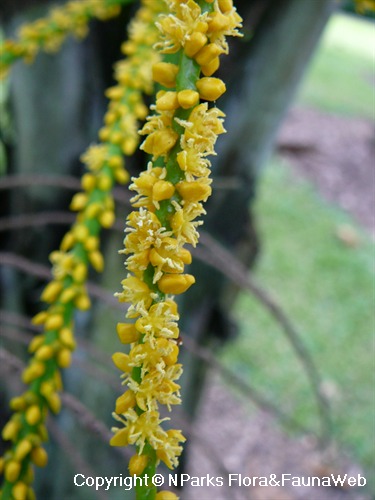
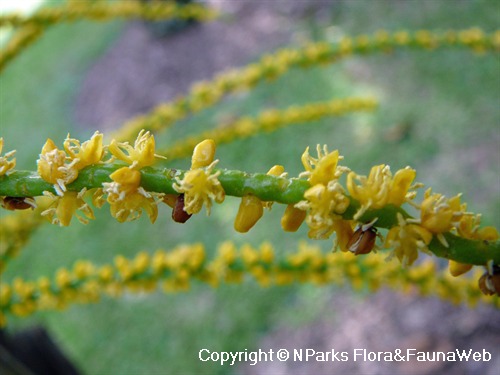
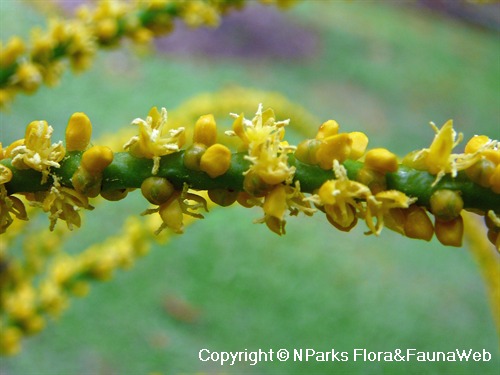
Name
Classifications and Characteristics
| Plant Division | Angiosperms (Flowering Seed Plants) |
|---|---|
| Plant Growth Form | Palm (Solitary Habit) |
| Plant Shape | Fountain (Palm-like) |
Biogeography
| Native Distribution | Seychelles |
|---|---|
| Native Habitat | Terrestrial (Primary Rainforest, Secondary Rainforest) |
| Preferred Climate Zone | Tropical, Sub-Tropical / Monsoonal |
Description and Ethnobotany
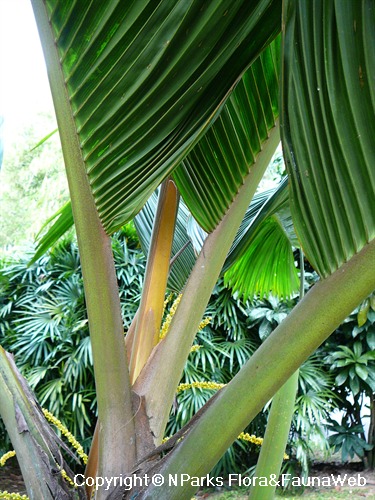
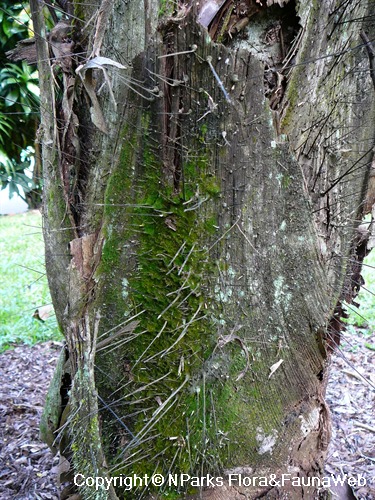
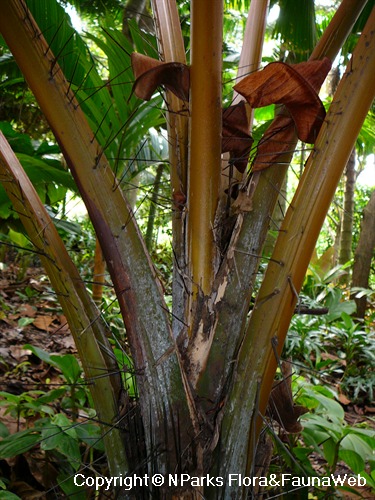
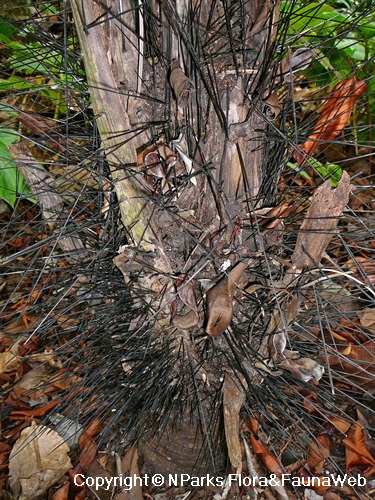
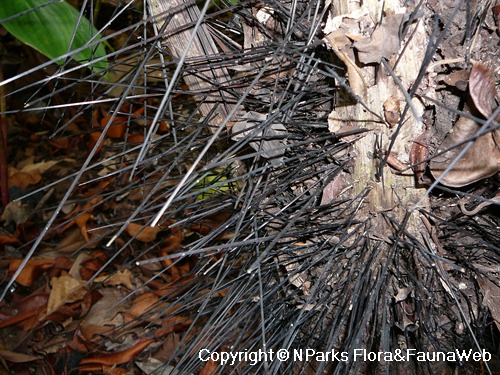
| Trunk | The trunks are ringed with leaf scars formed by the fallen leaves. Young plants bears spines. |
|---|---|
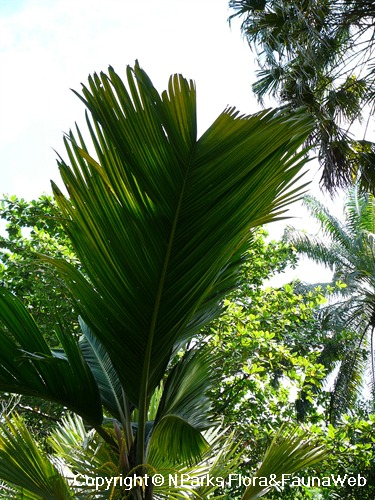
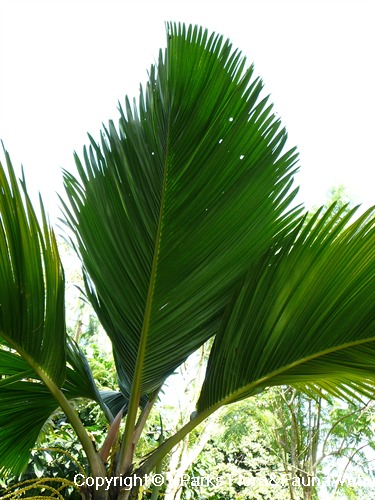
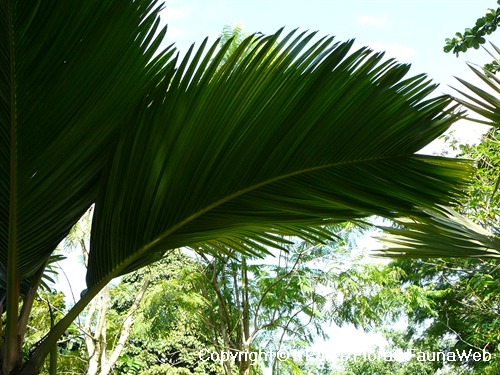
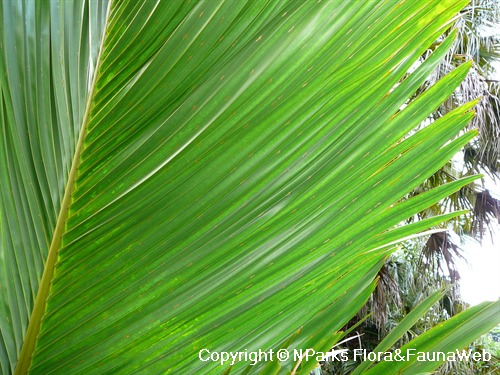
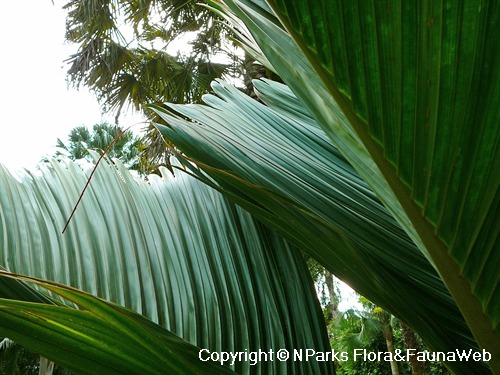
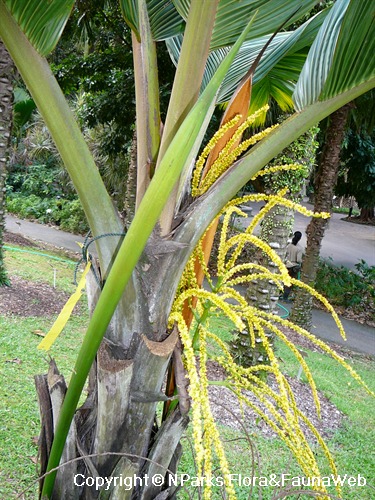
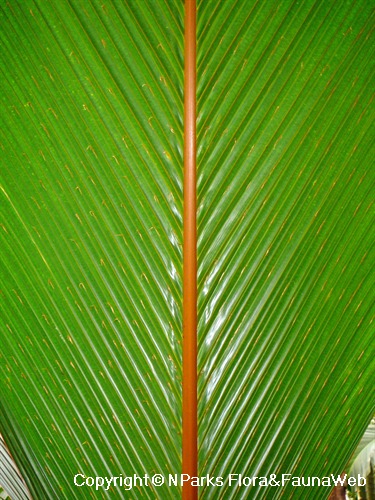
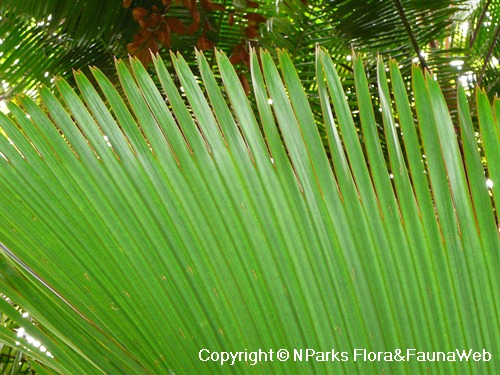
| Foliage | Broad feather leaf, orange petiole. Reach up to two meters in length. The leaves are split at the ends with orange-edged serrations. The stalks are also armed with spines. |
| Ethnobotanical Uses | Others: The leaves are used traditionally as thatching. |
Landscaping Features
| Landscape Uses | General, Parks & Gardens, Container Planting |
|---|---|
| Usage Hazard - Cons | Spines/Thorns - Trunk, Spines/Thorns - Leaf |
Plant Care and Propagation
| Light Preference | Full Sun, Semi-Shade |
|---|---|
| Water Preference | Moderate Water |
| Plant Growth Rate | Moderate |
| Rootzone Tolerance | Moist Soils, Well-Drained Soils |
| Propagation Method | Seed |
Foliar
| Mature Foliage Colour(s) | Green, Orange |
|---|---|
| Foliar Shape(s) | Palm Fronds (Simple) |
| Leaf Area Index (LAI) for Green Plot Ratio | 2.5 (Palm - Solitary) |
Non - Foliar and Storage
| Trunk Type (Palm) | Solitary Habit, Aboveground |
|---|
Floral (Angiosperm)
| Flower & Plant Sexuality | Unisexual Flowers , Monoecious |
| Flower Colour(s) | Yellow / Golden |
|---|
| Flower Grouping | Cluster / Inflorescence |
Fruit, Seed and Spore
| Mature Fruit Colour(s) | Orange, Yellow / Golden |
|---|
Image Repository
Others
| Master ID | 1368 |
|---|---|
| Species ID | 5098 |
| Flora Disclaimer | The information in this website has been compiled from reliable sources, such as reference works on medicinal plants. It is not a substitute for medical advice or treatment and NParks does not purport to provide any medical advice. Readers should always consult his/her physician before using or consuming a plant for medicinal purposes. |