




Back
Dictyoneura obtusa Blume
| Family Name: | Sapindaceae |
| Synonyms: | Dictyoneura microcarpa, Dictyoneura bamleri |
| Common Name: | Swamp Tamarind |
Name
Classifications and Characteristics
| Plant Division | Angiosperms (Flowering Seed Plants) |
|---|---|
| Plant Growth Form | Tree |
| Lifespan (in Singapore) | Perennial |
| Mode of Nutrition | Autotrophic |
| Maximum Height | 9 m to 25 m |
Biogeography
| Native Habitat | Terrestrial |
|---|---|
| Preferred Climate Zone | Tropical |
| Local Conservation Status | Non-native (Horticultural / Cultivated Only) |
Description and Ethnobotany
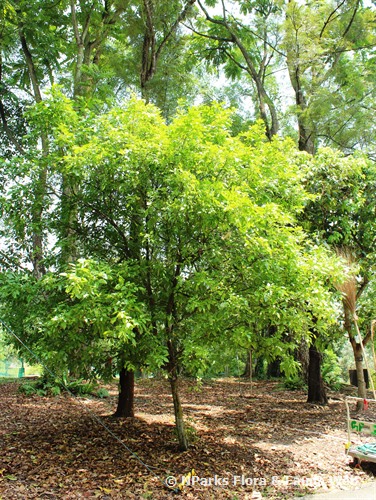
| Growth Form | A small tree or shrub that can grow up to 15 m (rarely 25 m) high and 20 – 30 cm wide. |
|---|---|
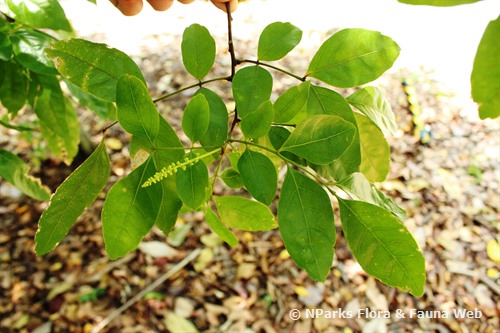
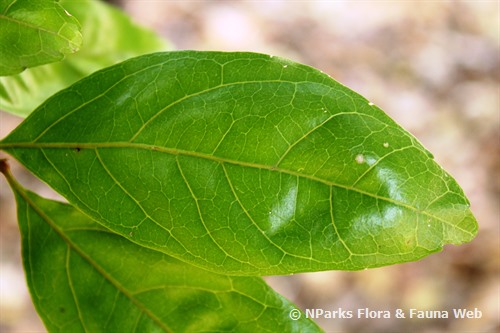
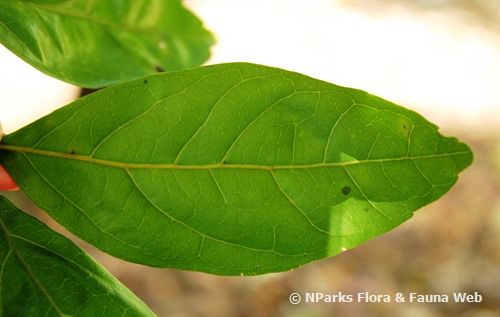
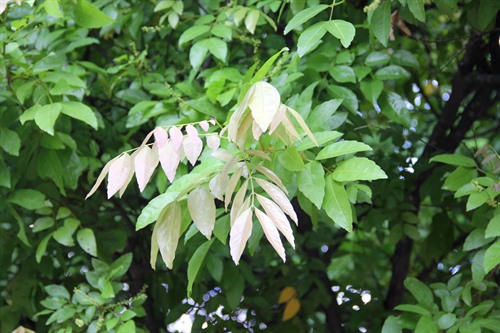
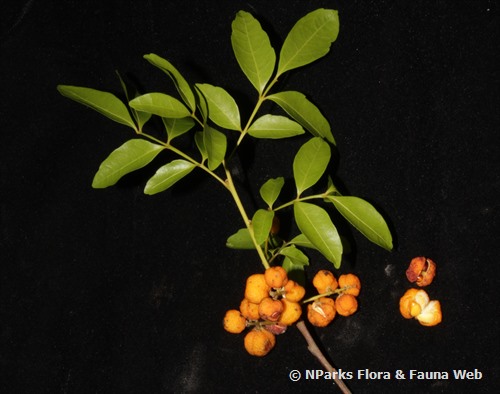
| Foliage | Leaves of Dictyoneura obtusa are compound and spirally arranged. Leaflets are 2.7 – 10.5 cm long and 1 – 3.5 cm wide with toothed margin. Compound leaf rhachis has a median ridge and two grooves on the upper surface. The terminal bud is covered with brown or golden hairs and young leaves are reddish. |
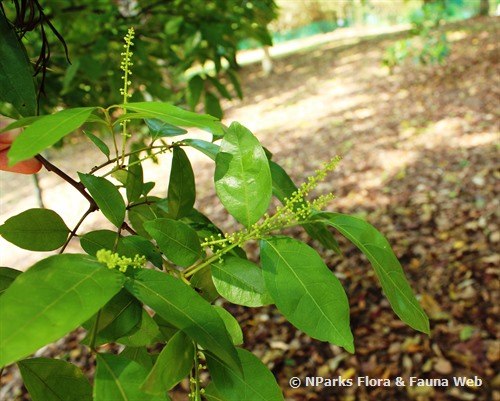
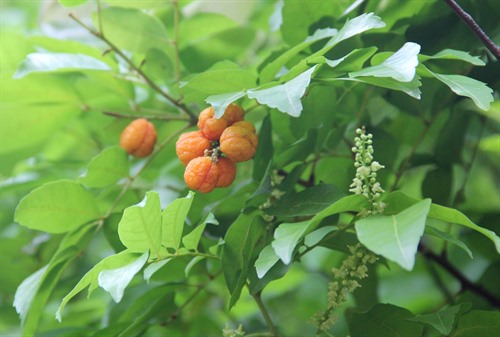
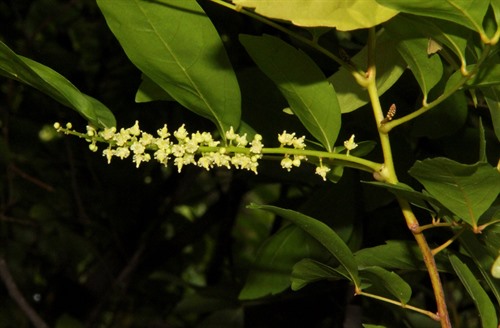
| Flowers | Flowers cluster together to form an inflorescence. They are yellowish white (about 3 – 5 mm in diameter) and unisexual. Male and female flowers occurs on the same individual. Male flower has 5 stamens while female flower has a hairy ovary. |
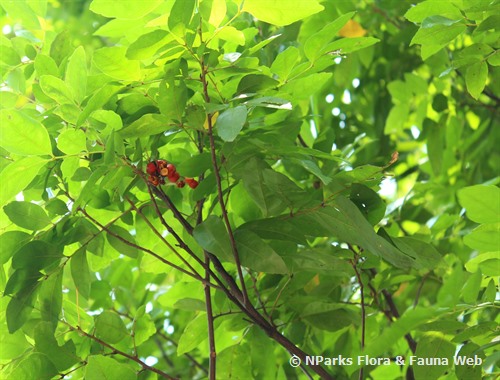
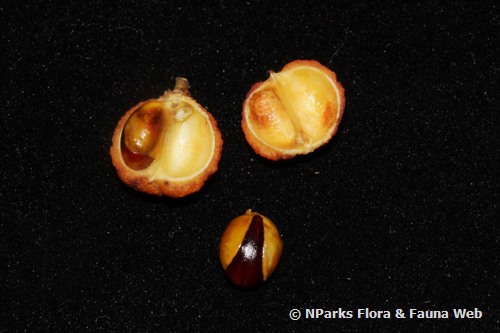
| Fruit | Fruit is roundish and turn from brownish green to orange when ripe (6 – 8 (-12) mm long, 6 – 8 mm wide). Each fruit contains 1 – 3 seeds which is oval shaped (4 – 9 mm long, 4 – 7 mm wide). Seed is surround by a thin orange or yellow flesh, which covers about 45% to 100% of the seed. Peeling away the flesh will reveal a very shiny and black seed coat. Sepals persistent in fruit. |
| Similar | Dictyoneura obtusa closely resembles Dictyoneura acuminata. The former has fruits which is almost smooth inside while the latter has fruits which is hairy inside. D. obtusa also has short petiole (up to 2 cm and rarely more than 2.5 cm long) while D. acuminata has longer petiole, usually more than 2 cm. D. obtusa differ from D. spec by having a smaller leaflet width (up to 5 cm wide) while D. spec leaflet size is larger (more than 5 cm wide). |
Landscaping Features
| Desirable Plant Features | Ornamental Fruits |
|---|---|
| Landscape Uses | Parks & Gardens |
Plant Care and Propagation
| Light Preference | Full Sun |
|---|---|
| Water Preference | Moderate Water |
| Plant Growth Rate | Moderate |
| Rootzone Tolerance | Well-Drained Soils |
| Propagation Method | Seed |
Foliar
| Mature Foliage Colour(s) | Green |
|---|
Floral (Angiosperm)
| Flower Colour(s) | Cream / Off-White |
|---|
Fruit, Seed and Spore
| Mature Fruit Colour(s) | Orange, Yellow / Golden |
|---|
Image Repository
Others
| Master ID | 32457 |
|---|---|
| Species ID | 6869 |
| Flora Disclaimer | The information in this website has been compiled from reliable sources, such as reference works on medicinal plants. It is not a substitute for medical advice or treatment and NParks does not purport to provide any medical advice. Readers should always consult his/her physician before using or consuming a plant for medicinal purposes. |