

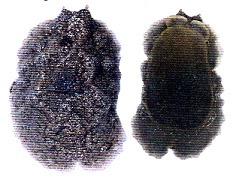
Name
Ecology, Habitat & Location
| Ecological Notes | Associated with extremely soft muds along mangrove river banks, it feeds by skimming algae from the surface while the tide is down and then burrows deep into the mud when the tide is in. Eggs hatch into swimming veliger larvae which spend some time in near-shore waters before settling to establish new populations. As settlement depends on tides reaching suitable mudbanks, the species appears as cohorts of different size in different places. |
|---|---|
| Habitats | Mudflats, Mangroves |
| Distribution | Previously known only from a single individual thought to have been from Bombay, India, and since rediscovered here in Singapore. |
Conservation
| Trends & Threats | Because of its lifestyle, survival depends on existence of a range of mudbanks at different levels, so that mangrove estuaries of some size and compexity are needed. In addition the planktonic larval stage indicates that off-shore water quality is important. This is true for a great many inter-tidal organisms and the opportunity is here taken to emphasise that conservation must cater for all aspects of an often complex life history. |
|---|---|
| Scientific Interest & Potential Value | Peronina is a member of a very poorly studied but ecologically important group of molluscs, the Onchidiacea which are worldwide in distribution. Some species are very common. Singapore was the first place where the taxonomy of the group was well studied (by Semper in 1870) and the Oriental fauna is very different from that in other parts of the world. Peronina appeared from description to belong to an assemblage of species otherwise restricted to the Atlantic, but re-examination has shown that, although very peculiar, it is properly a member of the oriental group. Peronina shows to an extreme degree a defence reaction also seen in some but not all others in the group. When the back is touched it raises the body margins and secretes possible repellant material from glands round the edge. There is much interest in physiologically active chemicals produced by such organisms that may have medical or other value, and the Onchidiacea deserve to be examined from this viewpoint. They are used for food in Papua New Guinea but apparently not elsewhere. |
| Conservation Notes | Threatened by habitat destruction. |
Status
| Singapore Red Data Book Status | Data Deficient (DD) [2008] |
|---|
Photos
References
| References | Davison, G.W.H., Ng, P.K.L. & Ho, H.C (Eds.). 2008. The Singapore Red Data Book (2nd Edition). Singapore: Nature Society (Singapore). 285pp Ng, P.K.L. & Wee, Y.C. (Eds.). 1994. The Singapore Red Data Book (1st Edition). Singapore: Nature Society (Singapore). 343pp |
|---|