

Back
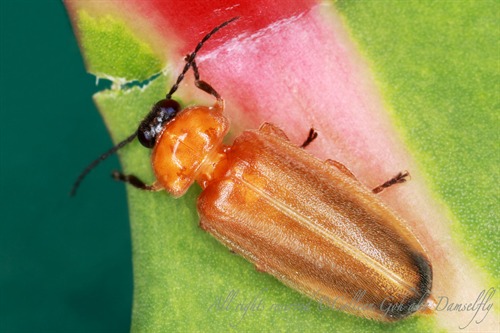
Pteroptyx valida (Olivier, 1883)
| Family Name: | Lampyridae |
| Taxonomic Group: | Invertebrates (Beetle) |
Name
Ecology, Habitat & Location
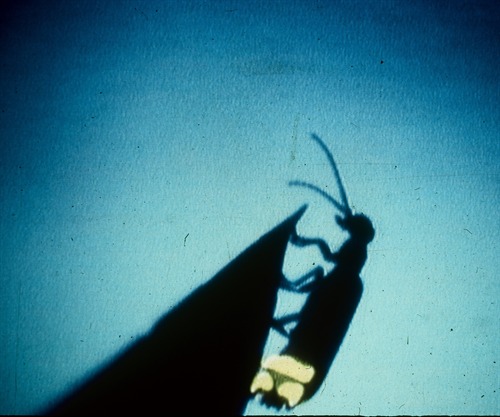
| Ecological Notes | A single mangrove site about 1km east of (and outside) the Sungei Buloh Wetland Reserve is teh last known habitat of this species in Singapore. The famous synchronously flashing fireflies of the Malaysian mangrove estuaries are among the wonders of the world. They can occur in vast numbers, lighting up individual trees like a Christmas tree and sometimes illuminating whole estuaries with waves of brilliant light. In Singapore they are virtually extinct on the main island and we know of only this single remaining site. One isolated Avicennia tree is still a gathering ground for perhaps 20 to 30 adult males of Pteroptyx validus, one of the three Malaysian species, who bravely flash their message to the few remaining females. The larvae, weakly lit "glow-worms" may be found on the foliage of low-growing mangrove plants nearby, apparently feeding on tiny immatures of arboreal mangrove snails (Littoraria spp.). Pteroptyx validus is not the most perfectly synchronising species and P. malaccae and P. tener are those responsible for the more spectacular displays. However the three species commonly occur together and the existence of this little population at least indicates a site with suitable conditions for their establishment. |
|---|---|
| Habitats | Mangroves |
| Distribution | Common in Malaysia and Indonesia, and previously in Singapore. |
| Nature Reserves | Sungei Buloh Wetland Reserve |
Conservation
| Trends & Threats | The single site, although near a nature reserve is outside its limits and under immediate threat of destruction during development of the new Agrotechnology Park. |
|---|---|
| Scientific Interest & Potential Value | That flashing fireflies are potentially a major tourist attraction has not escaped the authorities. The Singapore Zoo in fact hopes to establish a colony in its existing grounds, inland forest at Mandai. Nothing is impossible of course, but it could be both costly and very long term before such a project could succeed. Meanwhile a natural colony of Pteroptyx teeters on the very edge of extinction. Somewhere, somehow, someone surely ought to find the obvious solution. |
| Conservation Notes | Add the area to the existing nature reserve, or assign it to a conservation organization as a satellite project, until at least the possibility of re-establishing and maintaining a commercially useful display in a naturally appropriate site can be explored. |
Status
| Singapore Red Data Book Status | Endangered (EN) [2008] |
|---|
Photos
References
| References | Davison, G.W.H., Ng, P.K.L. & Ho, H.C (Eds.). 2008. The Singapore Red Data Book (2nd Edition). Singapore: Nature Society (Singapore). 285pp |
|---|