



Back
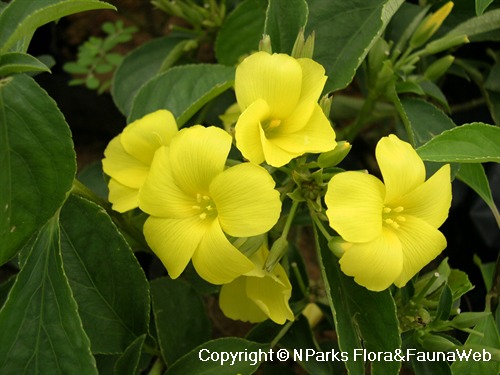
Reinwardtia indica
| Family Name: | Linaceae |
| Synonyms: | Linum trigynum, Reinwardtia trigyna |
| Common Name: | Yellow Flax |
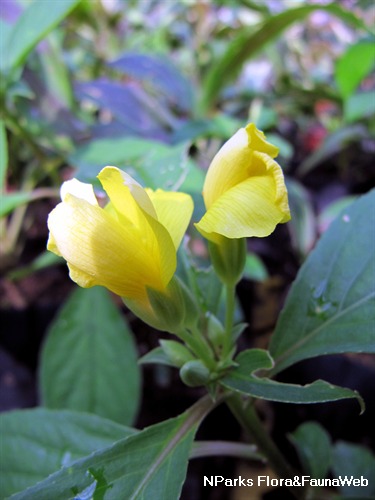
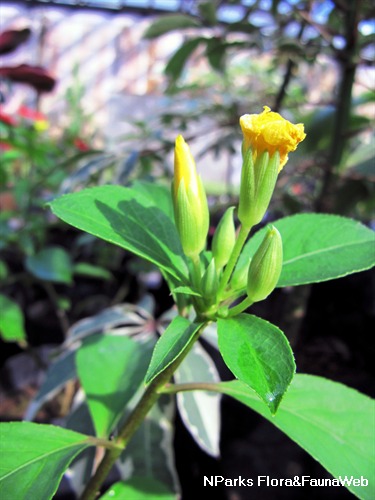
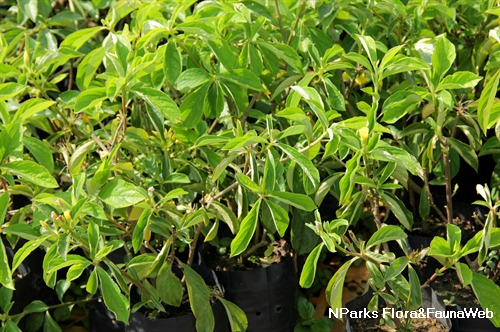
Name
Classifications and Characteristics
| Plant Division | Angiosperms (Flowering Seed Plants) |
|---|---|
| Plant Growth Form | Shrub |
| Mode of Nutrition | Autotrophic |
Biogeography
| Native Distribution | East India and China |
|---|---|
| Native Habitat | Terrestrial |
| Local Conservation Status | Non-native |
Description and Ethnobotany
| Growth Form | Erect to spreading, glabrous shrub reaching up to 1 m. |
|---|---|
| Foliage | Leaf blades oblong to elliptic, sometimes obovate or oblong-ovate, 2 - 8 cm. |
| Flowers | Showy, yellow to golden yellow flowers, measuring about 2.5 cm wide. |
| Fruit | Fruit is a capsule. |
| Etymology | Genus Reinwardtia honors Prussian-born Dutch botanist Caspar Georg Carl Reinwardt. Species indica refers to originating from India |
| Ethnobotanical Uses | Timber & Products: Yellow dye from flowers is used to dye clothes. |
Landscaping Features
| Desirable Plant Features | Ornamental Flowers |
|---|---|
| Landscape Uses | Parks & Gardens, Small Gardens |
Plant Care and Propagation
| Light Preference | Semi-Shade, Full Sun |
|---|---|
| Water Preference | Moderate Water |
| Plant Growth Rate | Moderate |
| Rootzone Tolerance | Moist Soils, Well-Drained Soils |
| Propagation Method | Seed |
Foliar
| Mature Foliage Colour(s) | Green |
|---|---|
| Foliar Margin | Entire |
| Foliar Apex - Tip | Mucronate |
| Leaf Area Index (LAI) for Green Plot Ratio | 4.5 (Shrub & Groundcover - Dicot) |
Floral (Angiosperm)
| Flower Colour(s) | Yellow / Golden |
|---|---|
| Flower Grouping | Cluster / Inflorescence |
Image Repository
Others
| Master ID | 1093 |
|---|---|
| Species ID | 2386 |
| Flora Disclaimer | The information in this website has been compiled from reliable sources, such as reference works on medicinal plants. It is not a substitute for medical advice or treatment and NParks does not purport to provide any medical advice. Readers should always consult his/her physician before using or consuming a plant for medicinal purposes. |