







Back
Allagoptera campestris
| Family Name: | Arecaceae (Palmae) |
| Synonyms: | Diplothemium campestre var. genuinum, Diplothemium campestre var. glaziovii, Diplothemium campestre var. glazioui, Diplothemium campestre, Allagoptera campestris var. orbignyi |
| Common Name: | Buri |
Name
Classifications and Characteristics
| Plant Division | Angiosperms (Flowering Seed Plants) (Monocotyledon) |
|---|---|
| Plant Growth Form | Palm (Solitary Habit, Clustered Habit) |
Biogeography
| Native Distribution | Brazil, Argentina, Paraguay |
|---|
Description and Ethnobotany
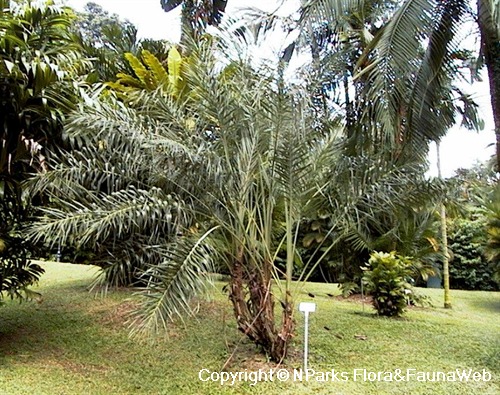
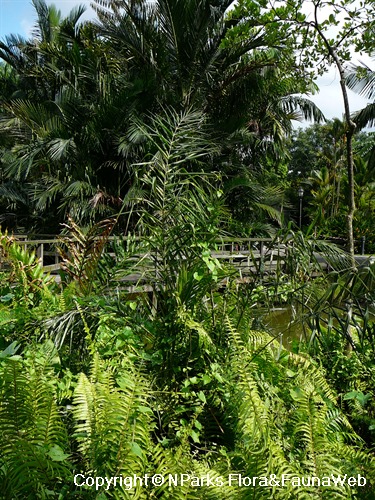
| Growth Form | An unarmed, relatively slow-growing clumping palm that grows in sparse, open habitats, with subterranean (grown below ground) trunks that tend to bifurcate, producing multiple heads, accompanied by a sparse crown of arching fronds. |
|---|---|
| Trunk | Stems very short or acaulescent (stemless or appearing so, or with the stem subterranean), erect, often making a downward turn in growth resulting in the crown appearing below the trunk base. |
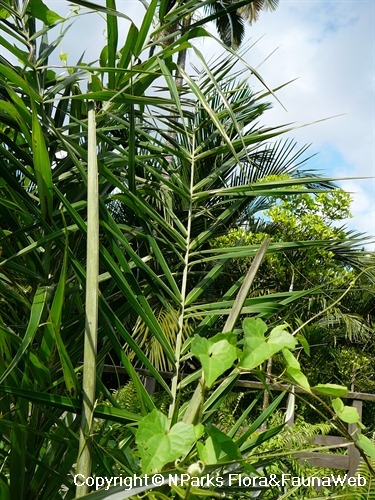
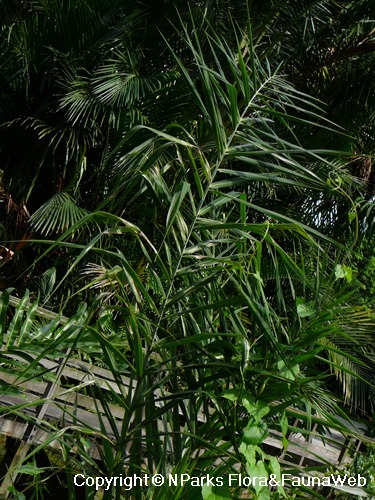
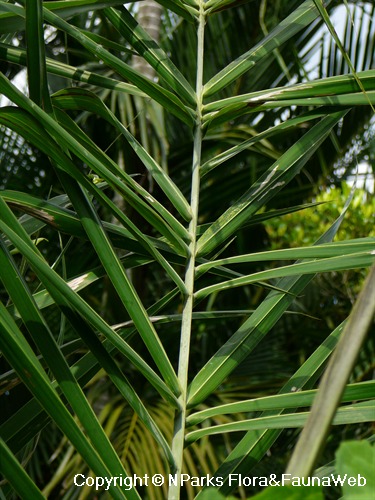
| Foliage | Fronds gently arching, up to 2 m long, dark green above and silvery below; leaflets stiff, pointed, regularly or irregularly positioned along the rachis in clusters of two or four, each protruding into a different plane, creating a plumose appearance on the frond; young fronds covered in soft, white hairs. |
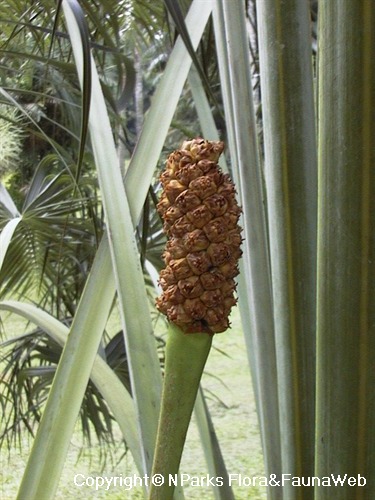
| Others - Plant Morphology | Flower: Inflorescence spicate, cream, emerging from within leaf-crown, supporting densely packed flowers on a short, broad flowering branch. Fruit: Fruits ovoid or ellipsoid, yellow to brown, single-seeded, covered in soft, white hairs. |
| Cultivation | Does best under full sun on well-drained, dry, rocky, sandy soils, especially those rich in iron. Propagated by dividing of rhizomes and by seeds. Seeds germinate erractically over 3 to 6 months. |
| Etymology | Its genus epithet is derived from two Greek words, 'allagos', alternate, on the opposite side, and 'pteron', a wing, in reference to the plumose appearance of its fronds. Its species epithet means 'growing in the fields', which suggests its natural habitats, where they are often found growing in the fields with tall grasses. |
| Ethnobotanical Uses | Others: Fruits are edible only before maturity. |
Landscaping Features
| Desirable Plant Features | Ornamental Fruits |
|---|---|
| Landscape Uses | Coastal Plant |
| Thematic Landscaping | Rockery / Desert Garden |
Plant Care and Propagation
| Light Preference | Full Sun |
|---|---|
| Water Preference | Moderate Water |
| Plant Growth Rate | Moderate |
| Rootzone Tolerance | Saline Soils / Salt Spray, Drought Tolerant |
Foliar
| Mature Foliage Colour(s) | Green |
|---|---|
| Mature Foliage Texture(s) | Glossy / Shiny, Hairy / Hirsute, Leathery |
| Leaf Area Index (LAI) for Green Plot Ratio | 4.0 (Palm - Cluster) |
Non - Foliar and Storage
| Trunk Type (Palm) | Clustering Habit, Aboveground |
|---|
Floral (Angiosperm)
| Flower Colour(s) | Cream / Off-White |
|---|
Fruit, Seed and Spore
| Mature Fruit Colour(s) | Brown, Yellow / Golden |
|---|
Image Repository
Others
| Master ID | 1292 |
|---|---|
| Species ID | 2585 |
| Flora Disclaimer | The information in this website has been compiled from reliable sources, such as reference works on medicinal plants. It is not a substitute for medical advice or treatment and NParks does not purport to provide any medical advice. Readers should always consult his/her physician before using or consuming a plant for medicinal purposes. |