











Back
Tarenna fragrans (Blume) Koord. & Valeton
| Family Name: | Rubiaceae |
| Synonyms: | |
| Common Name: | River Tarenna |
Name
Classifications and Characteristics
| Plant Division | Angiosperms (Flowering Seed Plants) (Dicotyledon) |
|---|---|
| Plant Growth Form | Shrub, Tree (Small (6m-15m)) |
| Lifespan (in Singapore) | Perennial |
| Mode of Nutrition | Autotrophic |
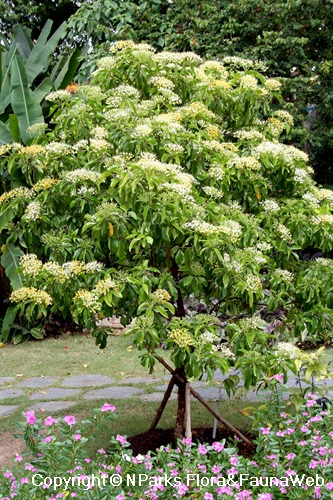
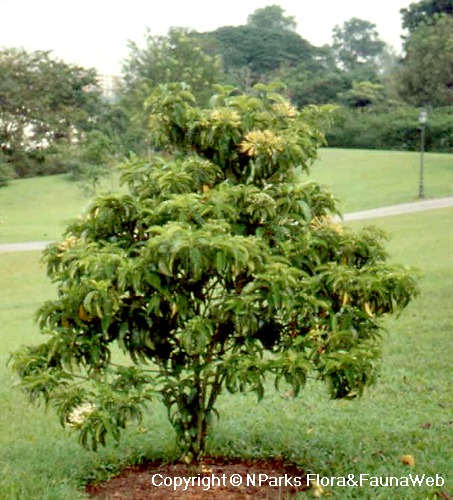
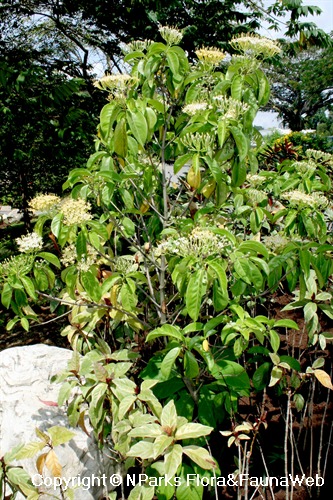
| Plant Shape | Rounded |
Biogeography
| Native Distribution | Sumatra, Peninsular Malaysia, Singapore, and Borneo |
|---|---|
| Native Habitat | Terrestrial (Primary Rainforest, Secondary Rainforest, Riverine) |
| Preferred Climate Zone | Tropical |
| Local Conservation Status | Native to Singapore (Endangered (EN)) |
Description and Ethnobotany
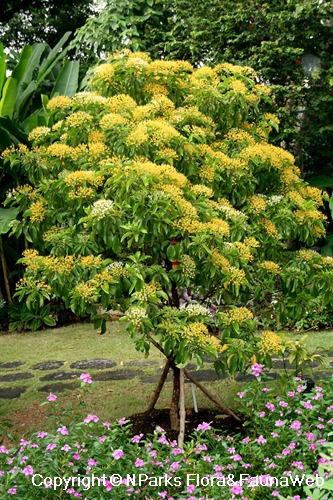
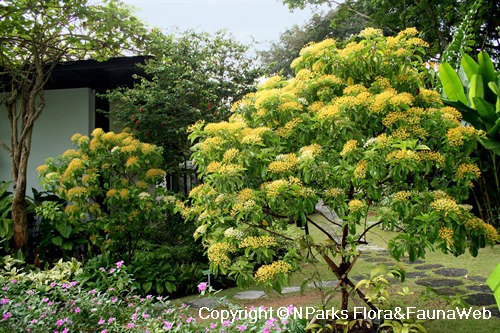
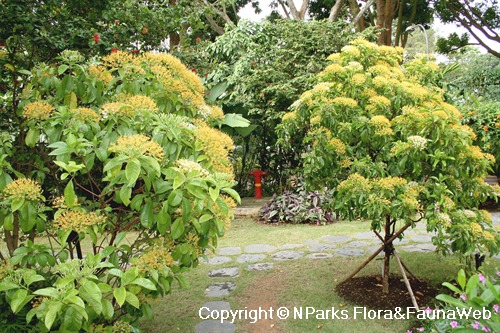
| Growth Form | It is a small low-branching tree or densely-branching big shrub, up to 2.5 m tall. May attain somewhat shorter heights if grown under partial shade, in limited spaces or rocky sites. |
|---|---|
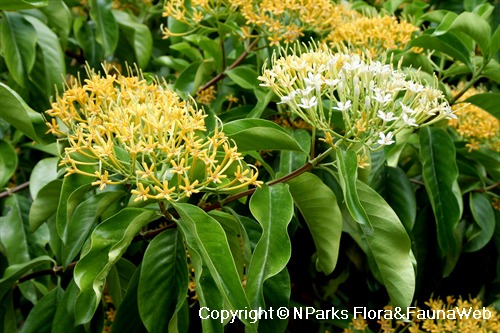
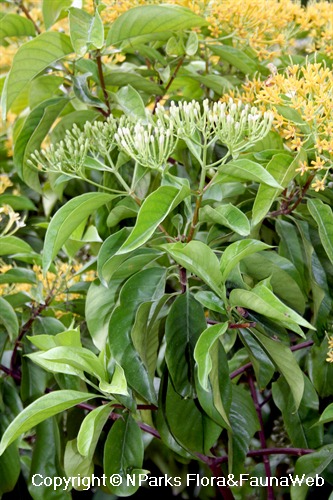
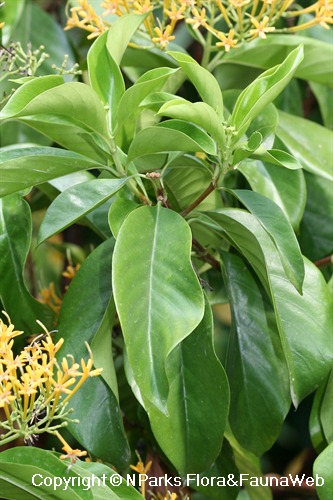
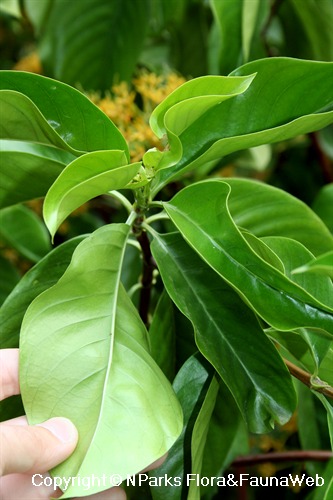
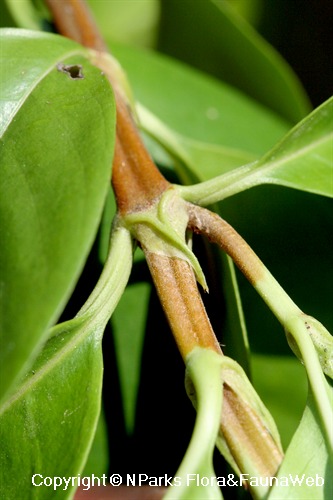
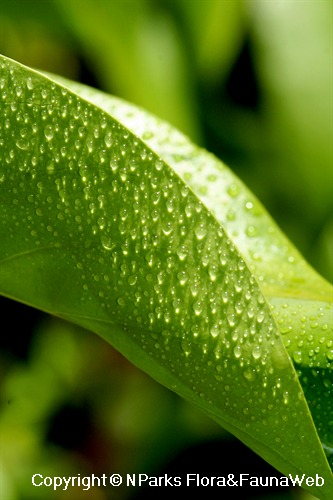
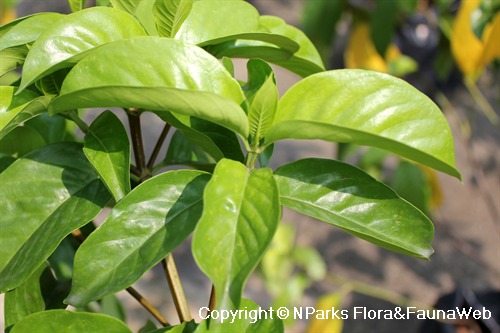
| Foliage | Its stalked leaves have leathery blades that are usually oval to drop-shaped with a pointed tip, shiny yellowish-green, 7.6–20 by 3.2–7.6 cm, and have 7–13 pairs of veins prominent below. Young petioles and stems pubescent. |
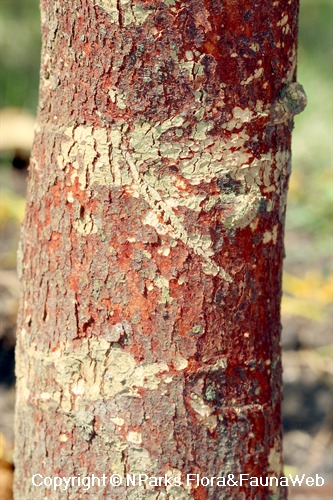
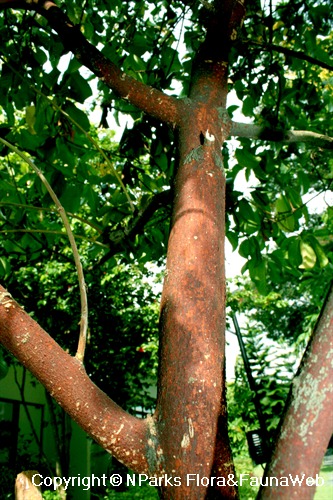
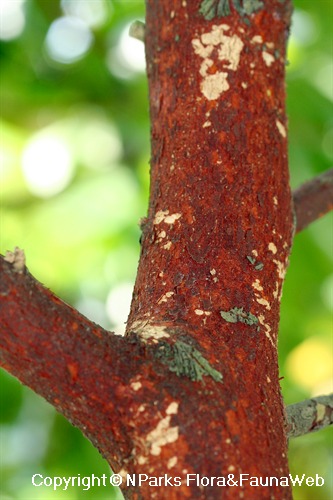
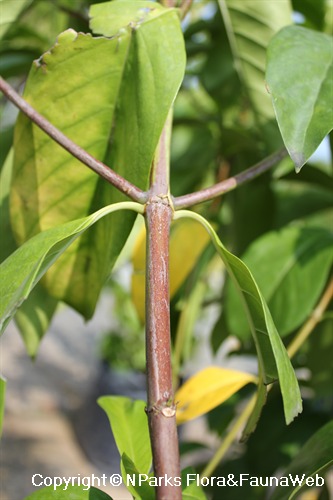
| Stems | Bark reddish-brown, scaly to slightly peeling. |
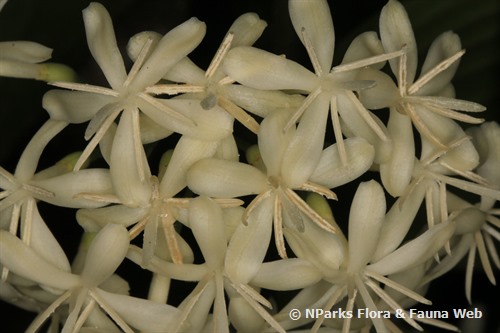
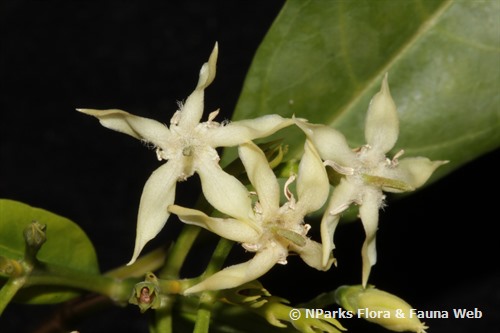
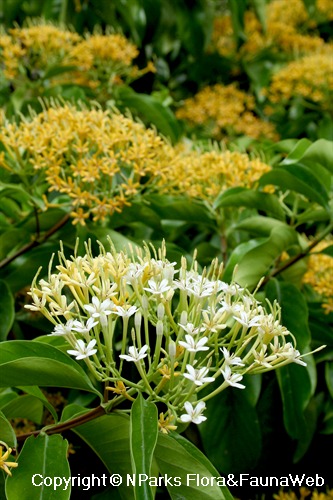
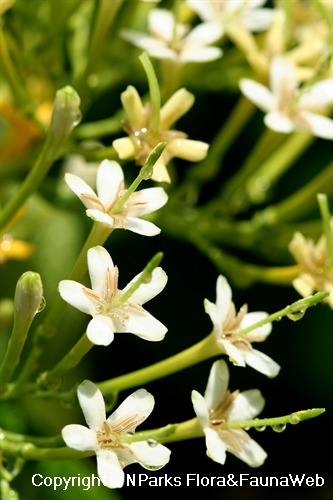
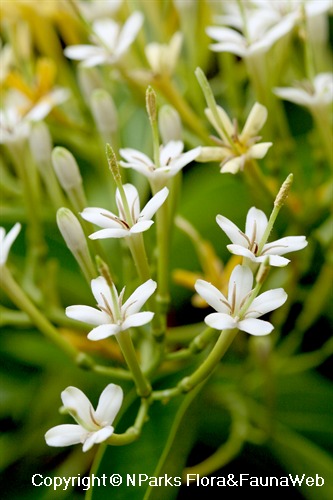
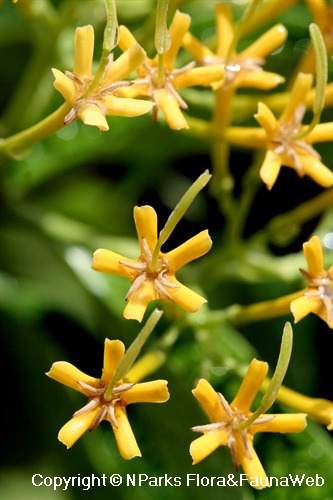
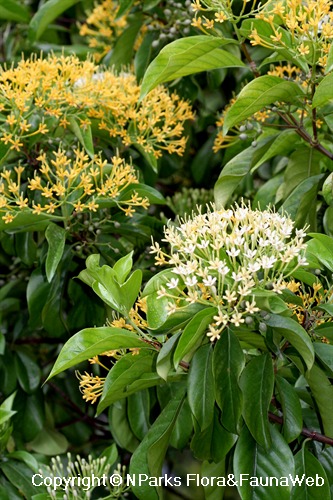
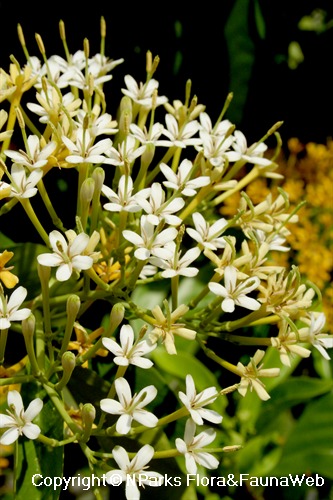
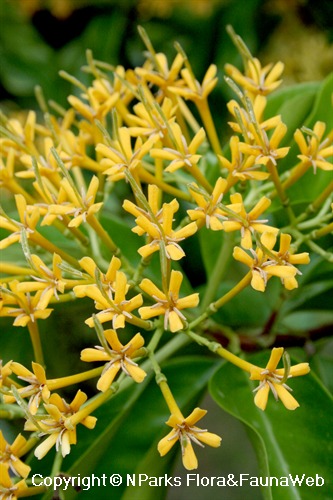
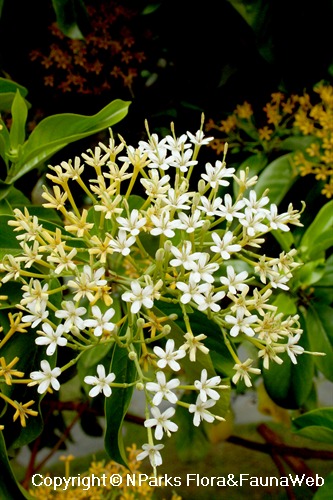
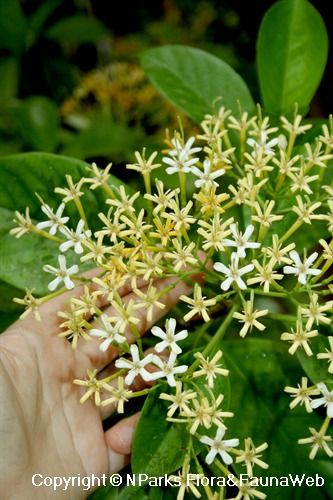
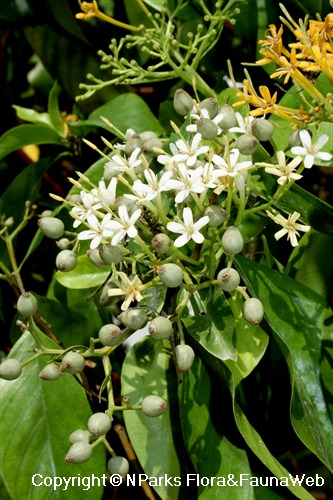
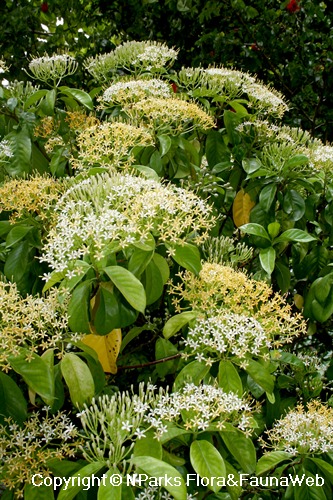
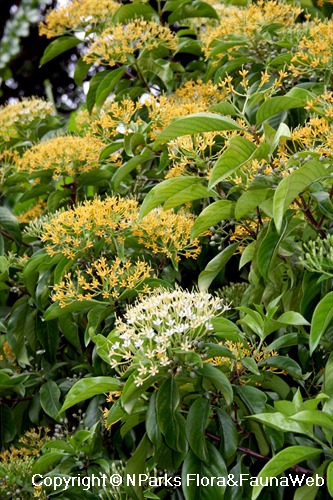
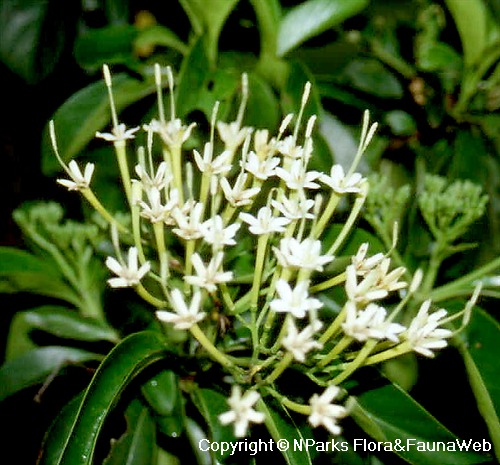
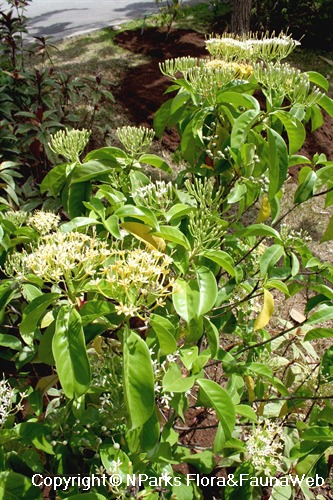
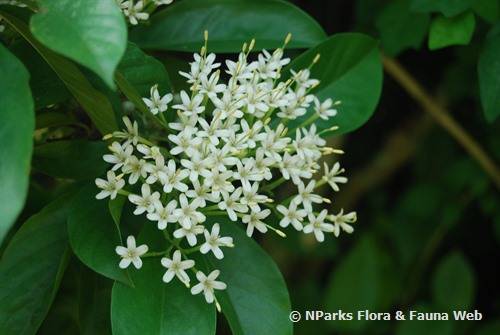
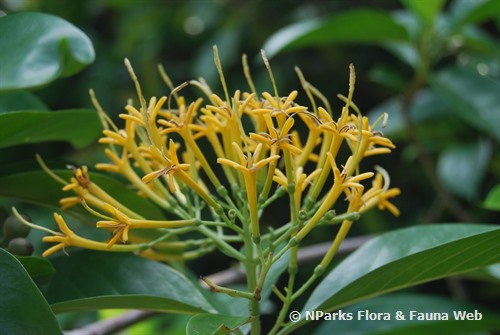
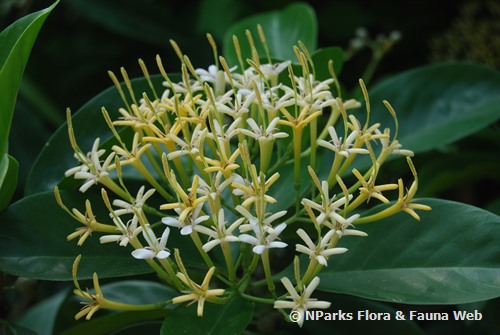
| Flowers | Its flowers are white, withering yellowish, 1.3 cm wide, fragrant, and arranged in 5–15 cm wide many-flowered clusters. Species observed to exhibit synchronous blooming a few times per year under local conditions. |
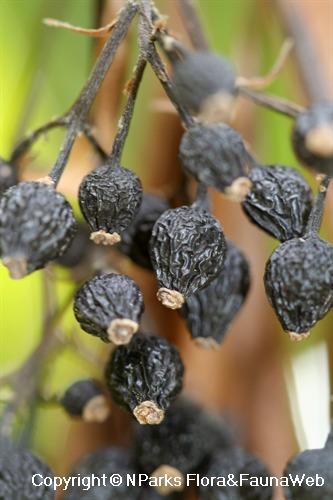
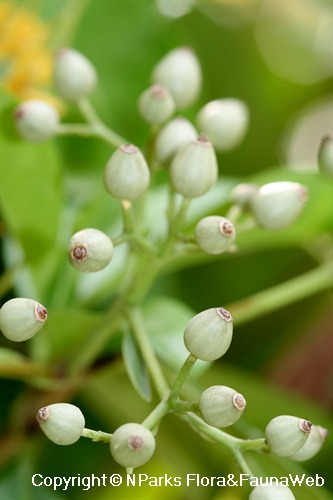
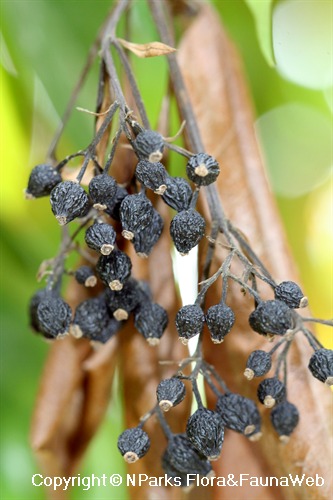
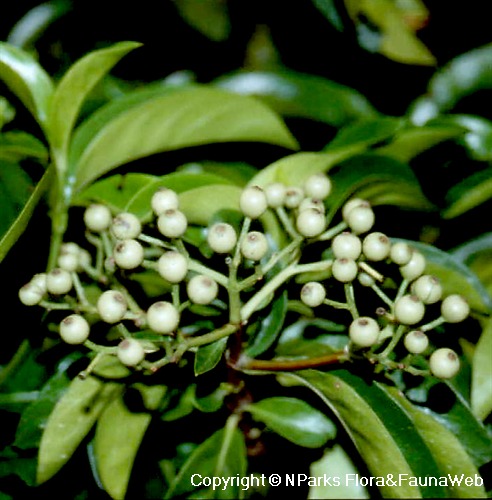
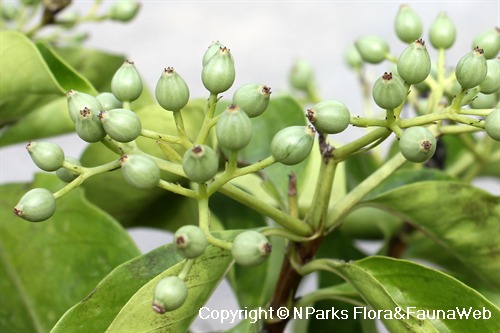
| Fruit | Its berry fruit is round, green turning purplish or bluish-black when mature, 1.5 cm long, and has many small brown seeds. |
| Habitat | Occurs in lowland forest at swampy sites or along riverbanks. |
| Cultivation | Likes moisture, withstands waterlogged and wet soils. Tends to remain shrubby at drier sites. Propagate by seeds, stem cuttings or air-layering. |
| Etymology | Genus epithet 'Tarenna' derived from Sinhalese name 'Maha-tarnana' for a plant from this genus -- Tarenna asiatica (synonym: Webera corymbosa), which is distributed from the Indian sub-continent to Indonesia (Borneo). Species epithet 'fragrans' means 'fragrant', a reference to the plant's scented flowers. |
Landscaping Features
| Landscaping | It is suitable for parks and streetscape planting for its spectacular yellow fragrant blooms. |
|---|---|
| Desirable Plant Features | Ornamental Flowers, Fragrant (Flowers) (Day) |
| Landscape Uses | Container Planting, General, Suitable for Roadsides, Parks & Gardens, Coastal Plant, Hedge / Screening, Riverine, Skyrise / Balcony |
| Thematic Landscaping | Golden Garden, Fragrant / Aromatherapy Garden, Naturalistic Garden, Bird & Wildlife Garden |
| Usage Hazard - Cons | Low Crown / Clearance |
Fauna, Pollination and Dispersal
| Fauna Pollination Dispersal Associated Fauna | Bird-Attracting Plant |
|---|---|
| Pollination Method(s) | Biotic (Fauna) |
| Seed or Spore Dispersal | Biotic (Fauna) |
Plant Care and Propagation
| Light Preference | Semi-Shade, Full Sun |
|---|---|
| Water Preference | Moderate Water, Lots of Water |
| Plant Growth Rate | Moderate |
| Rootzone Tolerance | Waterlogged Soils (Drains Site), Fertile Loamy Soils, Well-Drained Soils, Moist Soils |
| Maintenance Requirements | Moderate |
| Propagation Method | Seed, Stem Cutting, Air-Layering |
Foliar
| Foliage Retention | Evergreen |
|---|---|
| Mature Foliage Colour(s) | Green |
| Mature Foliage Texture(s) | Leathery |
| Foliar Type | Simple / Unifoliate |
| Foliar Arrangement Along Stem | Opposite |
| Foliar Attachment to Stem | Petiolate |
| Foliar Shape(s) | Non-Palm Foliage (Elliptical, Oblong) |
| Foliar Venation | Pinnate / Net |
| Foliar Margin | Entire - Wavy / Undulate, Entire |
| Foliar Apex - Tip | Acuminate |
| Foliar Base | Rounded / Obtuse |
| Typical Foliar Area | Mesophyll ( 45cm2 - 182.25 cm2 ) |
| Leaf Area Index (LAI) for Green Plot Ratio | 4.0 (Tree - Dense Canopy) |
Non - Foliar and Storage
| Trunk Type (Non Palm) | Woody |
|---|---|
| Bark Colour(s) | Reddish-brown |
| Mature Bark Texture | Peeling / Flaking / Papery, Scaly |
| Stem Type & Modification | Woody |
| Root Type | Underground (Tap Root, Fibrous Root) |
Floral (Angiosperm)
| Flower & Plant Sexuality | Bisexual Flowers |
| Flower Colour(s) | Cream / Off-White, Orange, White, Yellow / Golden |
|---|---|
| Flower Grouping | Cluster / Inflorescence |
| Flower Location | Terminal |
| Flower Symmetry | Radial |
| Individual Flower Shape | Tubular |
| Inflorescence Type | Compound Corymb |
| Flowering Opening Time | Time-Independent |
| Flower Lifespan on Plant | Several Days |
| Flowering Habit | Polycarpic |
| Inflorescence Size Remarks | Flowers open white, changing to cream and then yellow-orange over a few days. |
| Flowering Period Remarks | A few times per year |
Fruit, Seed and Spore
| Mature Fruit Colour(s) | Black, Purple |
|---|---|
| Fruit Classification | Simple Fruit |
| Fruit Type | Fleshy Fruit , Berry |
Image Repository
Others
| Master ID | 1882 |
|---|---|
| Species ID | 3175 |
| Flora Disclaimer | The information in this website has been compiled from reliable sources, such as reference works on medicinal plants. It is not a substitute for medical advice or treatment and NParks does not purport to provide any medical advice. Readers should always consult his/her physician before using or consuming a plant for medicinal purposes. |