



.jpg)
Back
Lophopetalum wightianum
| Family Name: | Celastraceae |
| Synonyms: | Lophopetalum pachyphyllum auct. non King <1>, Lophopetalum fimbriatum Wight |
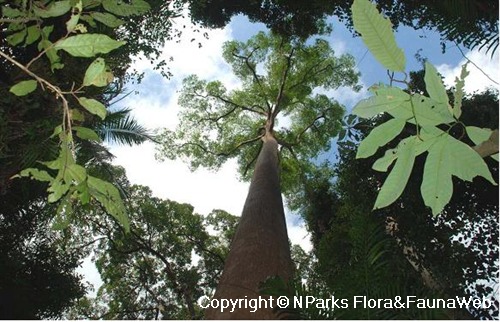
Lophopetalum wightianum is a large tree native to Singapore. Growing to 50 m tall, it has slightly leathery leaves, broadly to narrowly elliptic or egg shaped. Flowers are borne in clusters, distinctly 5-lobed, yellow petals with a red, sunken, cup-shaped disk. The fruit is a woody spindle-shaped capsule that splits to release oblong, flat, winged seeds.
.jpg)
.jpg)
Name
Classifications and Characteristics
| Plant Division | Angiosperms (Flowering Seed Plants) (Dicotyledon) |
|---|---|
| Plant Growth Form | Tree (Big (>30m)) |
| Maximum Height | 50 m |
Biogeography
| Native Distribution | India, East Pakistan, Mynmmar, Peninsular Malaysia, Sumatra, Singapore, Borneo |
|---|---|
| Native Habitat | |
| Preferred Climate Zone | Tropical |
| Local Conservation Status | Native to Singapore (Endangered (EN)) |
Description and Ethnobotany
| Growth Form | It is a large-sized tree that can grow up to 50 m tall. Buttress may be present up to 8 m in height. |
|---|---|
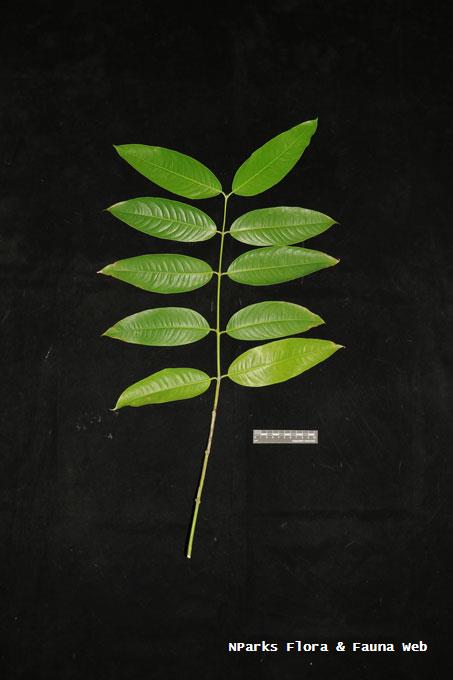
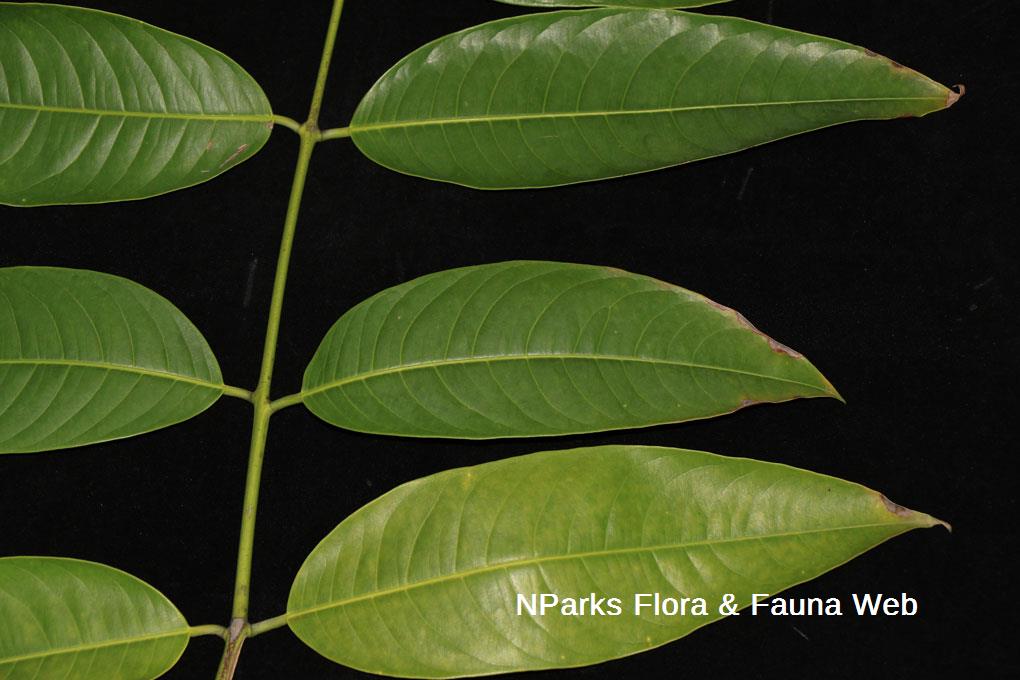
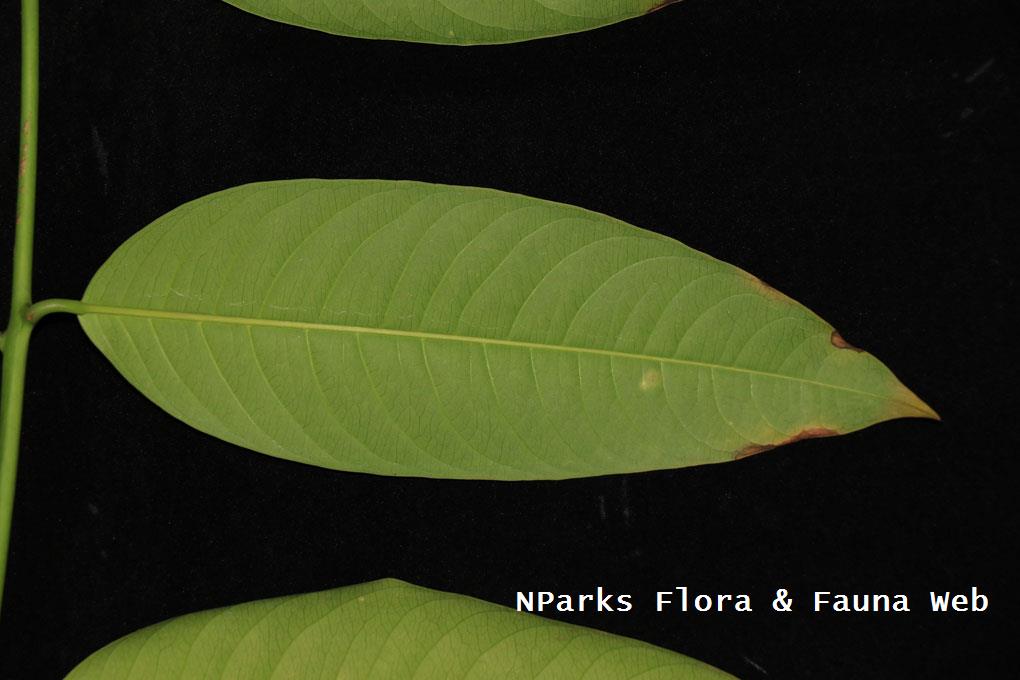
| Foliage | Leaves are slightly leathery, often broadly to narrowly elliptic or egg, rarely spoon-shaped, measuring 8 - 25 cm long by 4 - 10 cm wide. Tufts of hair are found on the stipules which may fall early. |
| Flowers | Flowers are borne on an inflorescence, up to 12 cm long. The flower is 10 - 13mm wide, distinctly 5-lobed, yellow petals and a red, sunken, cup-shaped disk at the center. Stamens and pistils emerging from the circular to 5-lobed disk. |
| Fruit | The fruit is a woody, spindle-shaped capsule, 3-lobed measuring 10 - 15 cm long. Upon maturity, it splits to release oblong, flat, winged seeds measuring to 6.5 cm long and 1.5 cm wide. |
| Habitat | Occurs in evergreen forest, from near sea level to altitude 780 m. <2,3> |
| Cultivation | It can be propagated by seed. |
Plant Care and Propagation
| Light Preference | Full Sun |
|---|---|
| Water Preference | Moderate Water |
| Plant Growth Rate | Moderate to Slow |
| Rootzone Tolerance | Moist Soils, Fertile Loamy Soils |
| Propagation Method | Seed |
Foliar
| Foliage Retention | Evergreen |
|---|---|
| Foliar Type | Simple / Unifoliate |
| Foliar Arrangement Along Stem | Opposite |
| Foliar Attachment to Stem | Petiolate |
| Foliar Shape(s) | Non-Palm Foliage (Elliptical, Oblong, Ovate) |
| Foliar Venation | Reticulate |
| Foliar Margin | Entire |
| Foliar Apex - Tip | Acuminate, Acute |
| Foliar Base | Rounded / Obtuse, Cuneate, Peltate |
Non - Foliar and Storage
| Stem Type & Modification | Woody |
|---|---|
| Root Type | Underground |
Floral (Angiosperm)
| Flower & Plant Sexuality | Bisexual Flowers , Bisexual Flowers |
| Flower Colour(s) | Yellow / Golden, Red |
|---|
| Flower Grouping | Cluster / Inflorescence |
| Flower Location | Axillary |
| Flower Symmetry | Radial |
| Inflorescence Type | Thyrse |
Fruit, Seed and Spore
| Mature Fruit Colour(s) | Brown, Black |
|---|---|
| Fruit Classification | Simple Fruit |
| Fruit Type | Dehiscent Dry Fruit , Capsule |
References
| References | <1> Chew, P.T., Saifuddin, S. & Ali, I. (1997). Checklist of Vascular Plants in the Nature Reserves of Singapore. Gardens' Bulletin Singapore 49(2): 176. Singapore: Singapore Botanic Gardens, National Parks Board. <2> Hou, D. 1962. Lophopetalum. In: Hou, D. (ed.) Celastraceae, Flora Malesiana, ser. 1, vol. 6, pt. 2, pp. 267-268. Leiden: Rjksherbarium. <3> Hou, D., Savinov, I.A., van Welzen, P.C. (2010). Celastraceae. Flora of Thailand, vol. 10(2), pp. 179-180. Bangkok: The Forest Herbarium, Department of National Parks, Wildlife and Plant conservation. |
|---|
Image Repository
Others
| Master ID | 30100 |
|---|---|
| Species ID | 4409 |
| Flora Disclaimer | The information in this website has been compiled from reliable sources, such as reference works on medicinal plants. It is not a substitute for medical advice or treatment and NParks does not purport to provide any medical advice. Readers should always consult his/her physician before using or consuming a plant for medicinal purposes. |