




Name
Classifications and Characteristics
| Plant Division | Ferns & Lycophytes (Non-Seed Vascular Plants) (Fern) |
|---|---|
| Plant Growth Form | Herbaceous Plant |
| Mode of Nutrition | Autotrophic |
Biogeography
| Native Distribution | Australia, Indonesia, West Malesia and Lesser Sunda Island |
|---|---|
| Native Habitat | Terrestrial |
| Preferred Climate Zone | Tropical, Sub-Tropical / Monsoonal |
| Local Conservation Status | Non-native |
Description and Ethnobotany
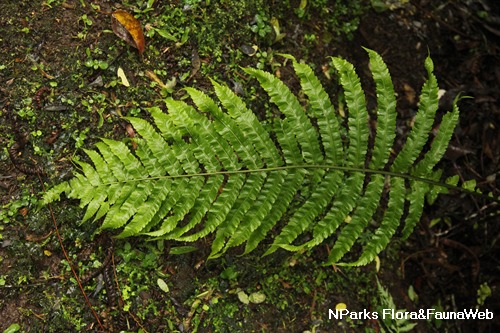
| Growth Form | Terrestrial fern, rhizome erect or sometimes short-creeping. |
|---|---|
| Foliage | Apex and stipe bases covered with thin and sparsely hairy scales, sometimes secreting mucilage, base of stipe to first large pinna measuring about 60 - 100 cm long. Fronds 1-pinnate, firm texture, largest pinnae measuring about 15 - 25 by 2 - 2.5 cm. |
| Reproductive Parts - non-flowering plant | Sori in an inverted V-shape, indusia firm and glabrous, sporangia bearing club-shaped glands and spores are usually pale brown in colour with small wings. |
| Habitat | Usually found near streams. |
| Etymology | Genus name Pneumatopteris is from two Greek words pneuma and pteris. pneuma means air and referring to the aerophores of the type species, and pteris means fern. |
Landscaping Features
| Desirable Plant Features | Ornamental Foliage |
|---|---|
| Landscape Uses | Parks & Gardens, Small Gardens |
Fauna, Pollination and Dispersal
| Seed or Spore Dispersal | Abiotic |
|---|
Plant Care and Propagation
| Light Preference | Semi-Shade, Full Shade |
|---|---|
| Water Preference | Moderate Water |
| Rootzone Tolerance | Moist Soils, Fertile Loamy Soils |
| Propagation Method | Spore, Division |
Foliar
| Foliage Retention | Evergreen |
|---|---|
| Mature Foliage Colour(s) | Green |
Image Repository
Others
| Master ID | 32220 |
|---|---|
| Species ID | 6626 |
| Flora Disclaimer | The information in this website has been compiled from reliable sources, such as reference works on medicinal plants. It is not a substitute for medical advice or treatment and NParks does not purport to provide any medical advice. Readers should always consult his/her physician before using or consuming a plant for medicinal purposes. |