





Back
Teratophyllum ludens (Fée) Holttum
| Family Name: | Dryopteridaceae |
| Synonyms: | Stenochlaena sorbifolia auct. non (L.) J.Sm.<2>, Lomariopsis sorbifolia auct. non (L.) Fée <1>, Acrostichum sorbifolium auct. non L.<4>, Acrostichum scandens auct. non (J.Sm.) Hook.<5> |
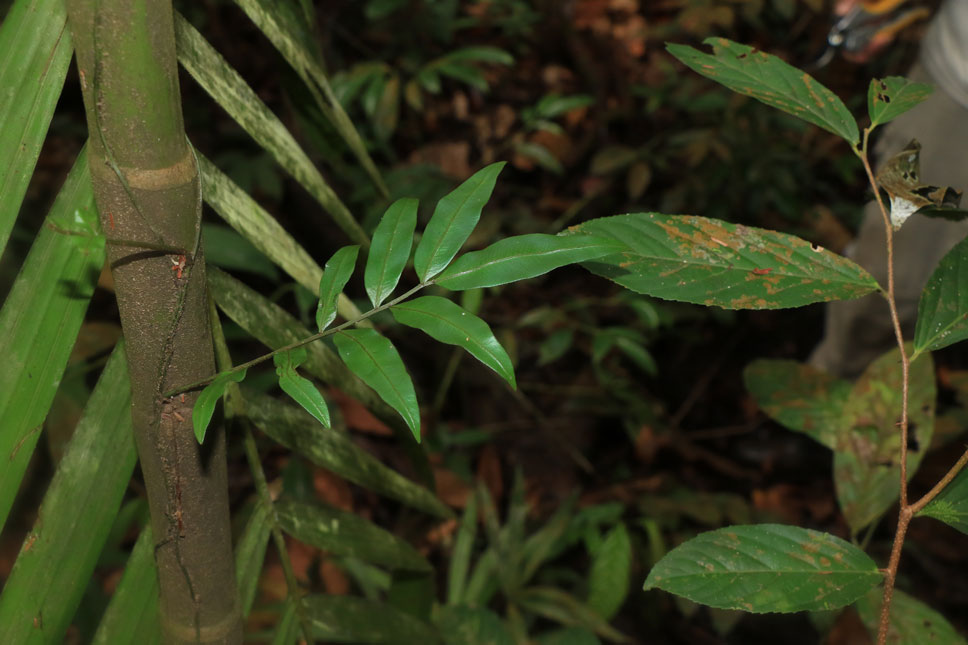
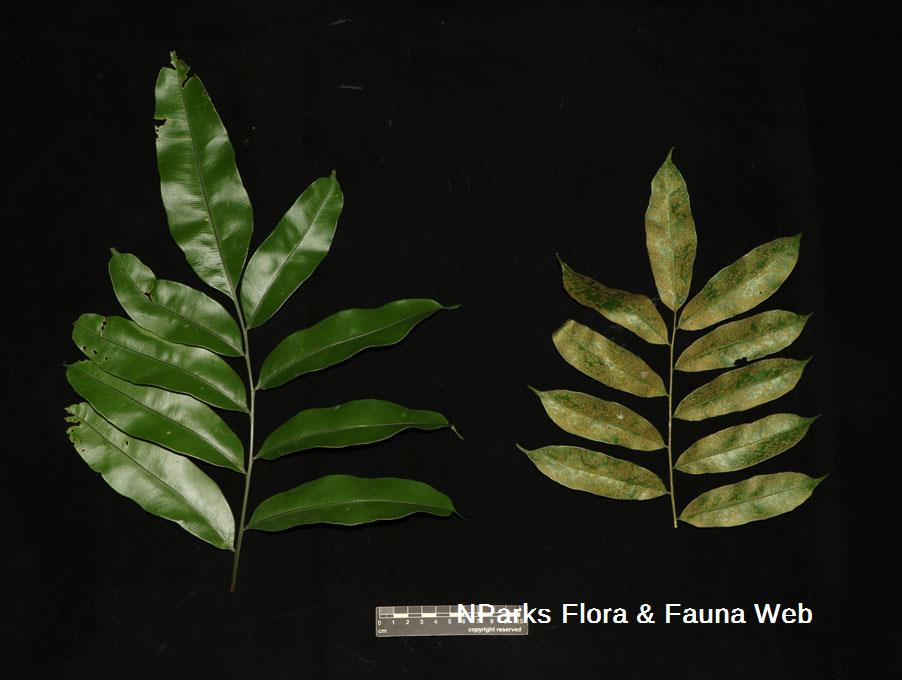
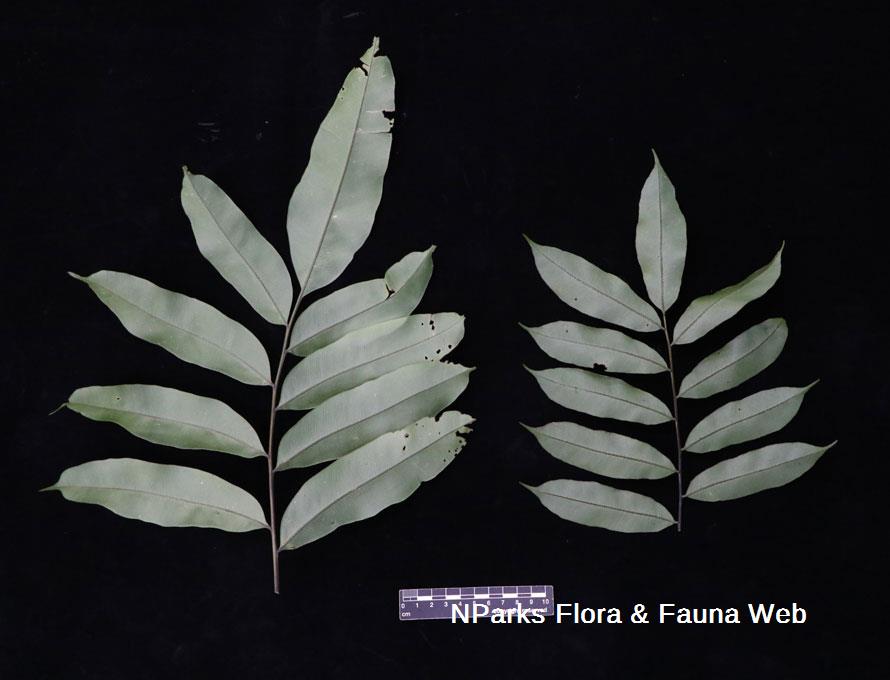
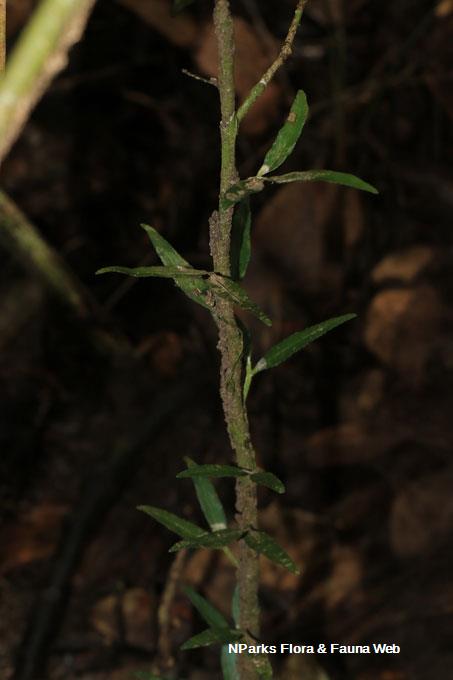
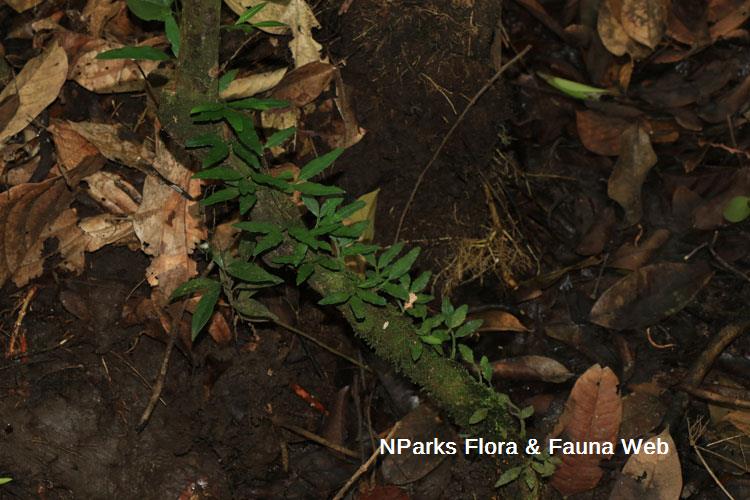
Teratophyllum ludens is a climbing fern native to Singapore. The rhizomes are slightly prickly with various forms of frond types. The mature, spore-bearing fronds are pinnate, measuring to 45 cm long, consist of up to 10 leaflets. Bathphylls fronds are found near the base of the plant, bipinnate with 5 - 9 leaflets. Each leaflet is 0.5 - 3 cm, round toothed margins near the tips.
Name
Classifications and Characteristics
| Plant Division | Ferns & Lycophytes (Non-Seed Vascular Plants) (Fern) |
|---|---|
| Plant Growth Form | Herbaceous Plant |
Biogeography
| Native Distribution | Peninsular Thailand, Peninsular Malaysia, Borneo, Sarawak, Singapore |
|---|---|
| Native Habitat | Terrestrial (Freshwater Swamp Forest) |
| Preferred Climate Zone | Tropical |
| Local Conservation Status | Native to Singapore (Critically Endangered (CR)) |
Description and Ethnobotany
| Growth Form | It is a climbing fern with long-creeping, sparsely prickly rhizomes. |
|---|---|
| Foliage | Stalk is swollen at the base, 5 - 20 cm long.
The sterile fronds consist of young fronds, and bathyphylls fronds formed near the base of the plant. Acrophylls fronds formed at some distance from the ground can be either be sterile or fertile. Young fronds are triangular, deeply lobed or have a free leaflet at the base. Bathphylls are pinnate or bipinnate, have 5 - 9 leaflets, largest leaflet at the tip. Each leaflet is 0.5 - 3 cm long, broadly elliptic or egg-shaped, round-toothed margin near the tips. Sterile acrophylls are pinnate, can measure to 45 cm long and 25 cm wide, consist of up to 10 pairs of leaflets that are 13 - 15 cm long and 2 - 4.5 cm wide. The leaflets are almost elliptic or linear. Fertile acrophylls are similar, with long and narrow leaflets measuring to 20 cm long, 3 mm wide, on a short stalk of up to 5 mm in length. |
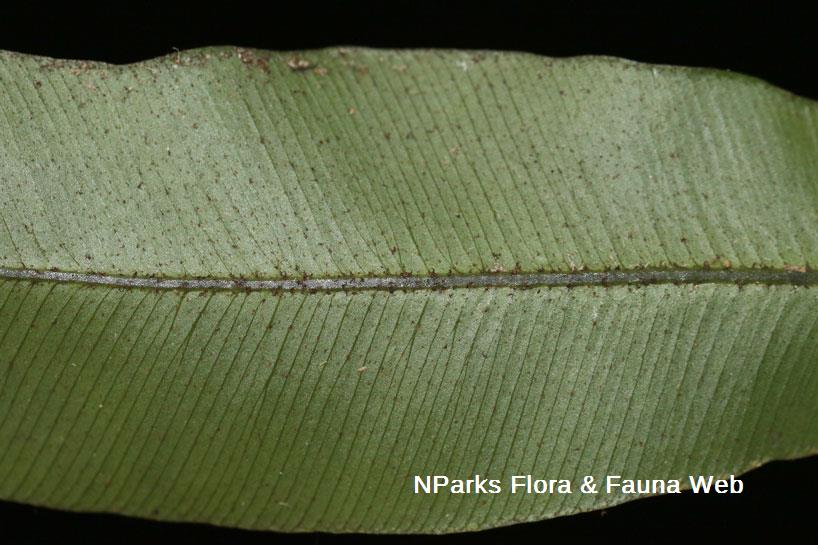
| Others - Plant Morphology | The sporangia (spore-bearing structures) spread across the entire lower surface. |
| Habitat | Occurs in evergreen, freshwater swamp forests, along streams at low to medium altitudes. <3 & 6> |
| Cultivation | It can be propagated by spores. |
Plant Care and Propagation
| Light Preference | Semi-Shade |
|---|---|
| Water Preference | Moderate Water |
| Plant Growth Rate | Moderate |
| Rootzone Tolerance | Moist Soils, Well-Drained Soils |
Foliar
| Foliage Retention | Evergreen |
|---|---|
| Mature Foliage Colour(s) | Green |
| Foliar Type | Compound (Odd-Pinnate, Bipinnate) |
| Foliar Attachment to Stem | Petiolate |
| Foliar Shape(s) | Non-Palm Foliage (Elliptical, Deltoid, Ovate) |
| Foliar Venation | Parallel |
| Foliar Margin | Crenulate |
| Foliar Apex - Tip | Acuminate |
| Foliar Base | Cuneate |
Non - Foliar and Storage
| Stem Type & Modification | Herbaceous |
|---|
References
| References | <1> Beddome, R.H. (1866). Ferns Brit. India, vol. 1 (excl. pl. 192). Madras: Gantz Brothers. <2> Beddome, R.H. (1892), Handbook to the ferns of British India, Ceylon and the Malay Peninsula; with supplement. Calcutta: Thacker, Spink, and Co. <3> Holttum, R.E. (1978). Teratophyllum. In: Holttum, R.E. (ed.) Lomariopsis group. Flora Malesiana, ser. 2, vol. 1, pt. 4. pp. 275. Leiden: Rjksherbarium. <4> Hooker, W.J. (1864). Species filicum, vol. 5. London: Dulau. pp. 241. <5> Hooker, W.J. (1864). Species filicum, vol. 5. London: Dulau. pp. 249. <6> Tagawa, M. & Iwatsuki, K. (1988). Flora of Thailand, vol 3(3), pp. 321-324. Bangkok: The Forest Herbarium, Department of National Parks, Wildlife and Plant Conservation. |
|---|
Image Repository
Others
| Master ID | 34423 |
|---|---|
| Species ID | 8836 |
| Flora Disclaimer | The information in this website has been compiled from reliable sources, such as reference works on medicinal plants. It is not a substitute for medical advice or treatment and NParks does not purport to provide any medical advice. Readers should always consult his/her physician before using or consuming a plant for medicinal purposes. |