


Back
Urophyllum hirsutum (Wight) Hook.f.
| Family Name: | Rubiaceae |
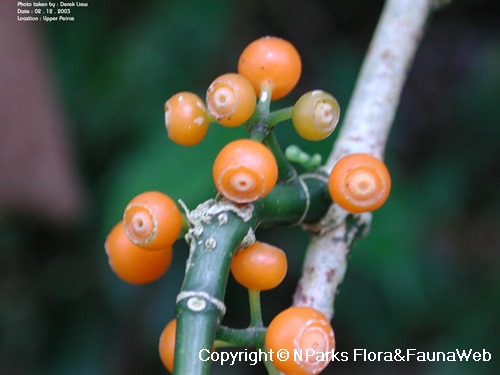
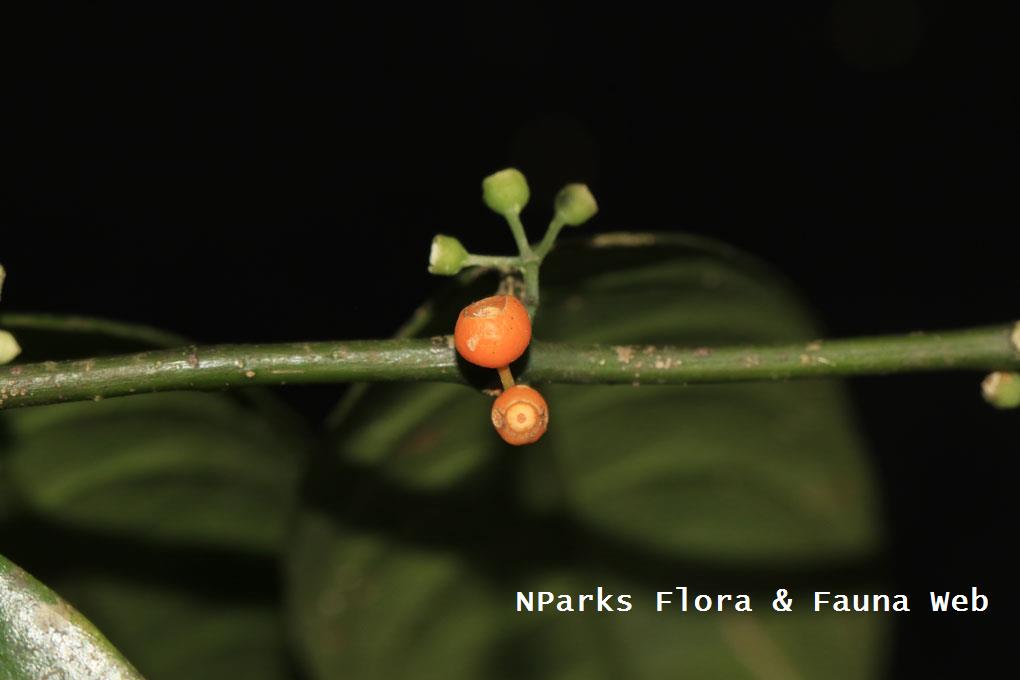
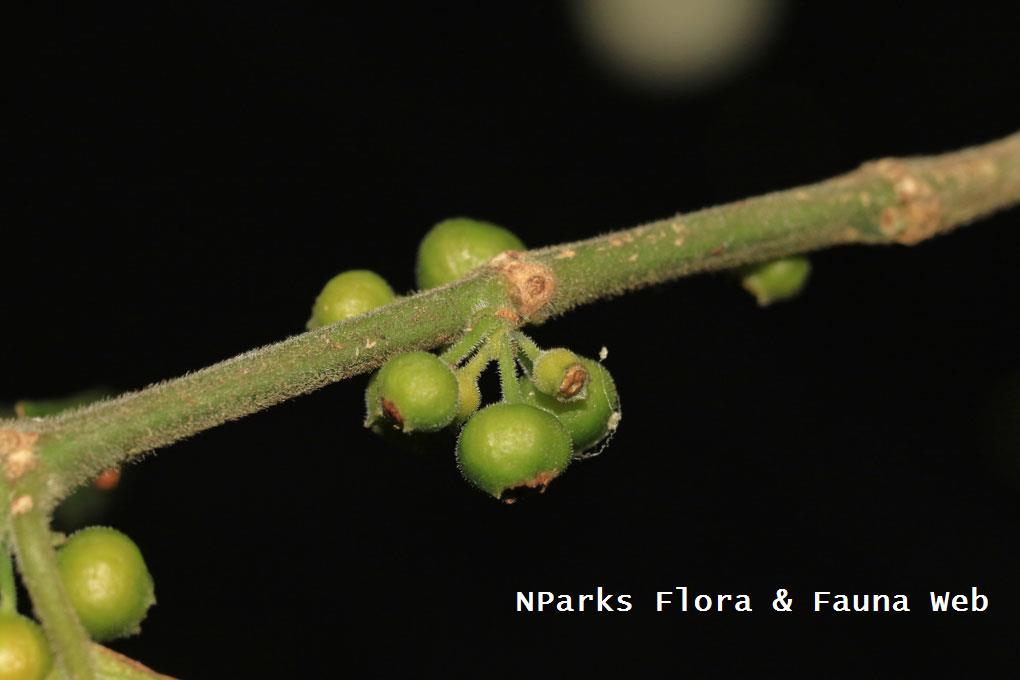
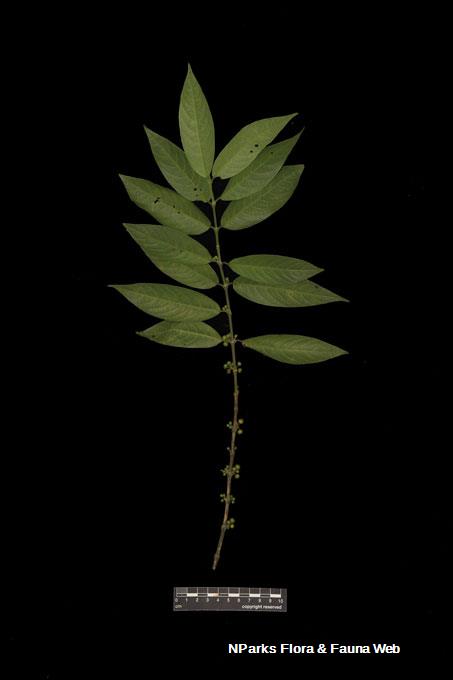
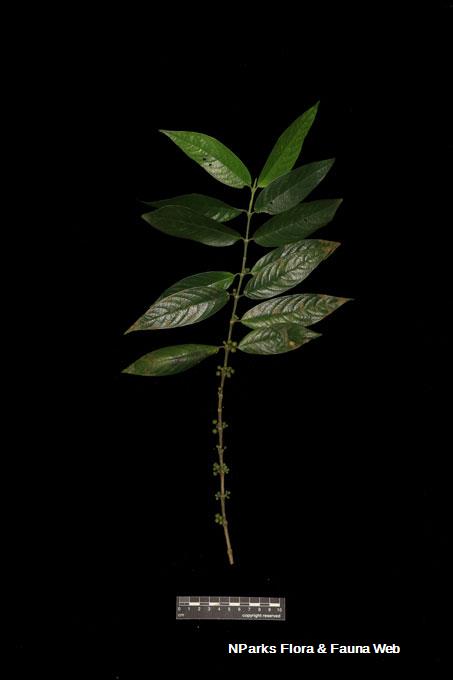
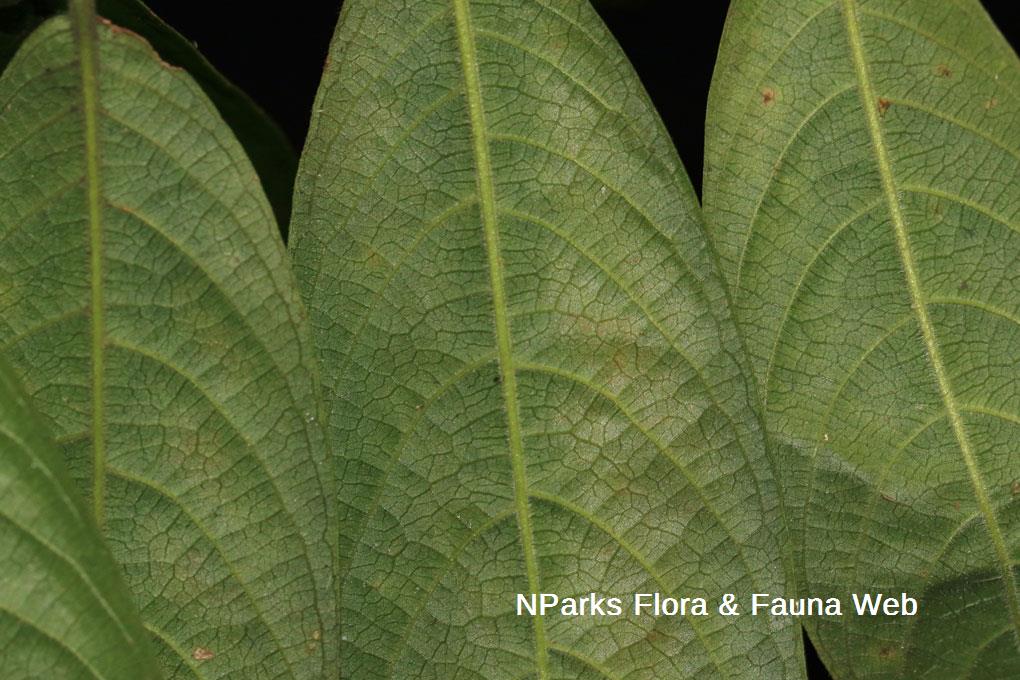
Urophyllum hirsutum is a large shrub to small tree, native to Singapore. Growing to 4 m tall, it has elliptic to almost-ovate leaves with ladder-like veinlets that are prominent on the underside. Flowers are dioecious, white, held in clusters along the axils, densely covered in pale or brownish erect hairs on the outside. The fruit is a yellowish orange to red berry covered in short erect hairs with a broad ring scale at the top.
Name
Classifications and Characteristics
| Plant Division | Angiosperms (Flowering Seed Plants) (Dicotyledon) |
|---|---|
| Plant Growth Form | Tree (Shrubby (1m-5m)), Shrub |
| Maximum Height | 4 m |
Biogeography
| Native Distribution | Peninsular Thailand, Peninsular Malaysia and Singapore |
|---|---|
| Native Habitat | Terrestrial (Primary Rainforest, Secondary Rainforest, Coastal Forest) |
| Preferred Climate Zone | Tropical |
| Local Conservation Status | Native to Singapore (Vulnerable (VU)) |
Description and Ethnobotany
| Growth Form | It is a large shrub to small tree that can grow between 2 - 4 m tall. |
|---|---|
| Foliage | Leaves are elliptic to almost egg-shaped measuring from 3.5 - 16.5 cm long by 1.3 - 5.5 cm wide. The midrib is hairy, hairs are also found along the veins and on lower surface. The veinlets are ladder-like, prominent on the underside. Stipules are linear, covered with stiff hairs on both sides. |
| Flowers | Flowers are dioecious, where the male and female flowers are produced on different individuals, held in clusters at the axils. Male flowers are dish-like, 0.5 - 1 mm long, about 1 mm wide, 4 short triangular lobes. Female flowers has a cup-like base, 1.5 mm long, about 2 mm wide with triangular lobes at 0.5 mm long. Both flowers are densely covered in pale or brownish erect hairs on the outside. |
| Fruit | The fruit is almost-round berry, sometimes slightly 5-lobed, covered in short erect hairs. Measuring 3 - 4 mm wide, the fruit has a broad ring scale at the top, ripening from green to yellowish orange or red. |
| Habitat | Occurs mainly in lowland forest and sometimes in coastal areas. <1,2> |
| Cultivation | Species is not tolerant to salt sprays. It can be propagated by seed |
| Etymology | The genus, Urophyllum Greek, uro meaning tail and phyllum meaning leaf in reference to the conspicuous tail-like prolongation of leaf apices. The species epithet, Latin, hirsutus meaning hirsute; with coarse stiff hairs; referring to the lower leaf surfaces |
Plant Care and Propagation
| Light Preference | Semi-Shade |
|---|---|
| Water Preference | Moderate Water |
| Plant Growth Rate | Moderate |
| Rootzone Tolerance | Fertile Loamy Soils, Well-Drained Soils |
| Propagation Method | Seed |
Foliar
| Foliage Retention | Evergreen |
|---|---|
| Foliar Type | Simple / Unifoliate |
| Foliar Arrangement Along Stem | Opposite |
| Foliar Attachment to Stem | Petiolate |
| Foliar Shape(s) | Non-Palm Foliage (Elliptical, Ovate) |
| Foliar Venation | Reticulate |
| Foliar Margin | Entire |
| Foliar Apex - Tip | Acuminate, Caudate |
| Foliar Base | Cuneate |
Non - Foliar and Storage
| Stem Type & Modification | Woody |
|---|
Floral (Angiosperm)
| Flower & Plant Sexuality | Unisexual Flowers , Dioecious |
| Flower Colour(s) | White |
|---|
| Flower Grouping | Cluster / Inflorescence |
| Flower Location | Axillary |
| Flowering Habit | Polycarpic |
Fruit, Seed and Spore
| Mature Fruit Colour(s) | Orange |
|---|---|
| Fruit Classification | Simple Fruit |
| Fruit Type | Fleshy Fruit , Berry |
References
| References | <1> Ridley, H.N. et. al (1923). The flora of Malay Peninsula, vol. 2. London: L. Reeve & Co., Ltd. pp. 66. <2> Wong, K.M. et. al. (2019). Urophyllum. Flora of Singapore, vol. 13, pp. 352-354. Singapore: Singapore Botanic Gardens, National Parks Board. |
|---|
Image Repository
Others
| Master ID | 34443 |
|---|---|
| Species ID | 8856 |
| Flora Disclaimer | The information in this website has been compiled from reliable sources, such as reference works on medicinal plants. It is not a substitute for medical advice or treatment and NParks does not purport to provide any medical advice. Readers should always consult his/her physician before using or consuming a plant for medicinal purposes. |