







Name
Classifications and Characteristics
| Plant Division | Ferns & Lycophytes (Non-Seed Vascular Plants) (Fern) |
|---|---|
| Lifespan (in Singapore) | Perennial |
| Mode of Nutrition | Autotrophic |
| Maximum Height | 2 m |
Biogeography
| Native Distribution | Madagascar, Madagascar, Andaman Islands, Nicobar Islands, Hainan, Myanmar, Vietnam, Thailand, Peninsular Malaysia, Singapore, Philippines, Lesser Sunda Islands, Sulawesi, Maluku, New Guinea, Bismarck Archipelago, Solomon Islands, Caroline Islands, Vanuatu, New Caledonia, Fiji and Australia (Western Australia, Northern Territory, Queensland, New South Wales) |
|---|---|
| Native Habitat | Shoreline (Mangrove Forest), Terrestrial (Marsh / Swamp), Freshwater (Emergent Freshwater) |
| Preferred Climate Zone | Tropical |
| Local Conservation Status | Native to Singapore (Least Concern (LC)) |
Description and Ethnobotany
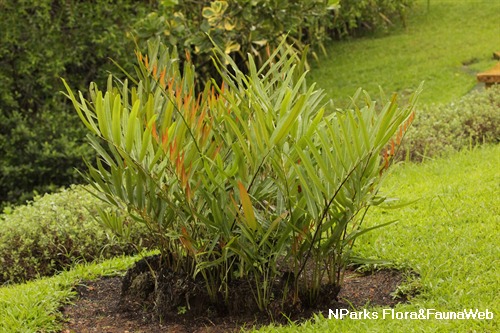
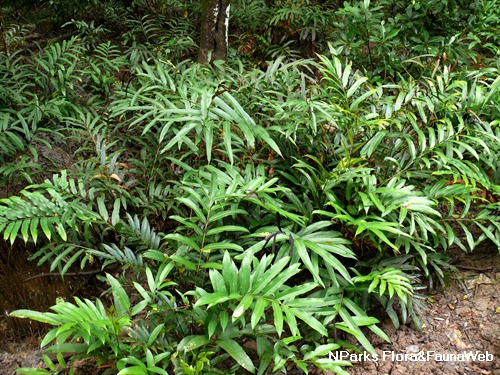
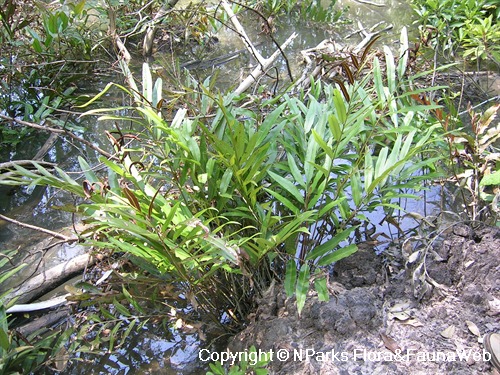
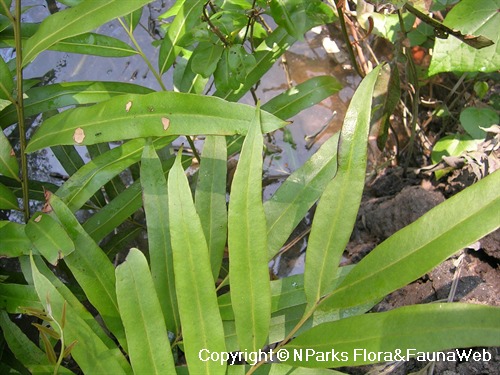
| Growth Form | Tall fern that grows in large, dense clumps. |
|---|---|
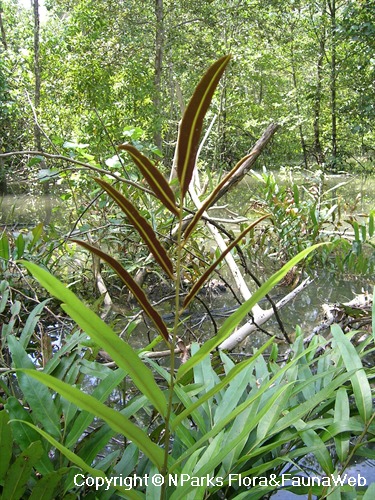
| Foliage | Large fronds are pinnately compound (up to 2 m long). The opposite pinnae are oblong with a sharply pointed tip (15 cm long). The fertile pinnae are smaller than the sterile ones and form dark brown sporangia that cover the entire underside. |
| Stems | It has an underground, horizontal stem known as a rhizome. The rhizome and the base of the stipes (frond petioles) are covered in shiny, dark brown scales (8 mm long). |
| Habitat | Occurs mostly in brackish, sometimes in freshwater, swamps, marshes and tidal forests. In mangroves, often found deep within inland regions. |
| Associated Fauna | The Purple Heron (Ardea purpurea) prefers to nest at the base of this species. Sometimes grows on Mud Lobster mounds. |
| Ethnobotanical Uses | Medicinal: The rhizome (underground, horizontal stem) is crushed and applied to wounds and boils. |
Landscaping Features
| Desirable Plant Features | Ornamental Foliage |
|---|---|
| Landscape Uses | Riverine, Pond / Lake / River, Marsh / Bog |
| Thematic Landscaping | Marsh Garden |
Plant Care and Propagation
| Light Preference | Semi-Shade, Full Shade |
|---|---|
| Water Preference | Lots of Water |
| Plant Growth Rate | Moderate |
| Rootzone Tolerance | Waterlogged Soils (Drains Site) |
| Propagation Method | Spore, Division |
Foliar
| Foliage Retention | Evergreen |
|---|---|
| Mature Foliage Colour(s) | Green |
| Mature Foliage Texture(s) | Smooth, Glossy / Shiny |
| Foliar Type | Compound (Odd-Pinnate) |
| Foliar Attachment to Stem | Petiolate |
| Foliar Shape(s) | Non-Palm Foliage (Oblong) |
| Foliar Venation | Pinnate / Net |
| Foliar Margin | Entire - Wavy / Undulate |
| Foliar Apex - Tip | Acuminate |
| Foliar Base | Rounded / Obtuse |
| Typical Foliar Area | Macrophyll ( 182.25cm2 - 1640.25 cm2 ) |
References
| References | Yong J, Tan PY, Nor Hafiz Hassan, Tan SN. 2010. A Selection of Plants for Greening of Waterways and Waterbodies in the Tropics. Singapore: Chung Printing . 480 pp. |
|---|
Image Repository
Others
| Master ID | 240 |
|---|---|
| Species ID | 1536 |
| Flora Disclaimer | The information in this website has been compiled from reliable sources, such as reference works on medicinal plants. It is not a substitute for medical advice or treatment and NParks does not purport to provide any medical advice. Readers should always consult his/her physician before using or consuming a plant for medicinal purposes. |