







Back
Megaskepasma erythrochlamys
| Family Name: | Acanthaceae |
| Synonyms: | Adhatoda cydoniifolia |
| Common Name: | Brazilian Red-Cloak, Red Justicia |
Name
Classifications and Characteristics
| Plant Growth Form | Shrub |
|---|---|
| Mode of Nutrition | Autotrophic |
Biogeography
| Native Distribution | Southern Venezuela, Costa Rica, Nicaragua, El Salvador |
|---|---|
| Native Habitat | Terrestrial |
| Preferred Climate Zone | Tropical |
| Local Conservation Status | Non-native |
Description and Ethnobotany
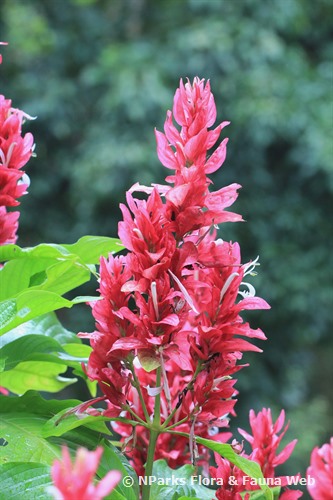
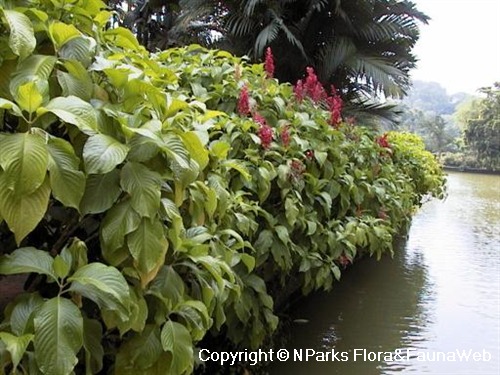
| Growth Form | Semi-woody evergreen shrub, able to grow up to about 2 - 3 m tall, and sometimes 4.5 m in its natural habitat. |
|---|---|
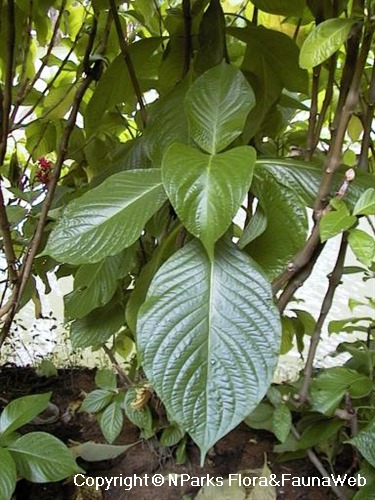
| Foliage | Green leaves, ovate in shape, opposite arrangement, measuring about 30 cm long, venation along the surface is prominent. |
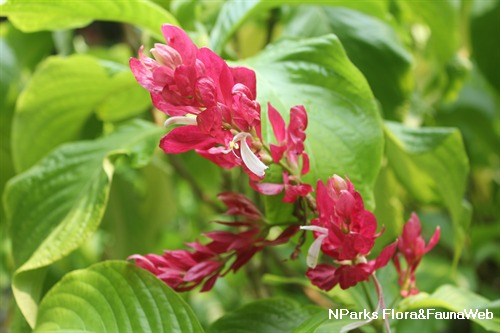
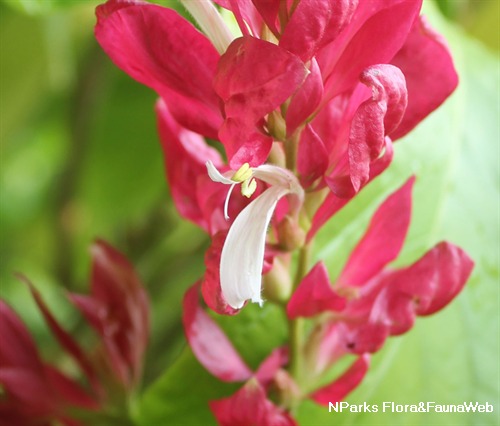
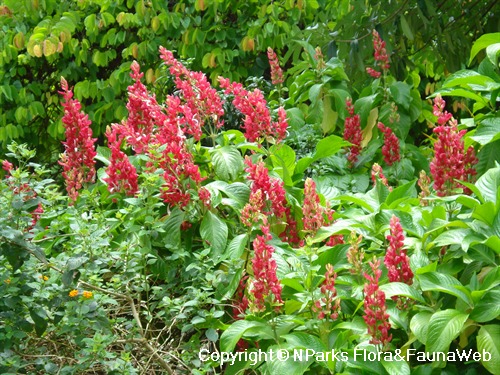
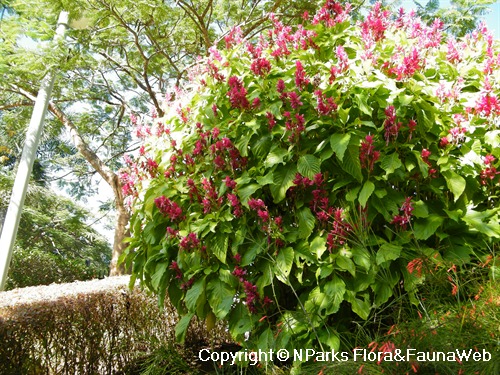
| Flowers | Tubular flowers on erect flowering spikes up to 30 m tall, each flower consist of the showy red bracts surrounding the true white flower. |
| Etymology | Genus Megaskepasma is from Greek words "megas" meaning big or large and "skepasma" meaning covering (refers to the coloured bracts). Species erythrochlamys means cloaked in red. |
Landscaping Features
| Desirable Plant Features | Ornamental Flowers |
|---|---|
| Landscape Uses | Parks & Gardens, Small Gardens, Container Planting |
Fauna, Pollination and Dispersal
| Fauna Pollination Dispersal Associated Fauna | Butterfly-Attracting Plant |
|---|
Plant Care and Propagation
| Light Preference | Semi-Shade, Full Sun |
|---|---|
| Water Preference | Moderate Water |
| Plant Growth Rate | Moderate |
| Rootzone Tolerance | Moist Soils, Well-Drained Soils |
| Propagation Method | Stem Cutting |
Foliar
| Mature Foliage Colour(s) | Green |
|---|---|
| Foliar Attachment to Stem | Petiolate |
| Foliar Shape(s) | Non-Palm Foliage (Ovate) |
| Leaf Area Index (LAI) for Green Plot Ratio | 4.5 (Shrub & Groundcover - Dicot) |
Floral (Angiosperm)
| Flower Colour(s) | Red, White |
|---|---|
| Flower Grouping | Cluster / Inflorescence |
Image Repository
Others
| Master ID | 925 |
|---|---|
| Species ID | 2219 |
| Flora Disclaimer | The information in this website has been compiled from reliable sources, such as reference works on medicinal plants. It is not a substitute for medical advice or treatment and NParks does not purport to provide any medical advice. Readers should always consult his/her physician before using or consuming a plant for medicinal purposes. |