





Back
Commelina diffusa Burm. f.
| Family Name: | Commelinaceae |
| Common Name: | Spreading Dayflower, Climbing Dayflower, Scurvy Weed, 节节草, 竹节花 |
Name
Classifications and Characteristics
| Plant Division | Angiosperms (Flowering Seed Plants) (Monocotyledon) |
|---|---|
| Plant Growth Form | Herbaceous Plant |
Biogeography
| Native Distribution | Tropical and Subtropical regions |
|---|
Description and Ethnobotany
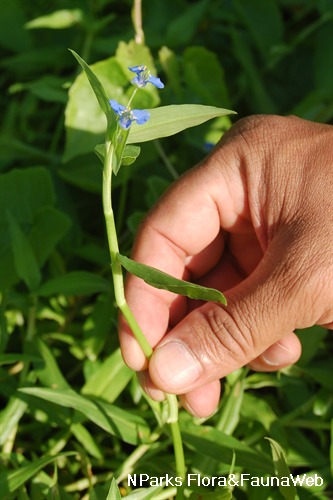
| Growth Form | Perennial herb with a scrambling growth habit, reaching to a length of 1 m. |
|---|---|
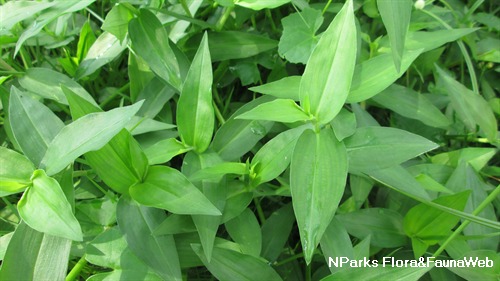
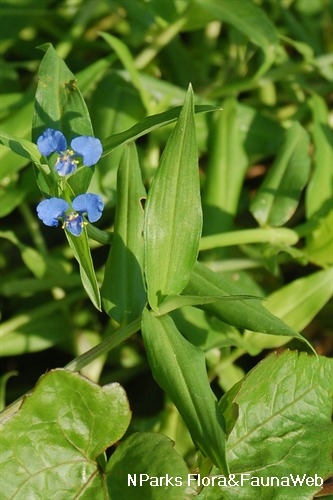
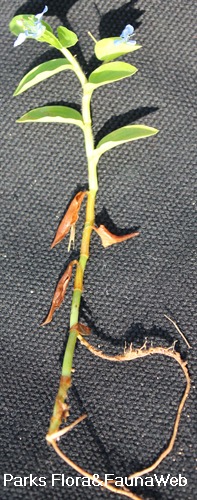
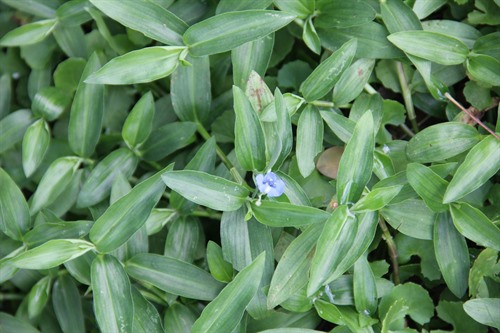
| Foliage | Lance-shaped to narrowly ovate leaves are smooth with undulate leaf margin. The leaf base wraps around the stem in a structure known as a leaf sheath. |
| Stems | Stems are soft and weak with roots emerging at the leaf nodes. |
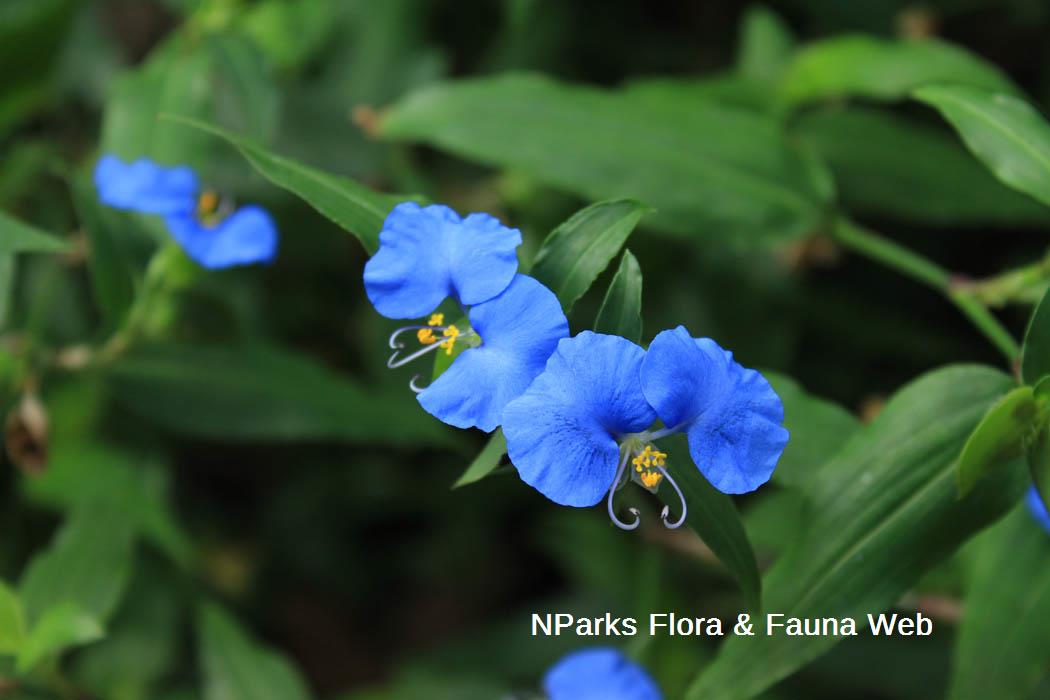
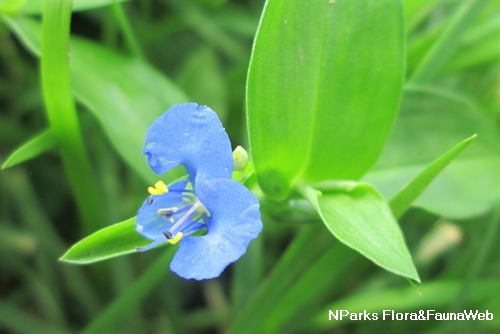
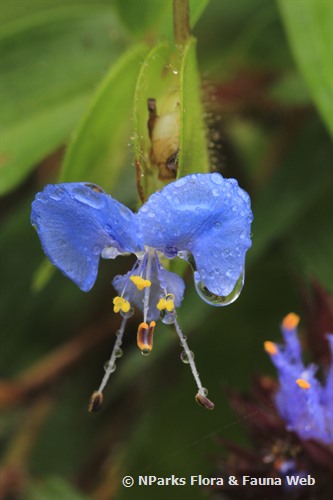
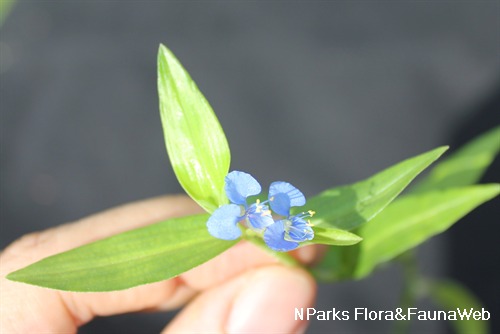
| Flowers | Small, bright blue flowers are composed of 3 triangular petals with wavy margins. |
| Fruit | Dry, dehiscent fruits are known as capsules (5 mm long). |
| Habitat | It naturally occurs in shaded areas. When exposed to full sun, such as after a clearing has occurred, it tends to grow aggressively. |
| Ethnobotanical Uses | Medicinal: The leaves are rich in Vitamin C. Early settlers in Australia consumed this plant to prevent scurvy, a disease caused by a Vitamin C deficiency. Others: The blue dye extracted from the flowers are used in painting in China. |
Landscaping Features
| Desirable Plant Features | Ornamental Flowers |
|---|
Fauna, Pollination and Dispersal
| Pollination Method(s) | Biotic (Fauna) |
|---|
Plant Care and Propagation
| Light Preference | Full Sun, Semi-Shade |
|---|---|
| Water Preference | Lots of Water, Moderate Water |
| Rootzone Tolerance | Moist Soils, Well-Drained Soils, Shallow Media, Easy to Grow |
| Propagation Method | Seed |
Foliar
| Mature Foliage Colour(s) | Green |
|---|
Floral (Angiosperm)
| Flower Colour(s) | Blue |
|---|
Fruit, Seed and Spore
| Mature Seed Colour(s) | Brown |
|---|
Image Repository
Others
| Master ID | 30779 |
|---|---|
| Species ID | 5133 |
| Flora Disclaimer | The information in this website has been compiled from reliable sources, such as reference works on medicinal plants. It is not a substitute for medical advice or treatment and NParks does not purport to provide any medical advice. Readers should always consult his/her physician before using or consuming a plant for medicinal purposes. |