








Back
Hanguana anthelminthica (Blume ex Schult. & Schult.f.) Masam.
| Family Name: | Hanguanaceae |
| Common Name: | Common Susum, Bakong Rimba |
Name
Classifications and Characteristics
| Plant Division | Angiosperms (Flowering Seed Plants) (Monocotyledon) |
|---|---|
| Plant Growth Form | Herbaceous Plant |
| Lifespan (in Singapore) | Perennial |
| Mode of Nutrition | Autotrophic |
| Maximum Height | 3 m |
Biogeography
| Native Distribution | India (excluding Assam), Sri Lanka, Myanmar, Vietnam, Thailand, Peninsular Malaysia, Borneo, Philippines, Sumatra, Java, Sulawesi, New Guinea, Caroline Islands, Australia (Northern Territory, Queensland) |
|---|---|
| Native Habitat | Terrestrial (Freshwater Swamp Forest), Freshwater (Emergent Freshwater) |
| Preferred Climate Zone | Tropical |
| Local Conservation Status | Non-native (Horticultural / Cultivated Only) |
Description and Ethnobotany
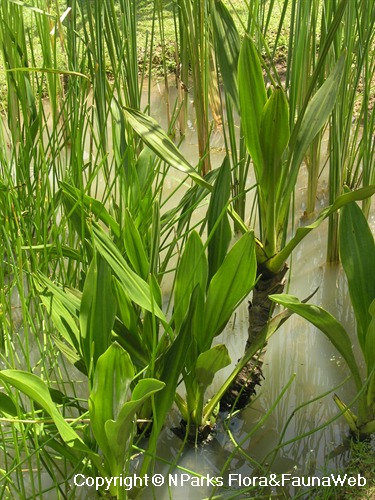
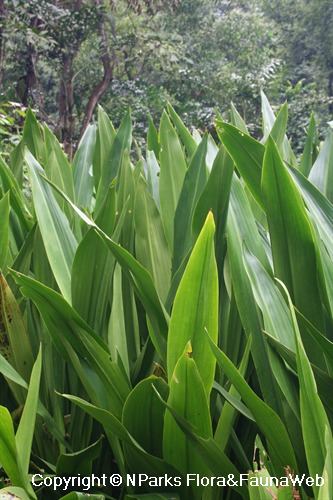
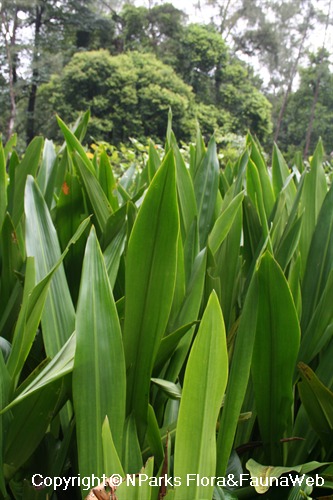
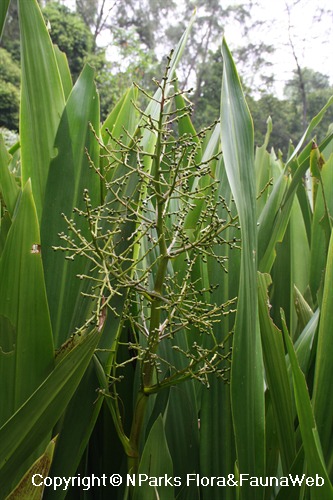
| Growth Form | It is an aquatic or terrestrial, perennial herbaceous plant up to 3 m tall. |
|---|---|
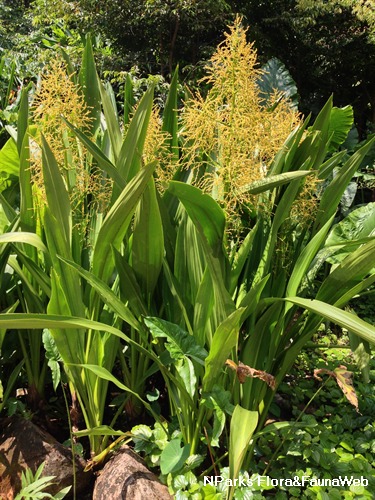
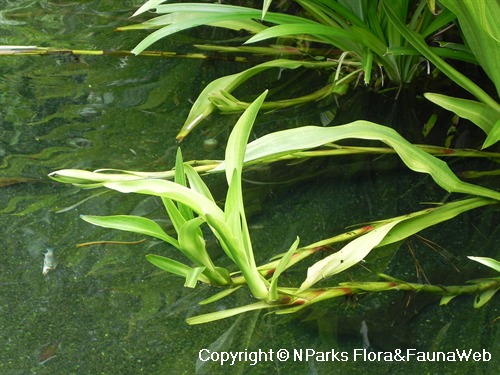
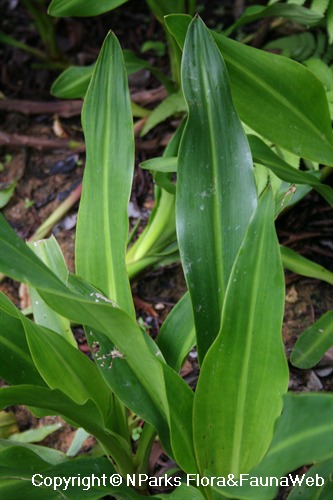
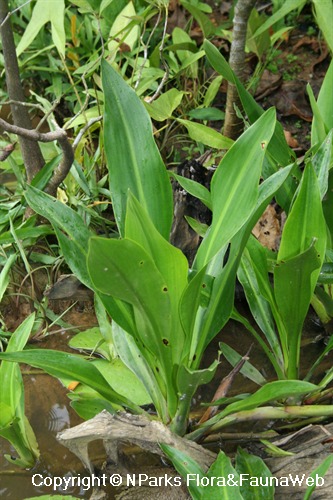
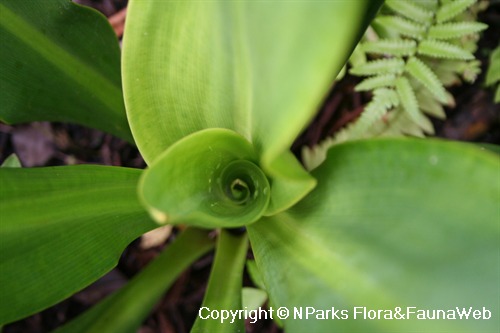
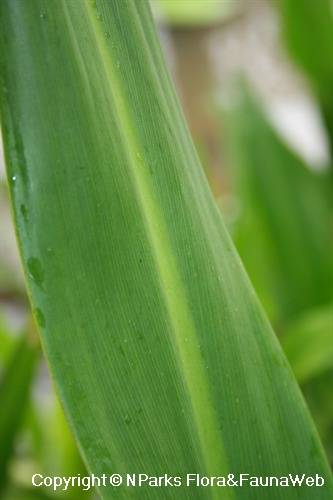
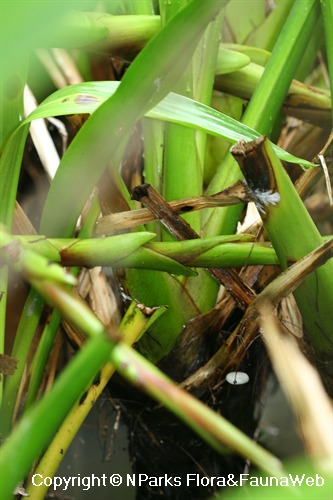
| Foliage | Its grass-like, fleshy, stalked leaves have leaf blades that taper at both ends. Its leaf blades are also sometimes purple or red on the underside, and 20–127 by 1.5–17.5 cm, with dense venation. |
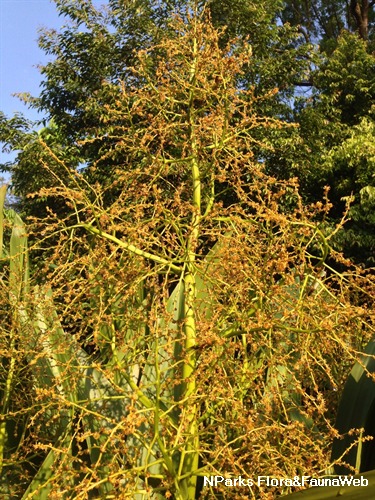
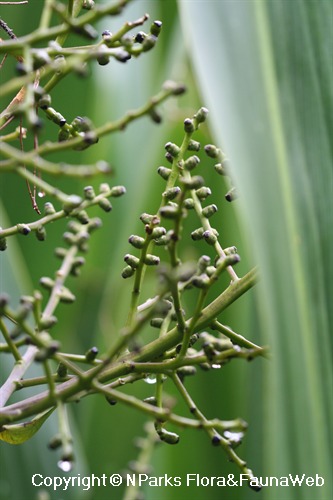
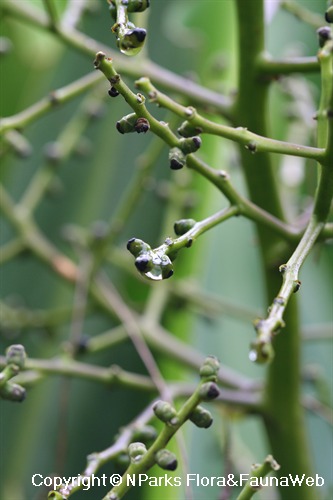
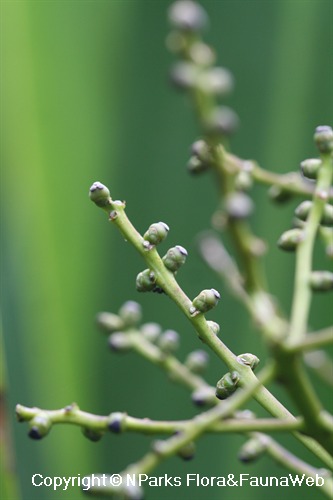
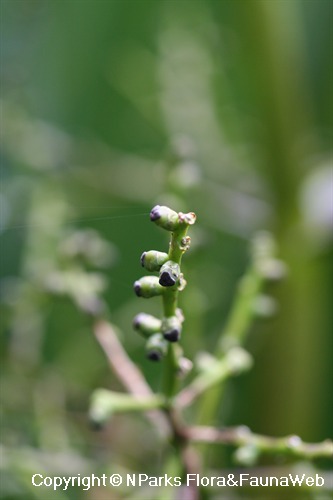
| Flowers | Its green or yellow flowers grow on a branched flowering shoot. |
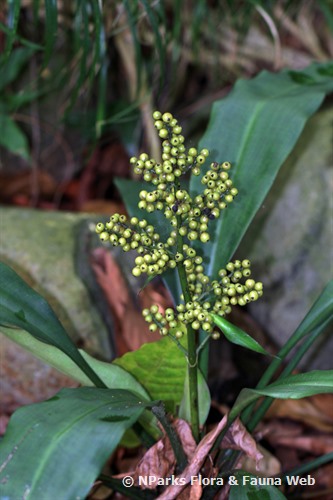
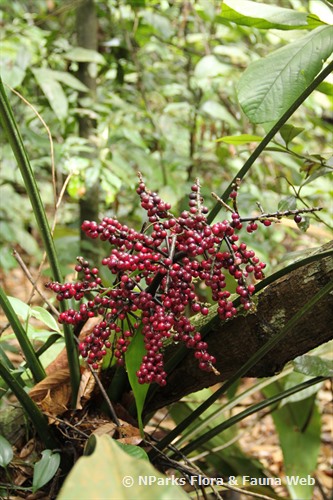
| Fruit | Its round fruits ripen from shiny red and dark purple to black, are up to 2.5 cm wide and contain one seed. |
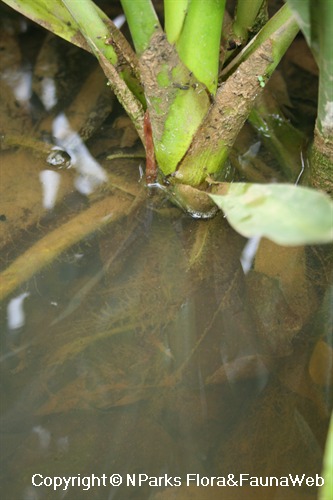
| Habitat | It can be found in morasses (areas with soft, wet, muddy ground), slow-moving freshwater, and along lake-shores and rivers, lowland swamp forest and hill forest up to 1,500 m above sea level. |
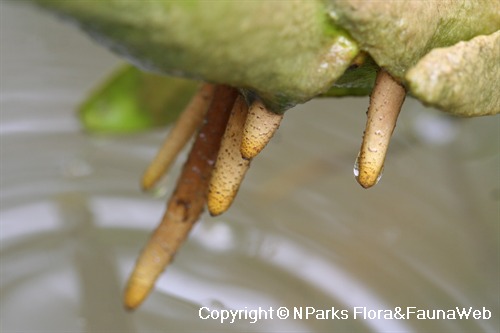
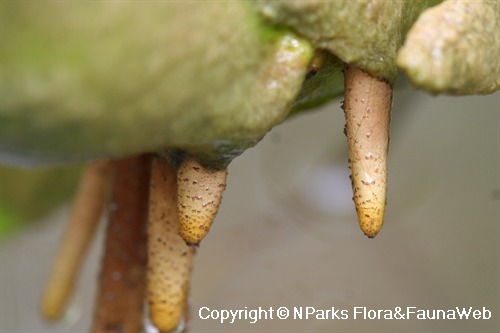
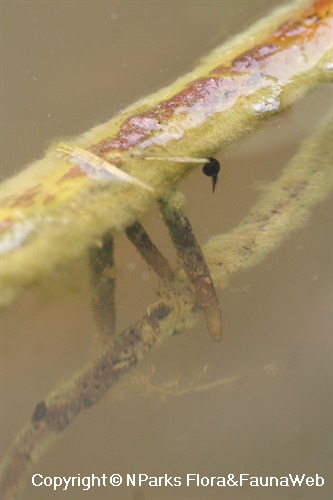
| Associated Fauna | It is an important habitat for waterfowl such as the Common Moorhen (Gallinula chloropus) and Purple Swamphen (Porphyrio porphyrio), as well as provides shelter for aquatic insects and freshwater fish among their dangling roots and perches for dragonflies. |
| Taxonomy | Hanguana anthelminthica (Blume ex Schult. & Schult.f.) Masam. was previously misidentified as Hanguana malayana (Jack) Merr. <1> |
| Cultivation | It can be propagated by seed and stolons. |
Landscaping Features
| Landscaping | It is able to form floating islands in lakes owing to air present in its numerous air-vessels. The plant is large and attractive and useful for landscaping water bodies. |
|---|---|
| Desirable Plant Features | Ornamental Flowers, Ornamental Foliage |
| Landscape Uses | Parks & Gardens, Riverine, Pond / Lake / River, Marsh / Bog |
| Usage Hazard - Cons | Invasive / Potentially Invasive |
Fauna, Pollination and Dispersal
| Fauna Pollination Dispersal Associated Fauna | Bird-Attracting Plant (Hiding / Nesting Place) |
|---|---|
| Pollination Method(s) | Biotic (Fauna) |
| Seed or Spore Dispersal | Biotic (Fauna) |
Plant Care and Propagation
| Light Preference | Semi-Shade, Full Sun |
|---|---|
| Water Preference | Moderate Water, Lots of Water |
| Plant Growth Rate | Fast |
| Rootzone Tolerance | Moist Soils, Waterlogged Soils (Does not Drain Site), Fertile Loamy Soils |
| Propagation Method | Seed, Stolon / Runner |
Foliar
| Foliage Retention | Evergreen |
|---|---|
| Mature Foliage Colour(s) | Green |
| Mature Foliage Texture(s) | Smooth |
| Foliar Type | Simple / Unifoliate |
| Foliar Arrangement Along Stem | Rosulate / Rosette |
| Foliar Attachment to Stem | Petiolate |
| Foliar Shape(s) | Non-Palm Foliage (Lanceolate) |
| Foliar Venation | Parallel |
| Foliar Margin | Entire |
| Foliar Apex - Tip | Acute |
| Foliar Base | Acute, Clasping |
Non - Foliar and Storage
| Stem Type & Modification | Herbaceous |
|---|---|
| Root Type | Underground |
| Specialised Storage Organ(s) |
Floral (Angiosperm)
| Flower & Plant Sexuality | Bisexual Flowers , Bisexual Flowers |
| Flower Colour(s) | Yellow / Golden, Green |
|---|
| Flower Grouping | Cluster / Inflorescence |
| Flower Location | Terminal |
| Flower Symmetry | Radial |
| Inflorescence Type | Thyrse, Panicle |
Fruit, Seed and Spore
| Mature Fruit Colour(s) | Red, Purple, Black |
|---|---|
| Fruit Classification | Simple Fruit |
| Fruit Type | Fleshy Fruit , Non-Accessory Fruit |
References
| References | <1> Leong-Škorničková, J. & Niissalo, M.A. (2017). Identity and typification of Hanguana malayana and H. anthelminthica and notes on other early names in Hanguanaceae. Plant System Evol. 303: 1213-1223. |
|---|
Image Repository
Others
| Master ID | 764 |
|---|---|
| Species ID | 2059 |
| Flora Disclaimer | The information in this website has been compiled from reliable sources, such as reference works on medicinal plants. It is not a substitute for medical advice or treatment and NParks does not purport to provide any medical advice. Readers should always consult his/her physician before using or consuming a plant for medicinal purposes. |