




Back
Ocimum basilicum 'Windowbox'
| Family Name: | Lamiaceae (Labiatae) |
| Common Name: | Windowbox Mini Basil |
Name
Classifications and Characteristics
| Plant Division | Angiosperms (Flowering Seed Plants) (Dicotyledon) |
|---|---|
| Plant Growth Form | Herbaceous Plant |
| Lifespan (in Singapore) | Annual |
| Mode of Nutrition | Autotrophic |
| Maximum Height | 20 cm to 25 cm |
Description and Ethnobotany
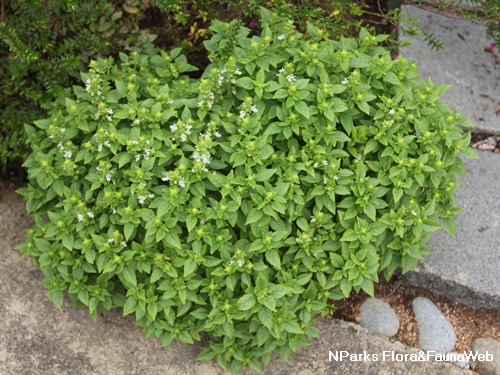
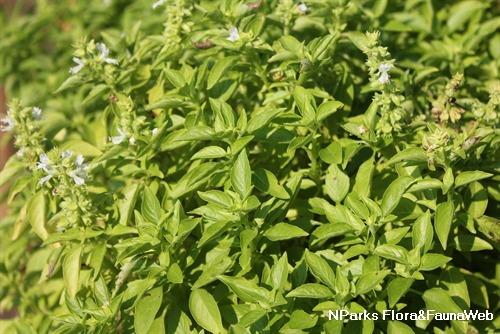
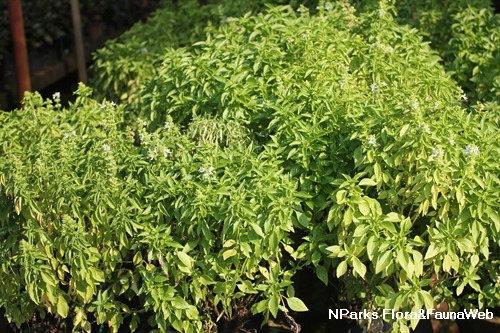
| Growth Form | Miniature basil with a compact, round form up to 25 cm tall.. |
|---|---|
| Foliage | Small, elliptic leaves (about 1 cm long) are rich in flavour. |
| Fruit | The tiny, seed-like fruit are botanically known as nutlets. |
| Others - Plant Morphology | This cultivar is popular in Italy, because its low, compact form is suitable for growing in window boxes. |
| Cultivation | The flowers should be promptly removed to promote leafy growth. |
| Ethnobotanical Uses | Edible Plant Parts : Edible Leaves Food (Herb or Spice) |
Landscaping Features
| Landscape Uses | Flowerbed / Border, Container Planting |
|---|---|
| Thematic Landscaping | Economic Garden |
Fauna, Pollination and Dispersal
| Pollination Method(s) | Biotic (Fauna), Abiotic |
|---|
Plant Care and Propagation
| Light Preference | Semi-Shade |
|---|---|
| Water Preference | Moderate Water |
| Plant Growth Rate | Fast |
| Rootzone Tolerance | Moist Soils, Well-Drained Soils, Fertile Loamy Soils |
| Propagation Method | Seed |
| Planting Distance | 15 cm |
| Seed / Spore Germination Duration | 7 days to 14 days |
Floral (Angiosperm)
| Flower & Plant Sexuality | Bisexual Flowers |
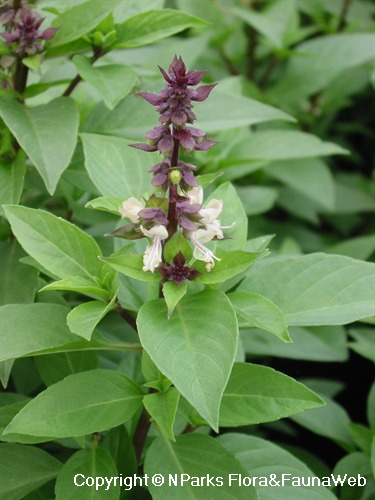
| Flower Colour(s) | White |
|---|
Fruit, Seed and Spore
| Fruit Classification | Simple Fruit |
|---|---|
| Fruit Type | Indehiscent Dry Fruit |
Image Repository
Others
| Master ID | 32281 |
|---|---|
| Species ID | 6689 |
| Flora Disclaimer | The information in this website has been compiled from reliable sources, such as reference works on medicinal plants. It is not a substitute for medical advice or treatment and NParks does not purport to provide any medical advice. Readers should always consult his/her physician before using or consuming a plant for medicinal purposes. |