






Back
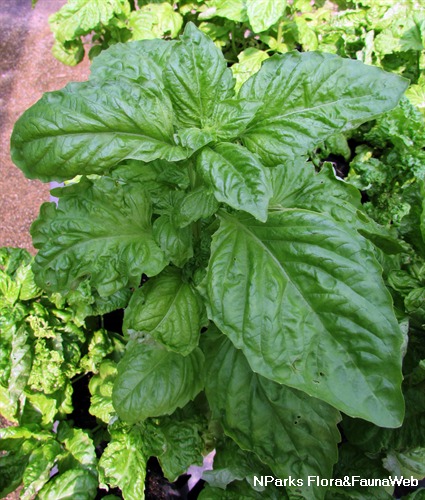
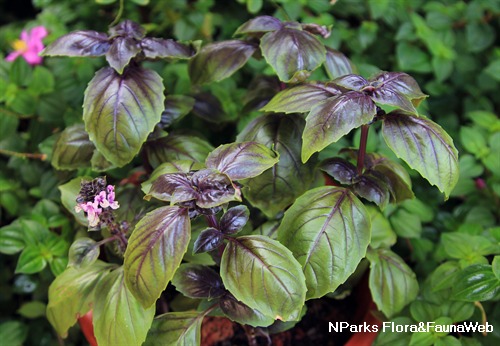
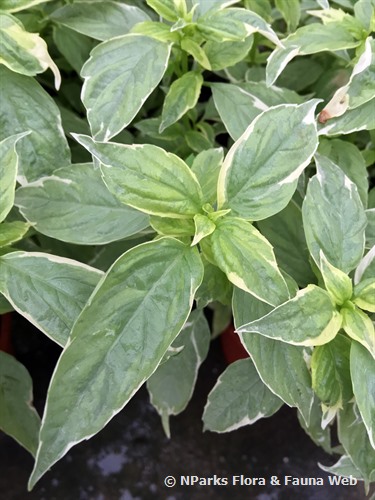
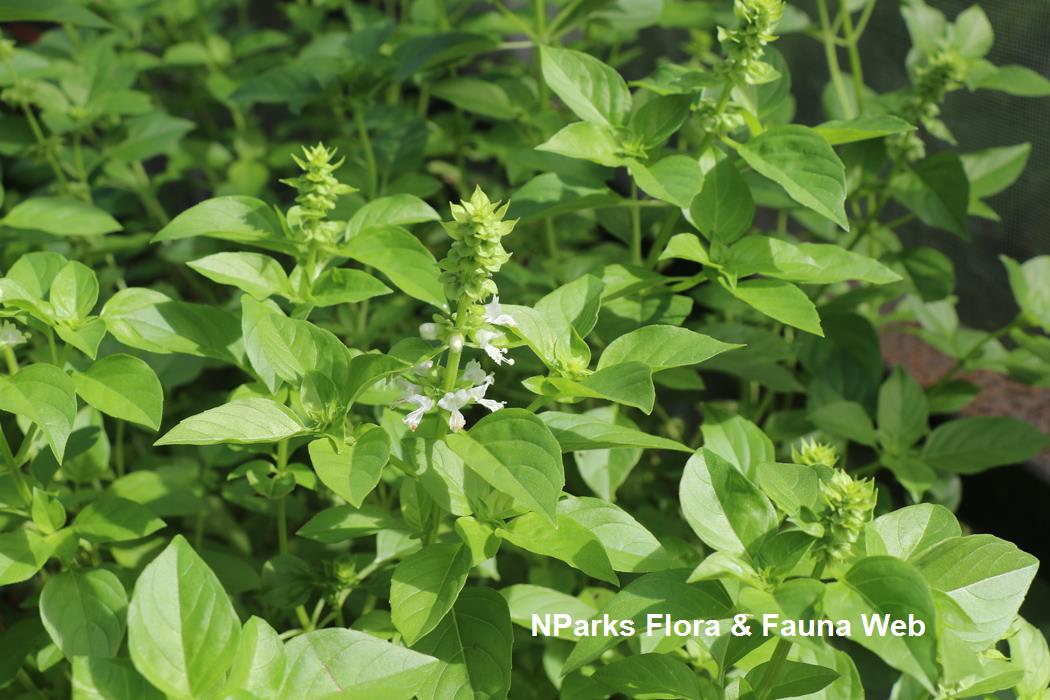
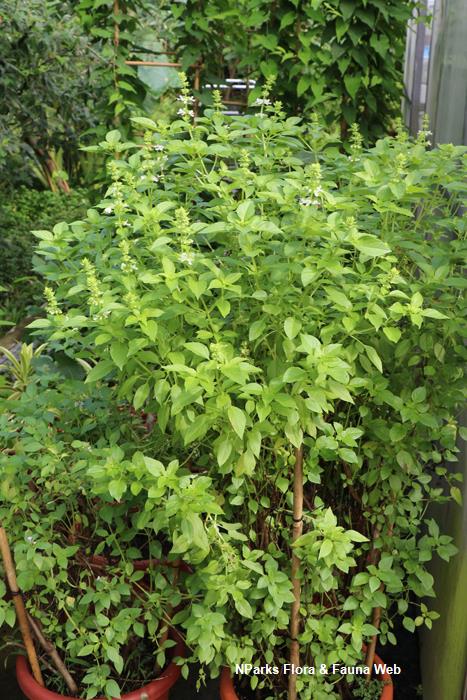
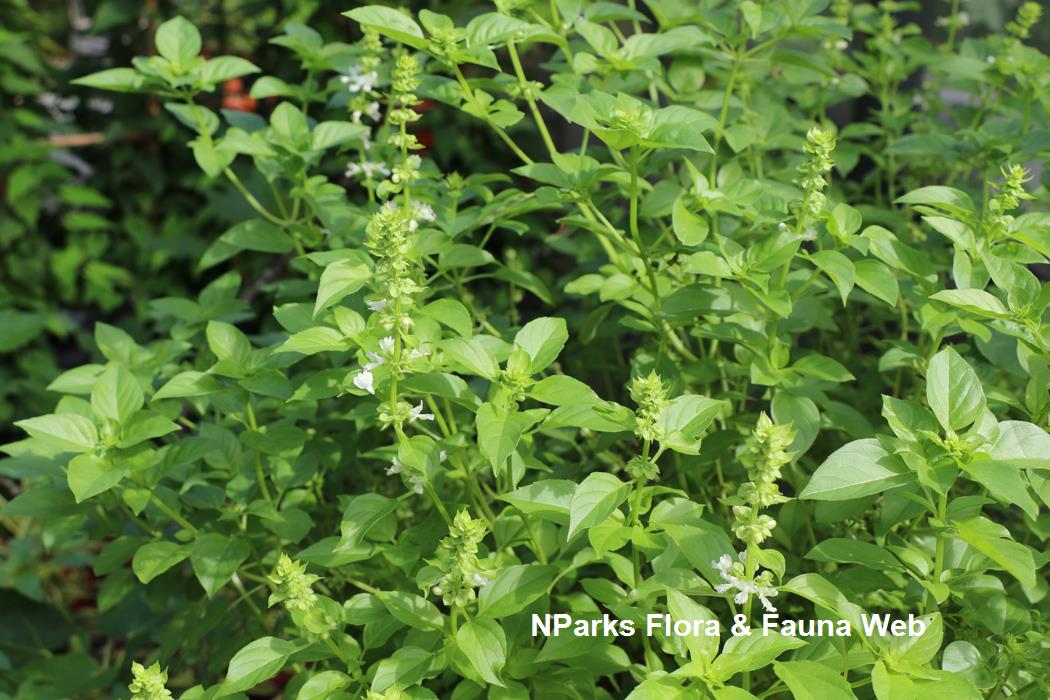
Ocimum basilicum 'Akoko Mesa'
| Family Name: | Lamiaceae (Labiatae) |
| Common Name: | Akoko Mesa Basil |
Akoko Mesa Basil is a variety that originates from Ghana in West Africa. 'Akoko Mesa' means chicken dance in Ghana and it refers to its use as a seasoning for chicken dishes.
Name
Classifications and Characteristics
| Plant Division | Angiosperms (Flowering Seed Plants) (Dicotyledon) |
|---|---|
| Plant Growth Form | Herbaceous Plant |
| Lifespan (in Singapore) | Annual |
| Mode of Nutrition | Autotrophic |
| Plant Shape | Compact |
Description and Ethnobotany
| Growth Form | Compact, herbaceous plant. |
|---|---|
| Foliage | Elliptic leaves are paired in opposite leaf arrangement. |
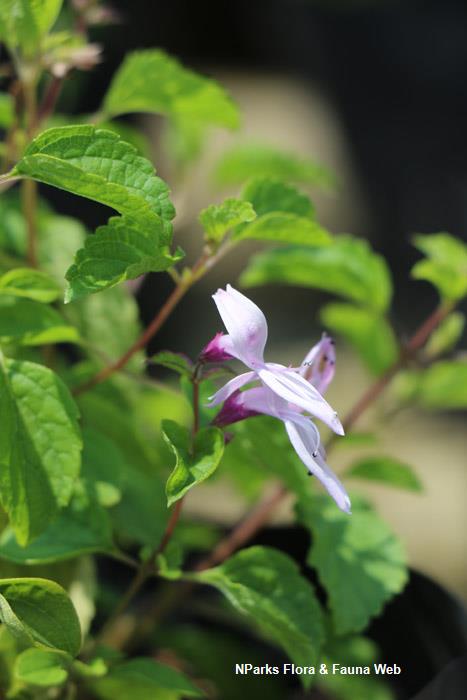
| Flowers | Small, white flowers are arranged in whorls along raceme inflorescences. |
| Fruit | The fruit is a nutlet. |
| Cultivation | It grows best under 8 to 12 hours of full sun per day. It needs well-drained soil that is kept moist but not wet; watering about once a day is usually adequate. Removing the floral stalks as they form will allow you to harvest better-tasting leaves over a longer period of time. |
| Etymology | The cultivar name 'Akoko Mesa' means chicken dance, referring to its use as a seasoning in chicken dishes. |
| Ethnobotanical Uses | Edible Plant Parts : Edible Leaves Food (Herb or Spice) |
Landscaping Features
| Desirable Plant Features | Fragrant (Foliage, Flowers) |
|---|---|
| Landscape Uses | Container Planting, Small Gardens |
| Thematic Landscaping | Economic Garden |
Fauna, Pollination and Dispersal
| Fauna Pollination Dispersal Associated Fauna | Bee-Attracting Plant |
|---|---|
| Pollination Method(s) | Abiotic (Self-Pollinated), Biotic (Fauna) (Insects (Bee)) |
Plant Care and Propagation
| Light Preference | Full Sun |
|---|---|
| Water Preference | Moderate Water |
| Plant Growth Rate | Fast to Moderate |
| Rootzone Tolerance | Fertile Loamy Soils, Well-Drained Soils |
| Fertilizing | It should be fertilised every 1 to 2 months with a balanced fertiliser. |
| Propagation Method | Seed, Stem Cutting (Herbaceous) |
| Planting Distance | 20 cm to 30 cm |
Foliar
| Foliage Retention | Evergreen |
|---|---|
| Mature Foliage Colour(s) | Green |
| Mature Foliage Texture(s) | Smooth |
| Young Flush Texture(s) | Smooth |
| Foliar Type | Simple / Unifoliate |
| Foliar Arrangement Along Stem | Opposite |
| Foliar Attachment to Stem | Petiolate |
| Foliar Shape(s) | Non-Palm Foliage (Elliptical) |
| Foliar Venation | Pinnate / Net |
| Foliar Margin | Crenulate |
| Foliar Apex - Tip | Acute |
| Foliar Base | Acute |
| Typical Foliar Area | Microphyll ( 2.25cm2 - 20.25 cm2 ) |
Floral (Angiosperm)
| Flower & Plant Sexuality | Bisexual Flowers |
| Flower Colour(s) | White |
|---|---|
| Flower Texture(s) | Smooth |
| Flower Grouping | Cluster / Inflorescence |
| Flower Location | Terminal |
| Flower Symmetry | Bilateral |
| Individual Flower Shape | Labiate / Lipped, Tubular |
| Inflorescence Type | Raceme |
Fruit, Seed and Spore
| Fruit Classification | Simple Fruit |
|---|---|
| Fruit Type | Indehiscent Dry Fruit , Nut / Nutlet |
| Seed Quantity Per Fruit | Few (1-5) |
Image Repository
Others
| Master ID | 34369 |
|---|---|
| Species ID | 8782 |
| Flora Disclaimer | The information in this website has been compiled from reliable sources, such as reference works on medicinal plants. It is not a substitute for medical advice or treatment and NParks does not purport to provide any medical advice. Readers should always consult his/her physician before using or consuming a plant for medicinal purposes. |