



Back
Dillenia pulchella (Jack) Gilg
| Family Name: | Dilleniaceae |
| Synonyms: | Wormia pulchella Jack, Dillenia micrantha Martelli, Dillenia parvifolia Martelli |
| Common Name: | Simpoh Paya, Simpoh Ayer, Simpoh Paya Hitam |
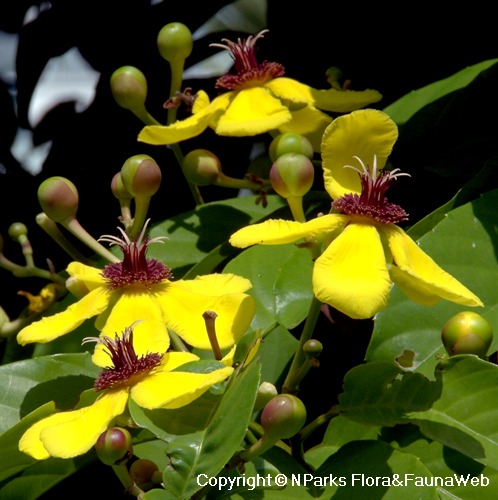
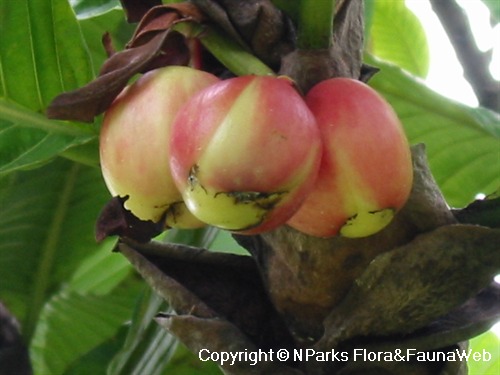
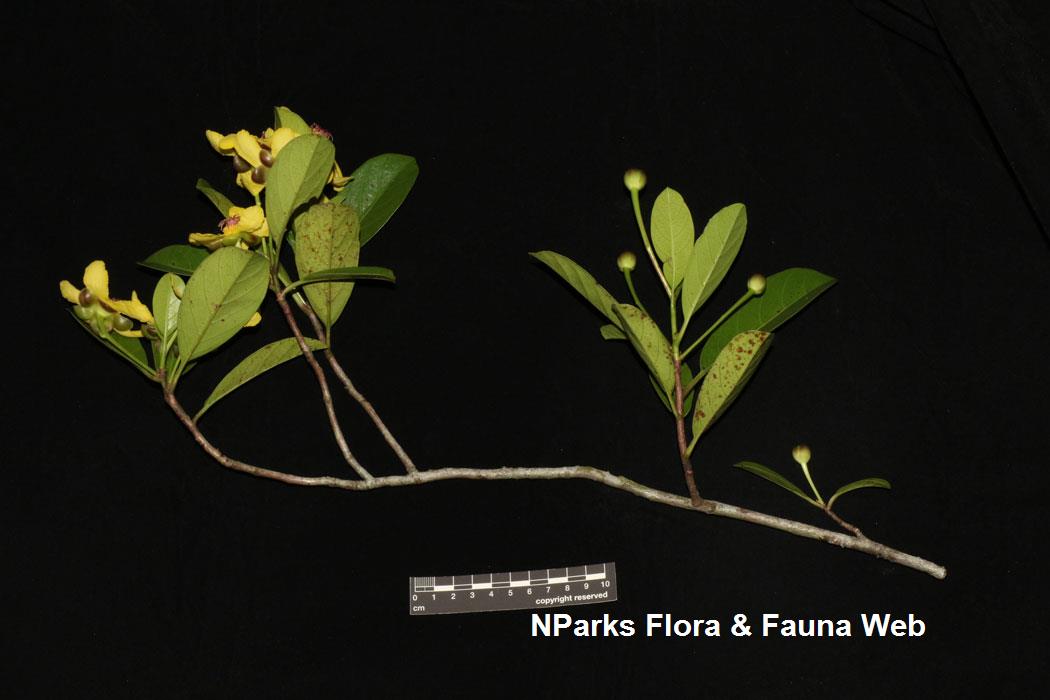
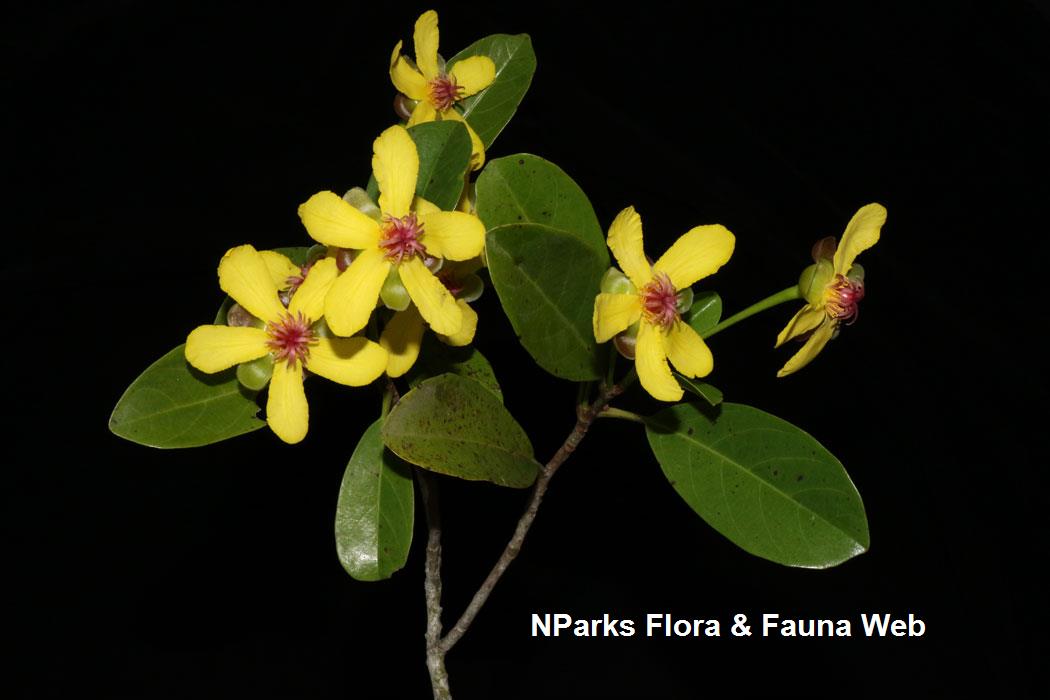
Dillenia pulchella, also known as Simpoh Paya, is a critically endangered tree in Singapore. It can reach up to 40 m tall and produces large yellow flowers. The fruit splits open at maturity, revealing 1 – 2 seeds per carpel, each surrounded by a red, membranous aril.
Name
Classifications and Characteristics
| Plant Division | Angiosperms (Flowering Seed Plants) |
|---|---|
| Plant Growth Form | Tree |
| Lifespan (in Singapore) | Perennial |
| Mode of Nutrition | Autotrophic |
| Maximum Height | 40 m |
Biogeography
| Native Distribution | Peninsular Malaysia, Singapore, Borneo, Sumatra, Riau-Lingga Islands, Banka |
|---|---|
| Native Habitat | Terrestrial (Primary Rainforest, Secondary Rainforest) |
| Preferred Climate Zone | Tropical |
| Local Conservation Status | Native to Singapore (Critically Endangered (CR)) |
Description and Ethnobotany
| Growth Form | It is a tree, up to 40 m tall. |
|---|---|
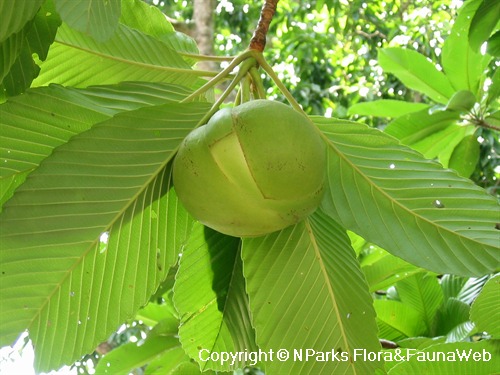
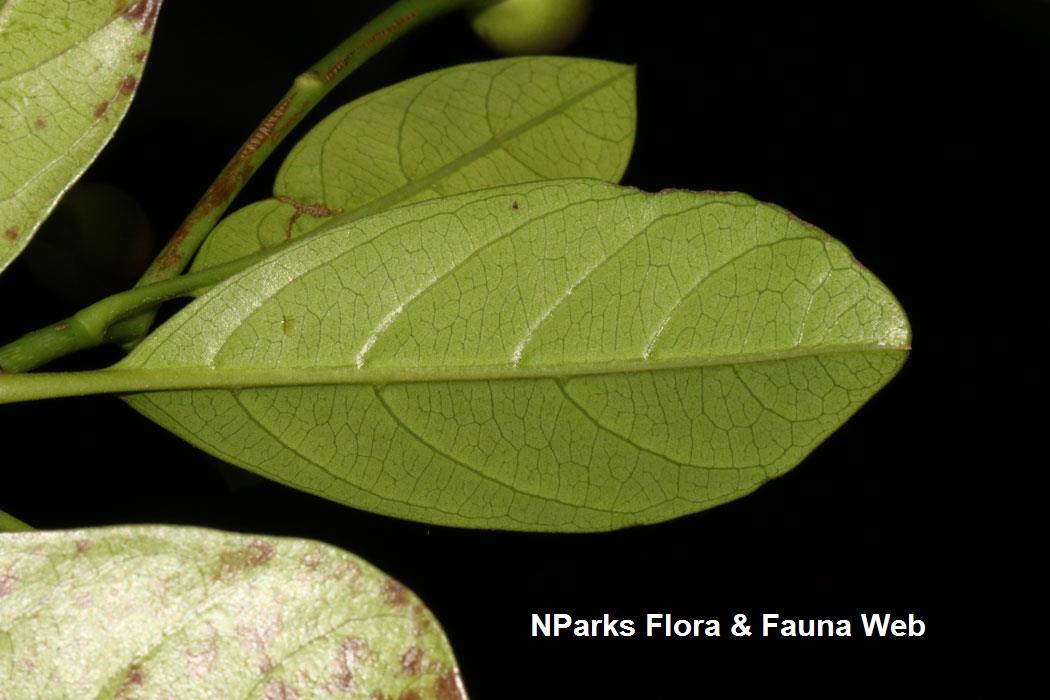
| Foliage | The leaves are elliptic to obovate, measuring 5 – 12 cm long and 3.5 – 6.5 cm wide. They are spirally arranged and leathery (coriaceous). The leaf tip is slightly notched (emarginate) to obtuse while the leaf base is acute and decurrent along the leaf stalk. The leaf margin is entire and each leaf has 4 – 8 pairs of lateral veins. The leaf stalk (petiole) is 1 – 1.5 cm long. Young saplings may have much bigger leaves (up to 35 cm long), 17 pairs of veins and occasionally with toothed margin. |
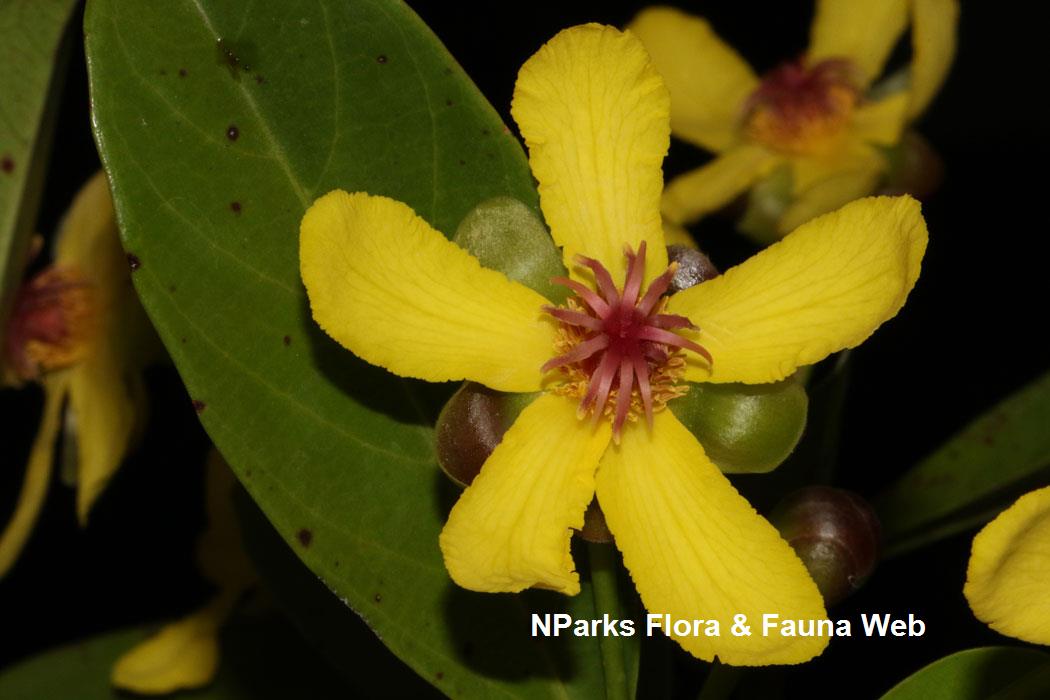
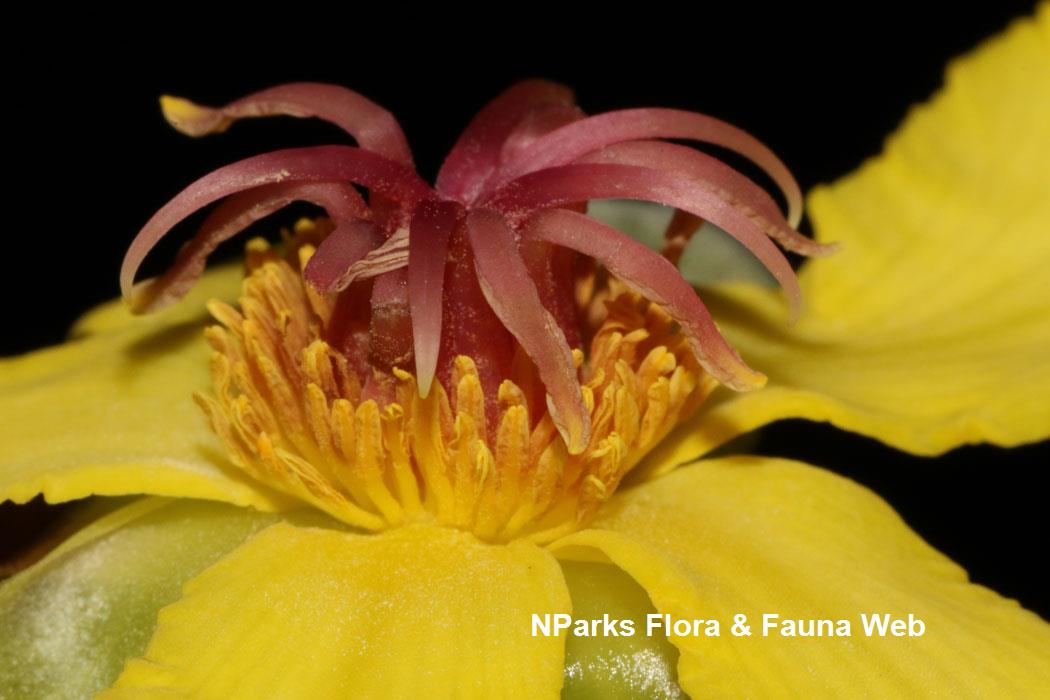
| Flowers | Flowers occur solitarily in the axils, occasionally in clusters of 2 (- 3) at the terminal ends. The flowers are large (about 3.5 cm in diameter) and are borne on flower stalk, measuring 2.5 – 7.5 cm. It comprises of 5 yellow petals and stamens arranged in two distinct rings. The outer ring bears about 110 stamens while the inner ring bears 10 stamens. Stamens of the outer ring are shorter (4 - 4.5 mm long) whereas those of the inner ring are longer (10-11 mm long) and distinctly thicker than those of the outer ring. |
| Fruit | The fruit splits open at maturity. Each carpel contains 1–2 seeds. The seeds are obovoid (about 3 mm long and 2 mm wide) and are surrounded by a red, membranous aril. |
| Habitat | It is found in rainforests, and often on peaty soil. |
| Associated Fauna | Flowers are pollinated by insects. |
| Cultivation | It can be propagated by seed. |
| Etymology | The genus epithet commemorates Johann Jacob Dillenius (1687-1747), Professor of Botany at Oxford University, author of Historia Muscorum and Hortus Elthamensis (Dilleniaceae) and also the first President of the Botanical Society of London. The specific epithet, in Latin, means pretty. |
| Ethnobotanical Uses | Timber & Products: The timber, after treating, is occasionally used for building houses. |
Landscaping Features
| Landscape Uses | Parks & Gardens, Reforestation |
|---|
Fauna, Pollination and Dispersal
| Pollination Method(s) | Biotic (Fauna) |
|---|---|
| Seed or Spore Dispersal | Biotic (Fauna) |
Plant Care and Propagation
| Light Preference | Full Sun |
|---|---|
| Water Preference | Moderate Water |
| Plant Growth Rate | Moderate |
Non - Foliar and Storage
| Root Type | Underground |
|---|
Floral (Angiosperm)
| Flower & Plant Sexuality | Bisexual Flowers |
| Flower Colour(s) | Yellow / Golden |
|---|---|
| Flower Grouping | Solitary |
| Flower Location | Axillary |
| Flower Symmetry | Radial |
| Flowering Period | A Few Times Yearly |
| Flowering Opening Time | Daytime |
References
| References | <1> Hoogland, R.D. (1951). Dilleniaceae. In: van Steenis, C.G.G.J. (ed.) Flora Malesiana, ser. 1, vol. 4 (3), pp. 141-174. Djakarta: Noordhoff-Kolff N.V. |
|---|
Image Repository
Others
| Master ID | 34495 |
|---|---|
| Species ID | 8908 |
| Flora Disclaimer | The information in this website has been compiled from reliable sources, such as reference works on medicinal plants. It is not a substitute for medical advice or treatment and NParks does not purport to provide any medical advice. Readers should always consult his/her physician before using or consuming a plant for medicinal purposes. |