







Back
Trigonachras acuta (Hiern) Radlk.
| Family Name: | Sapindaceae |
| Synonyms: | Cupania acuta Hiern |
| Common Name: | Seremkan |
Name
Classifications and Characteristics
| Plant Division | Angiosperms (Flowering Seed Plants) |
|---|---|
| Plant Growth Form | Tree |
| Lifespan (in Singapore) | Perennial |
| Mode of Nutrition | Autotrophic |
| Maximum Height | 18 m |
Biogeography
| Native Distribution | Sumatra, Peninsular Malaysia, Singapore, and Borneo |
|---|---|
| Native Habitat | Terrestrial |
| Preferred Climate Zone | Tropical |
| Local Conservation Status | Native to Singapore (Critically Endangered (CR)) |
Description and Ethnobotany
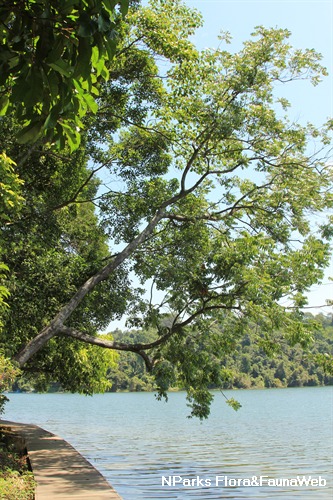
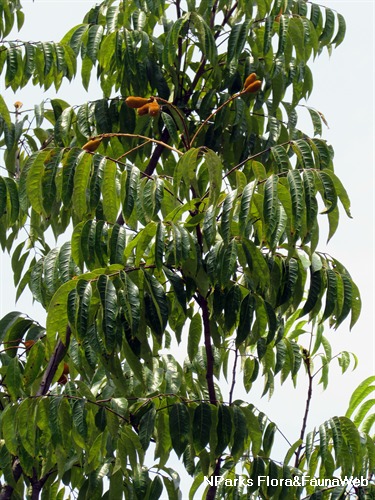
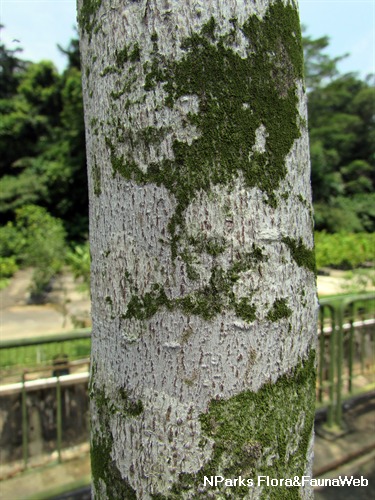
| Growth Form | It is a tree up to 18 m tall. |
|---|---|
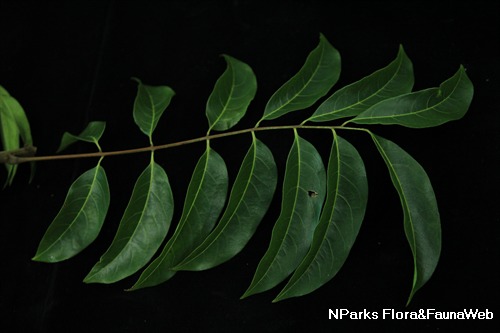
| Foliage | Its alternate, stalked, pinnate leaves are 18–25 cm long, with up to 6 pairs of leaflets. Its almost opposite, stalked leaflets have leaf blades that are glossy, lance-shaped, hairless, and 5–12 by 2–4 cm. |
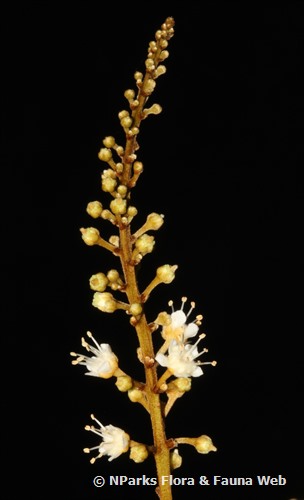
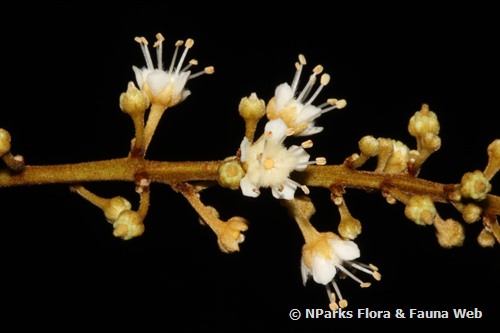
| Flowers | Its erect flowering shoot is 10–12 cm long, with flowers clustered at the tip. Its short-stalked flowers have 5 petals that are covered in hairy scales. |
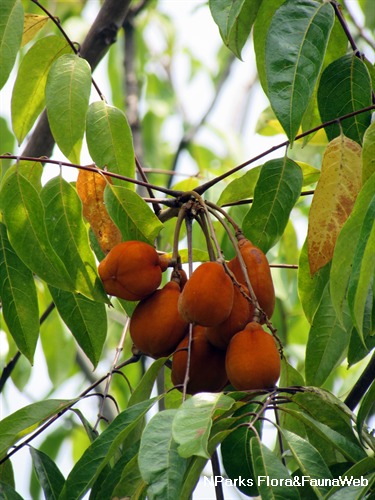
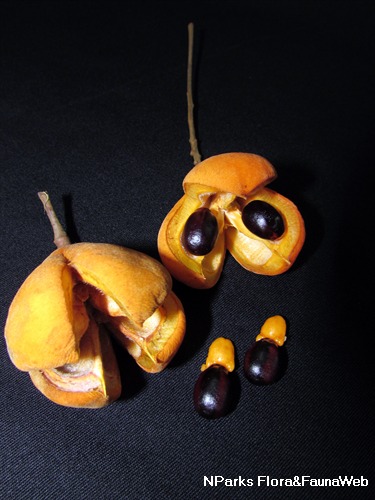
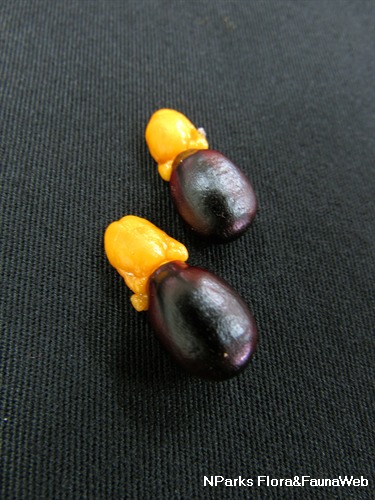
| Fruit | Its pear-shaped fruits are 3-angled, reddish orange when ripe, hairy, and up to 5 cm long, and covered with conical points. They split into 3 parts when ripe to reveal black, shiny seeds that are 1.5 by 1 cm with a white aril. |
| Habitat | It grows in coastal swamp and secondary forests. |
| Associated Fauna | Its flowers are insect-pollinated. |
| Etymology | Greek trigonon, triangle; Greek archras, wild pear, referring to the fruits; Greek acutus, sharp, referring to the leaflet tip |
Landscaping Features
| Landscape Uses | Suitable for Roadsides |
|---|
Plant Care and Propagation
| Light Preference | Full Sun, Semi-Shade |
|---|---|
| Water Preference | Moderate Water |
| Plant Growth Rate | Moderate |
| Propagation Method | Seed |
Foliar
| Mature Foliage Colour(s) | Green |
|---|
Fruit, Seed and Spore
| Mature Fruit Colour(s) | Orange, Red |
|---|
References
| References | Adema, F., P. W. Leenhouts & P.C. van Welzen. 1996. Sapindaceae. Tree Flora of Sabah and Sarawak. 2: 363–365 Yap, S. K.. 1989. Tree Flora of Malaya. 4: 453–454 |
|---|
Image Repository
Others
| Master ID | 30494 |
|---|---|
| Species ID | 4803 |
| Flora Disclaimer | The information in this website has been compiled from reliable sources, such as reference works on medicinal plants. It is not a substitute for medical advice or treatment and NParks does not purport to provide any medical advice. Readers should always consult his/her physician before using or consuming a plant for medicinal purposes. |