
- An organisation structure with clearly defined authority and delegation limits and reporting mechanisms to higher levels of management and to the Board;
- An annual budgeting and quarterly financial reporting system for all operating units that enables progress against annual plans and objectives to be monitored;
- Compliance with the provisions of the National Parks Board Act 1996, Statutory Board Financial Reporting Standards, Government Instruction Manuals, Finance and PSD Circulars and Minutes for policies and procedures related to operations, human resource management and financial controls and regulations; and
- A risk management framework which ensures close monitoring with proper mitigating measures for all identified high-risk areas

Strengthening Governance and Enabling Innovation
Chapter 3
Governance forms the foundation of NParks' sustainability efforts, ensuring accountability, transparency, and ethical conduct across our operations. Our governance practices provide the oversight needed to integrate environmental and social considerations into strategic planning and decision-making. Alongside this, NParks continues to harness digital innovation to enhance operational efficiency, strengthen decision-making, and better manage our parks and natural resources.
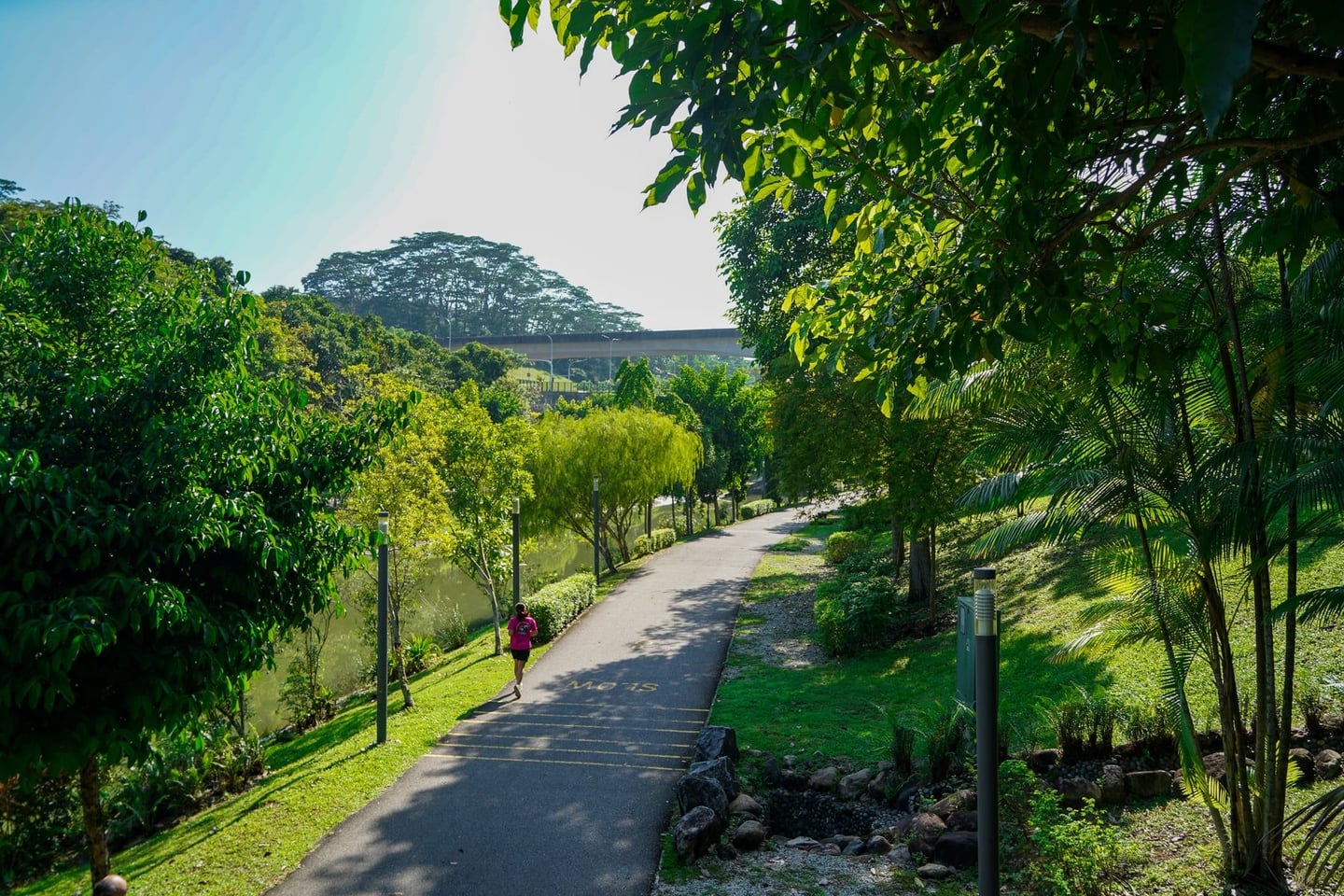
Punggol Waterway ParkMaterial Topic: Good Governance
(GRI 3-3)
Good governance is central to how NParks operates, providing the accountability and oversight structures that guide our decisions and ensure we remain responsive to the needs of our stakeholders.
Our corporate governance framework sets the parameters for how NParks operates, spanning strategy and risk management to day-to-day decision-making. It reflects our commitment to acting with integrity and transparency in service of our mandate to protect and enhance Singapore's greenery and biodiversity, and is fundamental to maintaining the trust of the public, government partners, and communities we serve.
Ethics and Conduct
(GRI 205-2, 205-3)
Grievance and Whistleblowing Mechanisms
(GRI 2-25, 2-26)
NParks is committed to fostering a culture where concerns can be raised openly and safely. We provide clear, secure, and confidential channels for reporting potential misconduct. Internally, a formal whistle-blowing policy allows employees to raise concerns without fear of reprisal, for matters such as workplace disputes or violations of their rights. Outside the organisation, members of public can submit feedback to NParks via the OneService App, or relevant feedback forms on our website.
Every case received is logged and followed through to closure, with clear pathways for escalation to Senior Management and the Board where needed. For workplace matters, our Collective Agreement sets out a structured grievance process that ensures concerns are addressed fairly, consistently, and without fear of reprisal.
There were no confirmed incidents of corruption during the reporting period, and no employees were dismissed or disciplined in relation to such matters.
Sustainable Procurement
Procurement at NParks is guided by the WOG Procurement Policy, which emphasises transparency, fair competition, and optimal value for money. To ensure objectivity, all evaluators are required to declare any conflicts of interest before participating in procurement decisions. When assessing suppliers, we look beyond price, giving weight to sustainability, worker welfare, and safety. Through our tender process, NParks requires suppliers to adopt the National Wages Council's (NWC) recommendations on wage increases, and comply with Progressive Wage Model (PWM) requirements, including Sectoral Progressive Wages and Occupational Progressive Wages. Safety records are taken into account in our operational and construction tenders, with contracts requiring adherence to a safety framework throughout, helping to protect workers and reduce the risk of delays and reputational issues arising from workplace incidents.
Environmental and innovation considerations are embedded in our tender evaluation criteria. Suppliers are assessed on their proposals for using environmentally friendly and innovative materials, increasing sustainability and greenery of operations, improving resource management, and driving innovation in automation and mechanisation. This encourages suppliers to continuously improve their practices and contribute to NParks' sustainability goals. By embedding sustainability criteria into our procurement process, NParks not only advances our environmental and social goals but also reduces operational risk, as suppliers with strong sustainability practices are better placed to deliver services that are consistent, compliant, and uninterrupted.
To ensure our procurement processes remain effective, key indicators such as competition levels and award outcomes are tracked and reported to management each quarter. Annual forums ensure staff remain aligned on procurement standards and our commitments to responsible purchasing.
NParks also strengthened its governance and procurement practices by enhancing verification processes, reinforcing staff capabilities through project and contract management training, and updating term contract provisions. Independent quantity surveyor consultants were also engaged for higher-value projects to strengthen the verification of works and payment claims, enhancing procurement oversight and contract management.
Data Security, Privacy and Data Governance
As a public agency, NParks manages a wide range of data, including personal data from volunteers, partners and members of the public, as well as environmental, geospatial and operational information. Protecting and managing this data responsibly is essential to maintaining public trust and supporting informed decision-making across the organisation.
NParks adopts a risk-based approach to data security, privacy and governance, underpinned by our Security Policy and Data Management Policy. These policies establish clear requirements for data classification, access management, use, retention and sharing of information. Data protection assessments are conducted for new initiatives involving personal data to identify and address privacy risks early, while structured approval processes ensure that data sharing is carried out in accordance with legal, regulatory and security requirements. Building on these foundations, NParks continues to strengthen enterprise data governance through policies, standards and governance forums that promote the responsible use of data across the organisation.
As digital technologies become increasingly embedded in our operations, NParks also continues to enhance governance measures for emerging technologies, including Artificial Intelligence (AI), through appropriate policies, risk assessments and user awareness programmes. These measures help to enable innovation while ensuring that associated risks are appropriately managed.
Should a cybersecurity incident occur, our Incident Management Plan provides a clear framework for a prompt and coordinated response. Annual cybersecurity exercises complement these efforts by testing our readiness, strengthening organisational resilience and ensuring staff remain vigilant against evolving cyber threats.
Yellow Bells (Tecoma stans)Material Topic: Digital Innovation
(GRI 3-3)
- Industry partners: Tools are co-developed and trialled with landscape contractors to ensure practical relevance before scaling, with open tenders prioritising contractors willing to adopt our digitalised greenery management model.
- Public agencies and research institutions: Partnerships with agencies such as GovTech enable NParks to apply AI and emerging technologies to conservation and operational challenges, as seen in initiatives developed through the GovTech Hackathon.
Year in Review
Leveraging Technology for Wildlife and Tree Management
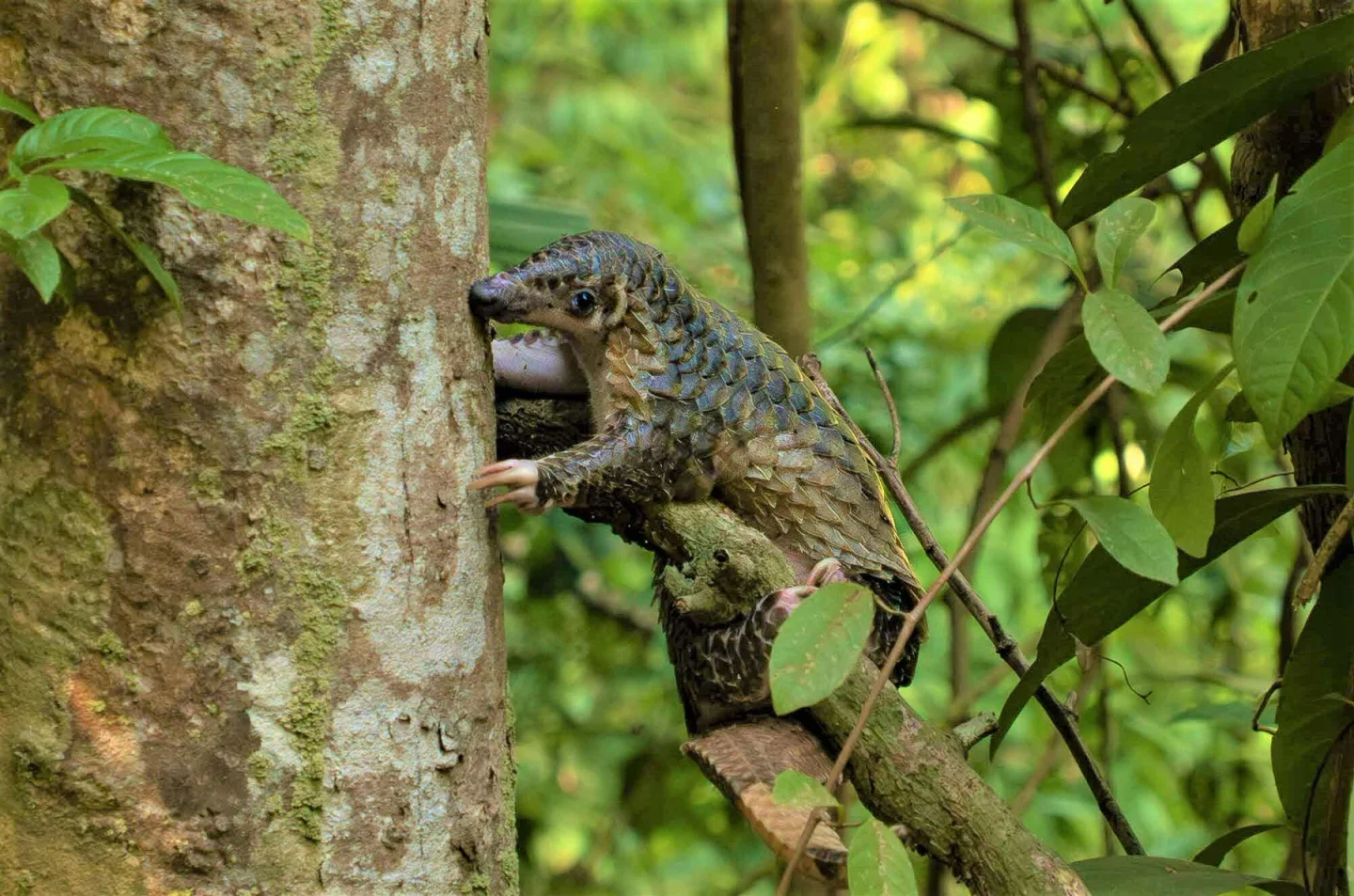
NParks partnered with GovTech to pioneer the use of multi-modal large language models (LLMs) for wildlife monitoring. Traditional AI approaches to processing continuous CCTV footage require large training datasets, a barrier when monitoring rare species such as the critically endangered Sunda Pangolin (Manis javanica). To overcome this, the team developed a prompt-based pipeline that can be deployed without extensive prior data, making it better suited to species where footage is scarce. The innovation has the potential to reduce manhours required for footage processing by 50%, enabling more comprehensive and cost-effective wildlife surveillance.
NParks continues to leverage digital tools developed with the landscape industry, to manage the greenery in our parks and along the streets. Recognising the need for tree management standards focussed on tropical urban environments, NParks, and the Landscape Industry Association (Singapore) (LIAS) representing professionals from the landscape and arboricultural sectors, will develop the first national standard for tree management. This new Code of Practice will provide common standards for tree pruning and industry-recognised best practices in Singapore, raising the overall level of tree care and support the long-term health of our urban trees.
Digitalising Park Operations
NParks is taking significant strides in digitalising park operations through a suite of technology-driven initiatives, such as the Integrated Fault Management System (IFMS) and the AI-enabled Defect Management System (DAMS). The IFMS leverages the Internet of Things (IoT) sensors, QR codes, mobile reporting, and computer vision to enable real-time monitoring, automatic fault detection, and streamlined maintenance workflows of the parks’ cleansing, greenery, mechanical as well as electrical assets.
Complementing this, the Defect Management System utilises mobile video and computer vision to identify structural defects and improve inspection consistency. Such technologies, combined with use of robotics and remote inspection trials in complex hilly terrain, enable staff to reprioritise time to higher value work while still ensuring a consistent high-quality experience for park visitors.
Sunda Pangolin (Manis javanica)Due to its shy, nocturnal nature, camera traps are needed to observe the Sunda Pangolin in its habitat.