



Back
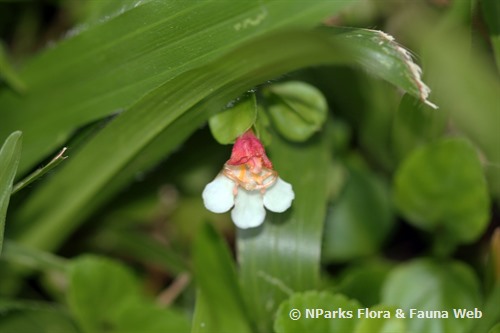
Legazpia polygonoides Benth. (Yamazaki)
| Family Name: | Linderniaceae |
| Synonyms: | Torenia polygonoides Benth. |
| Common Name: | Kerak Nasi, Malayan Eyebright |
Name
Classifications and Characteristics
| Plant Division | Angiosperms (Flowering Seed Plants) |
|---|---|
| Plant Growth Form | Shrub |
| Mode of Nutrition | Autotrophic |
Biogeography
| Native Distribution | Myanmar, Indonesia, Malaysia and Philippines. |
|---|---|
| Native Habitat | Terrestrial |
| Preferred Climate Zone | Tropical |
Description and Ethnobotany
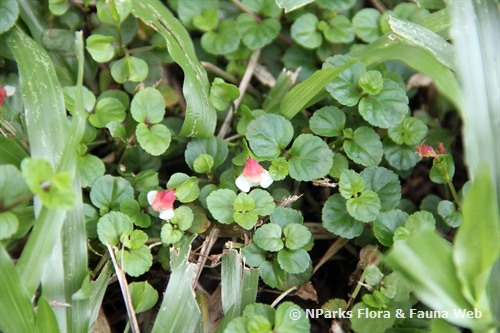
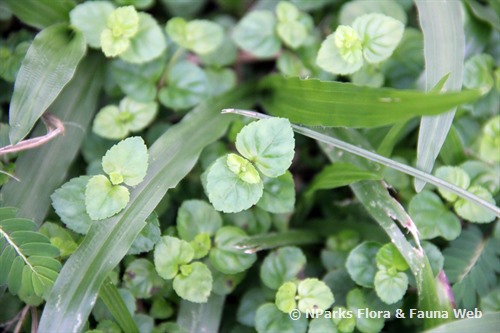
| Growth Form | A creeping herb. |
|---|---|
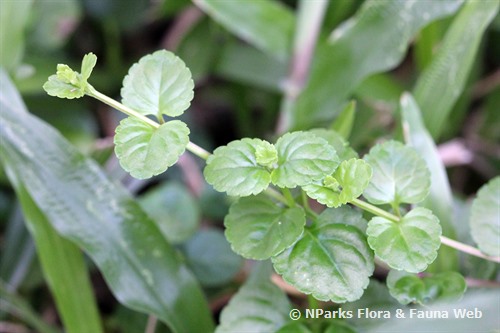
| Foliage | Petiole 0.5 - 0.8 mm, leaf blade ovate-elliptical or ovate-rhomboid shaped, measuring 1 - 2 cm, papery, glabrous, margin crenate to serrate. |
| Stems | Slender branches. |
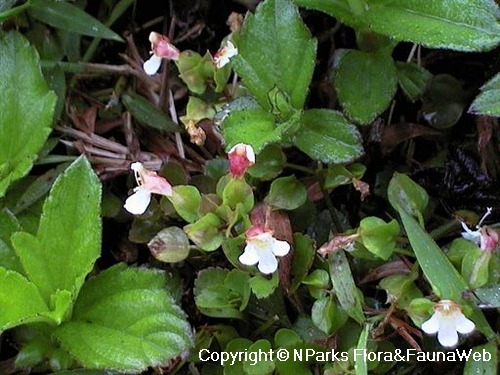
| Flowers | Inflorescence with 1 - 4 flowers, flowers freely, peduncle measuring 0.5 - 1.5 cm, corolla white to purple blue. |
| Fruit | Fruits capsule, oblong-ovoid shaped, measuring around 8 mm in diameter. |
| Habitat | Commonly found on shady and wet places of the mountain valleys. |
| Etymology | The genus Legazpia is named after Miguel Lopez de Legazpi, a Spanish conquistador of East Indies and Pacific Islands. The specific epithet polygonoides means resembling Polygonum. |
Landscaping Features
| Desirable Plant Features | Ornamental Flowers |
|---|
Plant Care and Propagation
| Light Preference | Semi-Shade, Full Sun |
|---|---|
| Water Preference | Lots of Water |
| Rootzone Tolerance | Moist Soils |
| Potential Problems | Chewing pests such as grasshoppers. |
| Propagation Method | Stem Cutting |
Foliar
| Mature Foliage Colour(s) | Green |
|---|---|
| Leaf Area Index (LAI) for Green Plot Ratio | 4.5 (Shrub & Groundcover - Dicot) |
Floral (Angiosperm)
| Flower Colour(s) | White |
|---|
Image Repository
Others
| Master ID | 1225 |
|---|---|
| Species ID | 2518 |
| Flora Disclaimer | The information in this website has been compiled from reliable sources, such as reference works on medicinal plants. It is not a substitute for medical advice or treatment and NParks does not purport to provide any medical advice. Readers should always consult his/her physician before using or consuming a plant for medicinal purposes. |