



Back
Tabebuia heterophylla (DC.) Britton
| Family Name: | Bignoniaceae |
| Synonyms: | Tabebuia pallida subsp. heterophylla (DC.) Stehlé, Raputia heterophylla DC. |
| Common Name: | Whitewood, Roble |
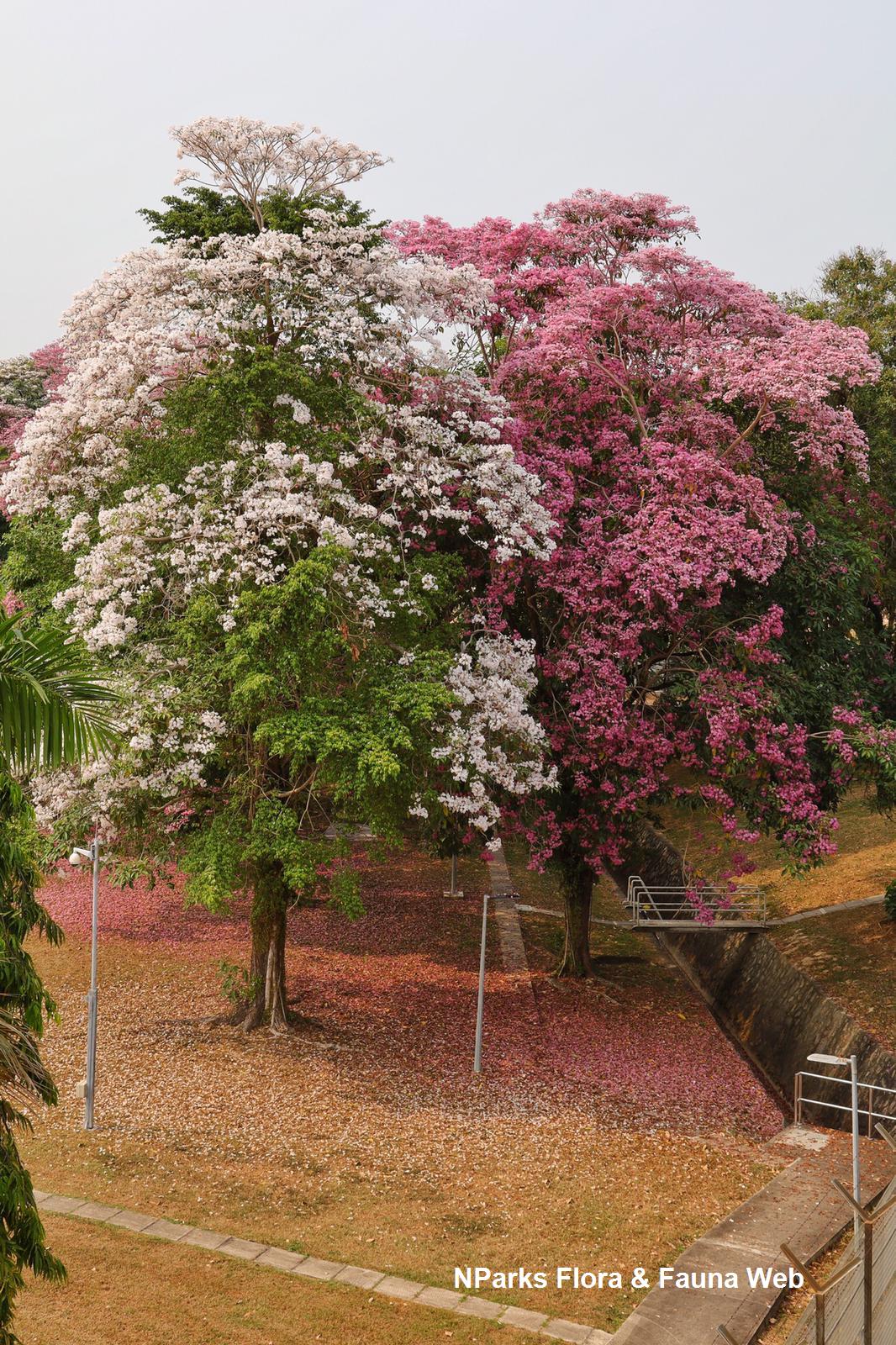
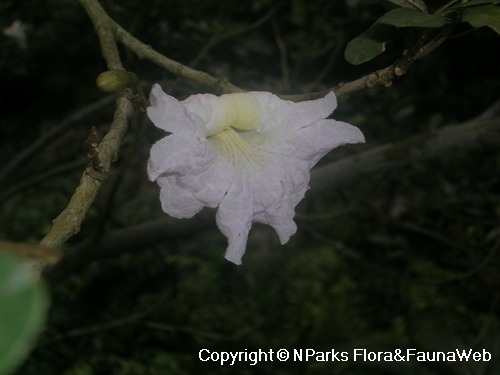
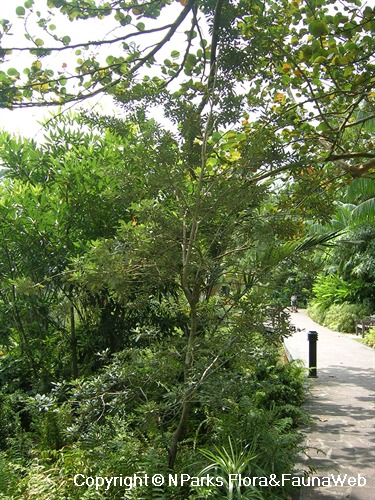
Tabebuia heterophylla , also known as Whitewood, is a tree that can reach up to 20 m tall. It produces large, tubular flowers varying in colour from lavender or pale magenta to almost white. The timber is used for flooring, mortars, wooden bowls and dugout canoe.
Name
Classifications and Characteristics
| Plant Division | Angiosperms (Flowering Seed Plants) (Dicotyledon) |
|---|---|
| Plant Growth Form | Tree (Small (6m-15m)) |
| Lifespan (in Singapore) | Perennial |
| Mode of Nutrition | Autotrophic |
| Maximum Height | 20 m |
Biogeography
| Native Distribution | Throughout the Antilles |
|---|---|
| Native Habitat | Terrestrial (Secondary Rainforest, Coastal Forest) |
| Preferred Climate Zone | Tropical |
| Local Conservation Status | Non-native |
Description and Ethnobotany
| Growth Form | It is a tree, up to 20 m tall. |
|---|---|
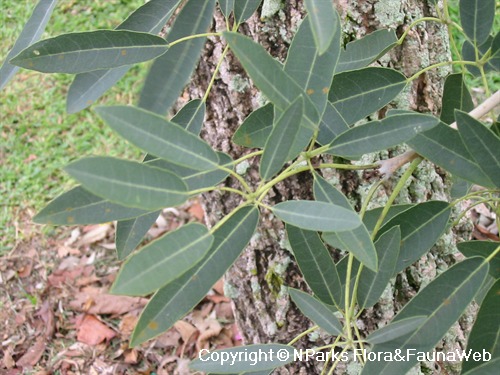
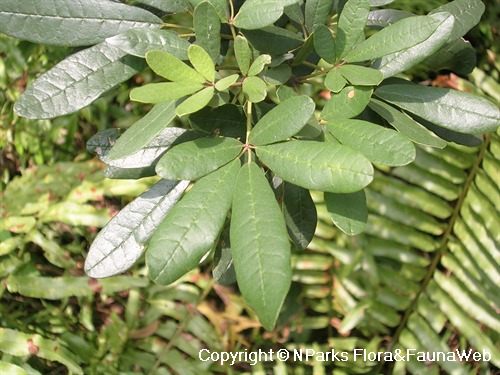
| Foliage | The leaves are compound, with 3–5 leaflets, but may also be unifoliolate. The leaflets are highly variable in size, shape, and texture. The terminal leaflet is usually obovate or obovate-elliptic, while the lateral leaflets are usually elliptic or oblong-elliptic. The leaflets are densely covered with whitish lepidote scales on both the upper and lower surfaces, with a few scattered reddish scales sometimes present on the underside. The leaf stalk (petiole) measures 0.5–8 (–14) cm long and bears lepidote scales. |
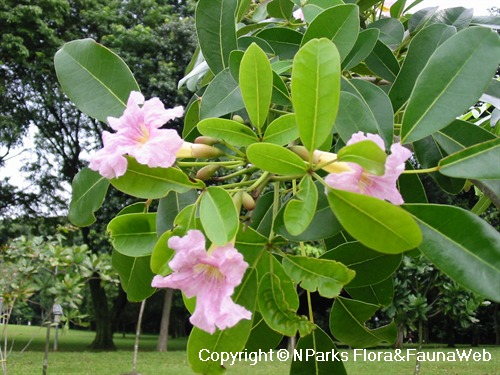
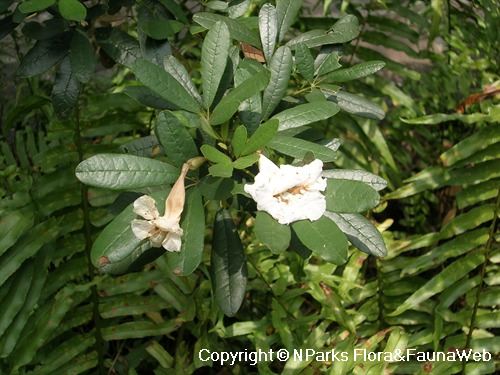
| Flowers | The flowers occur in a branched cluster (panicle) at the terminal position. Each flower is tubular (3.5 – 7 cm long), and is lavender or pale magenta to almost white. The flower throat is yellow when fresh and fades to white over time. The inner surface of the flower lobes is hairy. |
| Fruit | The fruit is woody, capsular and linear-cylindric, measuring about 7 – 20 cm long and 0.6 - 1 cm wide. It splits open at maturity to reveal winged seeds inside. |
| Habitat | It is found in coastal woodlands and secondary forests, up to 1000 m altitude. |
| Associated Fauna | Flowers are pollinated by insects. |
| Cultivation | It can be propagated by seed. |
| Etymology | The specific epithet, in Latin, means leaves with different shapes, possibly referring to its leaflets which are highly variable in size, shape and texture. |
| Ethnobotanical Uses | Timber & Products: The timber is used for flooring, mortars, wooden bowls and dugout canoes. |
Landscaping Features
| Desirable Plant Features | Ornamental Flowers |
|---|---|
| Landscape Uses | Parks & Gardens |
Fauna, Pollination and Dispersal
| Pollination Method(s) | Biotic (Fauna) |
|---|---|
| Seed or Spore Dispersal | Abiotic |
Plant Care and Propagation
| Light Preference | Full Sun |
|---|---|
| Water Preference | Moderate Water |
| Plant Growth Rate | Moderate |
Foliar
| Mature Foliage Colour(s) | Green |
|---|---|
| Foliar Type | Compound |
| Foliar Attachment to Stem | Petiolate |
| Leaf Area Index (LAI) for Green Plot Ratio | 3.0 (Tree - Intermediate Canopy) |
Non - Foliar and Storage
| Trunk Type (Non Palm) | Woody |
|---|---|
| Root Type | Underground |
Floral (Angiosperm)
| Flower Colour(s) | White |
|---|
Fruit, Seed and Spore
| Fruit Type | Dehiscent Dry Fruit , Capsule |
References
| References | Gentry, A.H. (1992) Bignoniaceae. Part II (Tribe Tecomeae). Flora Neotropica Monograph, 25(2), 1-370. |
|---|
Image Repository
Others
| Master ID | 1877 |
|---|---|
| Species ID | 3170 |
| Flora Disclaimer | The information in this website has been compiled from reliable sources, such as reference works on medicinal plants. It is not a substitute for medical advice or treatment and NParks does not purport to provide any medical advice. Readers should always consult his/her physician before using or consuming a plant for medicinal purposes. |