







Name
Classifications and Characteristics
| Plant Division | Angiosperms (Flowering Seed Plants) (Dicotyledon) |
|---|---|
| Plant Growth Form | Shrub |
| Lifespan (in Singapore) | Perennial |
| Mode of Nutrition | Autotrophic |
| Plant Shape | Compact |
Biogeography
| Native Habitat | Terrestrial |
|---|---|
| Local Conservation Status | Non-native (Horticultural / Cultivated Only) |
Description and Ethnobotany
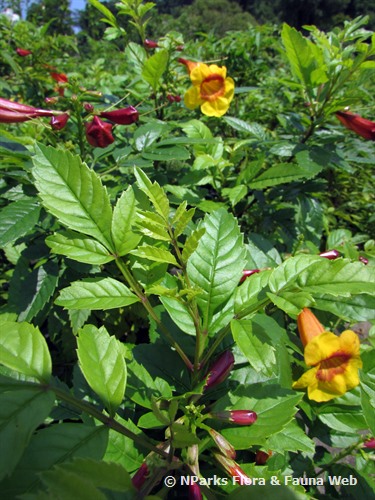
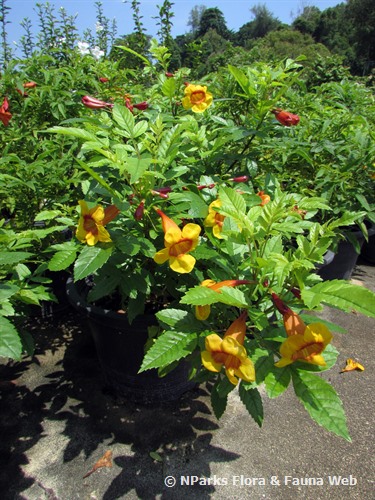
| Growth Form | A shrub growing upright and has compact growth habit, up to 1.8 m tall and 1 m wide. |
|---|---|
| Roots | Tap root. |
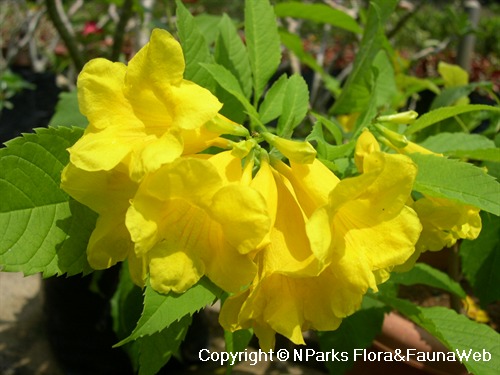
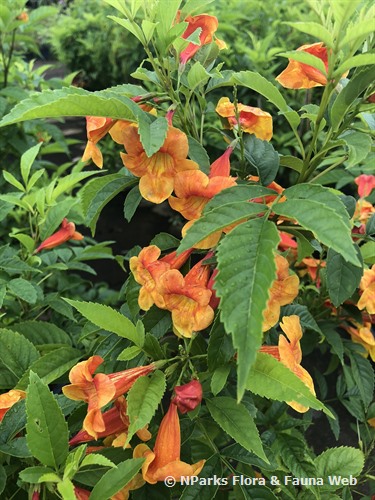
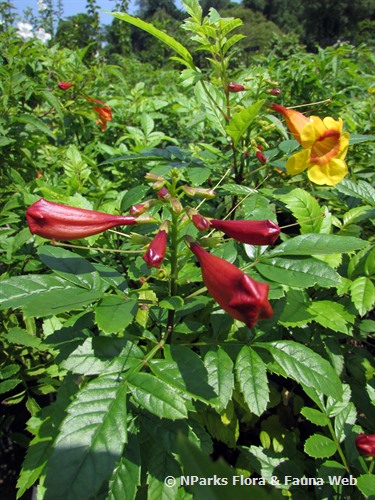
| Foliage | Compound pinnate (odd-pinnate), glossy dark green leaves with serrated or toothed margin. |
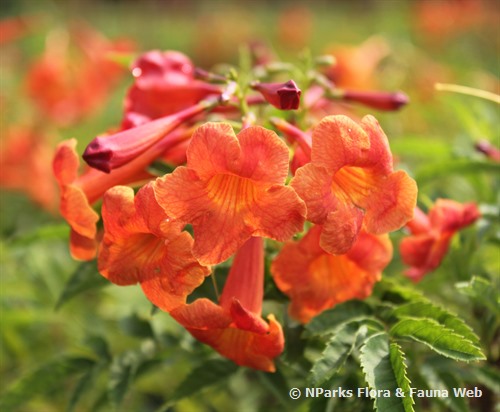
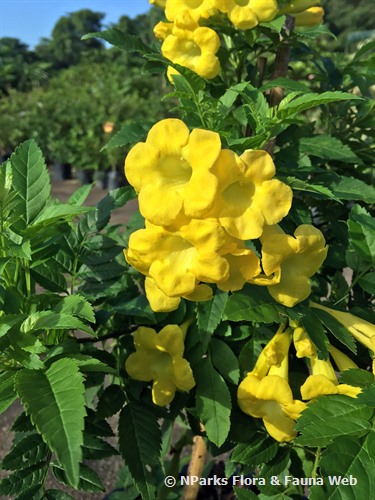
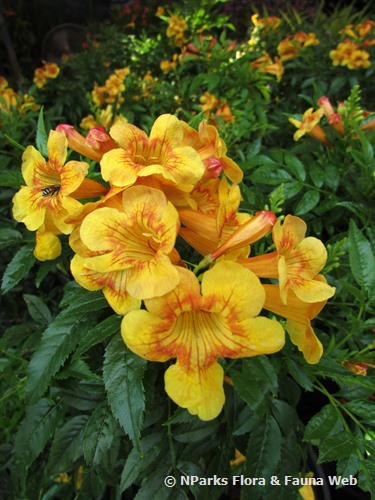
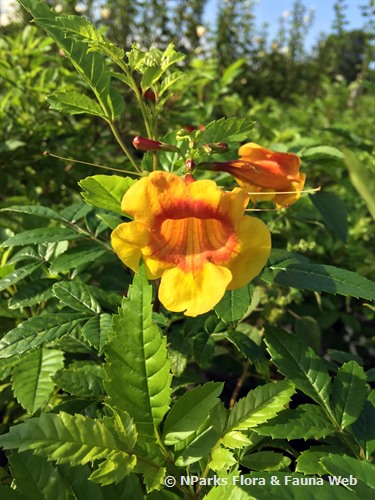
| Flowers | Large and showy, apricot yellow trumpet-shaped flowers with reddish-orange throats. Flower when in bloom is about 5 cm in diameter. |
| Fruit | Plant is almost sterile, and produces very few seeds. |
| Others - Plant Morphology | The cultivar is named after the Arizona State University mascot, hybridized by an ASU faculty member, George Hull in 2012. |
| Cultivation | Plant in a well-drained soil. If plant in containers, ensure there is excellent drainage. Plant requires very little water once established. |
| Etymology | The genus Tecoma is taken from the Mexican name tecomaxochitl. |
Landscaping Features
| Desirable Plant Features | Ornamental Flowers |
|---|---|
| Landscape Uses | General, Suitable for Roadsides, Parks & Gardens, Focal Plant, Container Planting |
| Thematic Landscaping | Bird & Wildlife Garden |
Fauna, Pollination and Dispersal
| Fauna Pollination Dispersal Associated Fauna | Bird-Attracting Plant |
|---|---|
| Pollination Method(s) | Biotic (Fauna) (Insects (Bee), Vertebrates (Bird)) |
Plant Care and Propagation
| Light Preference | Full Sun |
|---|---|
| Water Preference | Moderate Water, Little Water |
| Plant Growth Rate | Moderate |
| Rootzone Tolerance | Drought Tolerant, Moist Soils, Well-Drained Soils |
| Maintenance Requirements | Moderate |
| Potential Problems | Generally not affected by pest or disease, however can be infested with whiteflies and spidermites. |
| Pest(s) | Sucking Insects |
| Propagation Method | Stem Cutting |
Foliar
| Foliage Retention | Evergreen |
|---|---|
| Mature Foliage Colour(s) | Green |
| Mature Foliage Texture(s) | Glossy / Shiny |
| Prominent Young Flush Colour(s) | Green |
| Young Flush Texture(s) | Glossy / Shiny |
| Foliar Type | Compound |
| Foliar Arrangement Along Stem | Opposite |
| Foliar Attachment to Stem | Petiolate |
| Foliar Shape(s) | Non-Palm Foliage |
| Foliar Venation | Pinnate / Net |
| Foliar Margin | Serrate / Toothed |
| Foliar Apex - Tip | Acute |
Non - Foliar and Storage
| Stem Type & Modification | Woody |
|---|---|
| Root Type | Underground (Tap Root) |
Floral (Angiosperm)
| Flower & Plant Sexuality | Bisexual Flowers |
| Flower Colour(s) | Orange, Yellow / Golden |
|---|---|
| Flower Texture(s) | Smooth |
| Flower Grouping | Cluster / Inflorescence |
| Flower Location | Axillary |
| Flower Symmetry | Bilateral |
| Individual Flower Shape | Trumpet-shaped |
| Inflorescence Type | Raceme |
| Flowering Period | Free-Flowering |
Image Repository
Others
| Master ID | 31141 |
|---|---|
| Species ID | 5532 |
| Flora Disclaimer | The information in this website has been compiled from reliable sources, such as reference works on medicinal plants. It is not a substitute for medical advice or treatment and NParks does not purport to provide any medical advice. Readers should always consult his/her physician before using or consuming a plant for medicinal purposes. |