





Back
Glebionis coronaria (L.) Cass. ex Spach
| Family Name: | Asteraceae (Compositae) |
| Common Name: | Tang Orh, Garland Chrysanthemum, Tang Oh, Crown Daisy, 茼蒿 (tong hao) |
Name
Classifications and Characteristics
| Plant Division | Angiosperms (Flowering Seed Plants) (Dicotyledon) |
|---|---|
| Plant Growth Form | Herbaceous Plant |
| Lifespan (in Singapore) | Annual |
| Mode of Nutrition | Autotrophic |
| Maximum Height | 0.7 m |
Description and Ethnobotany
| Growth Form | Annual herb up to 0.7 m tall. |
|---|---|
| Cultivation | Harvest the leaves before flowering, as they quickly wither after flowering. Remove the immature inflorescence stalk to prolong the harvest period. |
| Ethnobotanical Uses | Edible Plant Parts : Edible Leaves, Edible Stems Food (Fruit or Vegetable): Young shoots and leaves are often cooked in Chinese soups. It is especially popular for steamboat dinners held during Chinese New Year. |
Plant Care and Propagation
| Light Preference | Full Sun, Semi-Shade |
|---|---|
| Water Preference | Moderate Water |
| Plant Growth Rate | Fast |
| Rootzone Tolerance | Moist Soils, Well-Drained Soils, Fertile Loamy Soils |
Foliar
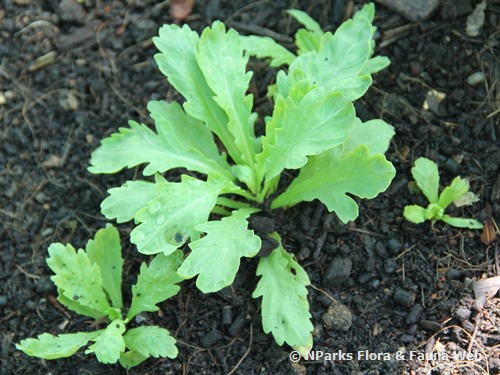
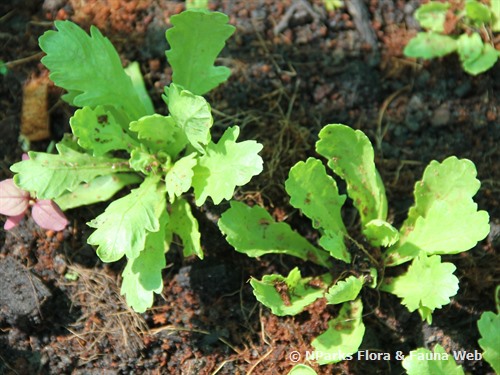
| Mature Foliage Colour(s) | Green |
|---|---|
| Mature Foliage Texture(s) | Smooth |
| Prominent Young Flush Colour(s) | Green |
| Young Flush Texture(s) | Smooth |
| Foliar Type | Simple / Unifoliate |
| Foliar Arrangement Along Stem | Rosulate / Rosette |
| Foliar Shape(s) | Non-Palm Foliage (Lanceolate, Elliptical) |
| Foliar Venation | Pinnate / Net |
| Foliar Margin | Scalloped |
| Foliar Apex - Tip | Rounded |
| Foliar Base | Cuneate |
Floral (Angiosperm)
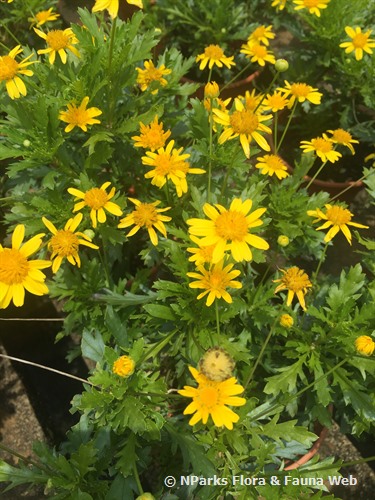
| Flower Colour(s) | Yellow / Golden |
|---|---|
| Flower Texture(s) | Smooth |
| Flower Grouping | Cluster / Inflorescence |
| Inflorescence Type | Compound Head / Capitulum |
Fruit, Seed and Spore
| Fruit Classification | Simple Fruit |
|---|---|
| Fruit Type | Indehiscent Dry Fruit |
Image Repository
Others
| Master ID | 33682 |
|---|---|
| Species ID | 8096 |
| Flora Disclaimer | The information in this website has been compiled from reliable sources, such as reference works on medicinal plants. It is not a substitute for medical advice or treatment and NParks does not purport to provide any medical advice. Readers should always consult his/her physician before using or consuming a plant for medicinal purposes. |