


Back
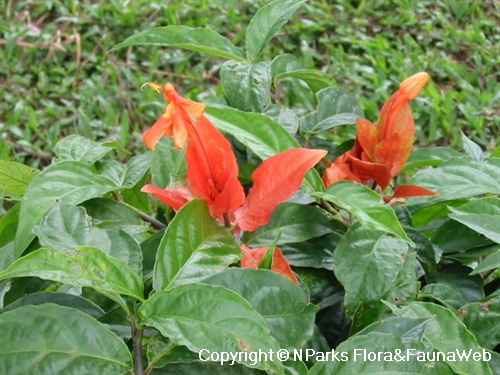
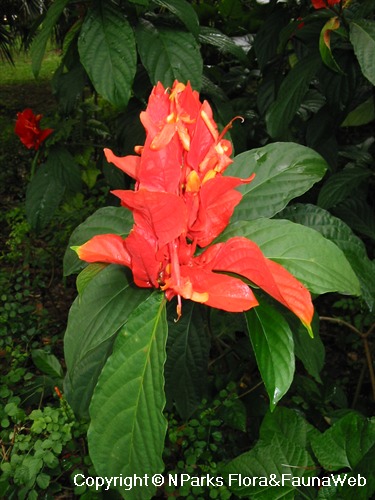
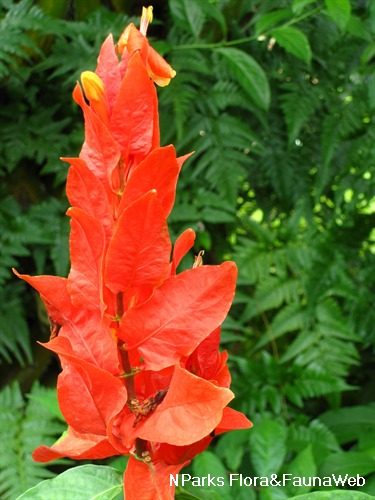
Ruellia chartacea (T.Anderson) Wassh.
| Family Name: | Acanthaceae |
| Synonyms: | Ruellia colorata Baill |
| Common Name: | Peruvian Wild Petunia, Red Shrimp Plant |
Name
Classifications and Characteristics
| Plant Division | Angiosperms (Flowering Seed Plants) |
|---|---|
| Plant Growth Form | Herbaceous Plant |
| Mode of Nutrition | Autotrophic |
Biogeography
| Native Distribution | Ecuador, Colombia, Brazil and Peru |
|---|---|
| Native Habitat | Terrestrial |
| Preferred Climate Zone | Tropical |
| Local Conservation Status | Non-native |
Description and Ethnobotany
| Growth Form | Herbaceous plant, able to grow up to about 1 - 2 m tall and 0.9 - 1.2 m wide. |
|---|---|
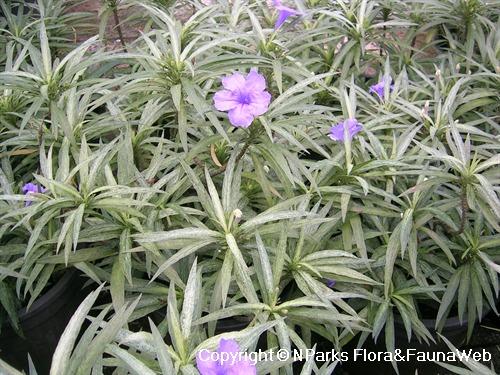
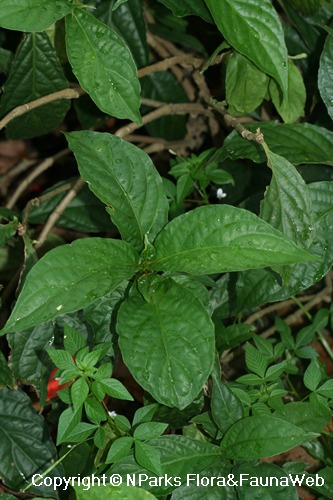
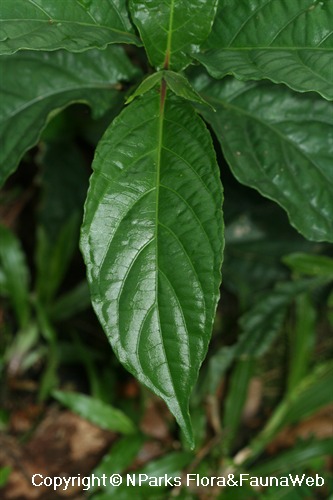
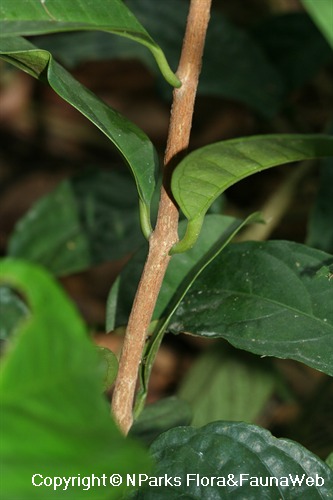
| Foliage | Elliptic leaves, dark green, broad and in opposite arrangement, measuring about 15 - 18 cm long by 6 - 8 cm wide. |
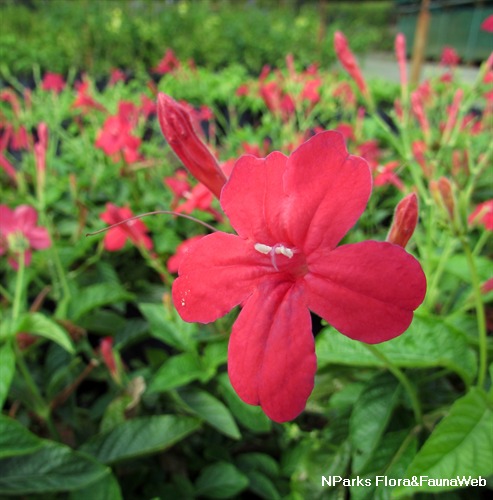
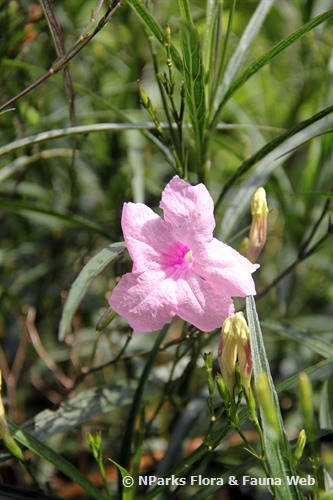
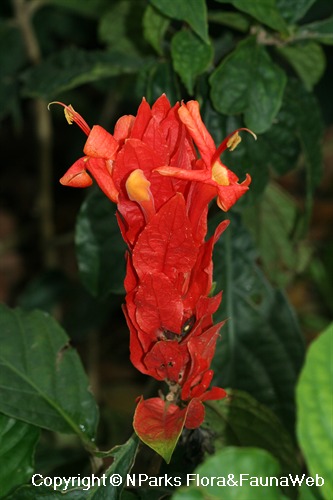
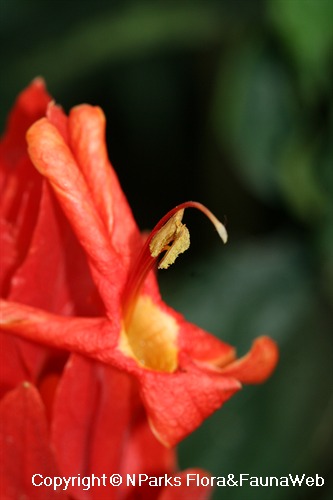
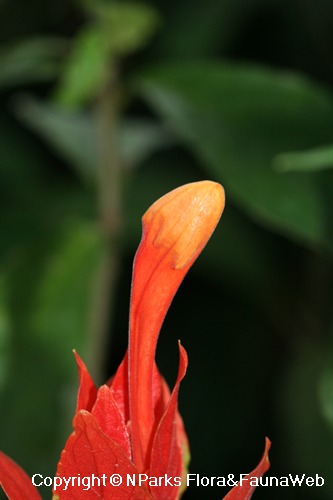
| Flowers | Flowers are in a terminal inflorescence, bright red bracts, measuring up to 10 cm long. |
| Etymology | Genus Ruellia is named after John de la Ruelle of Soissons, who is the author of De natura plantarum (1536). Species chartacea refers to the papery or parchment-like characteristic of the plant's bracts. |
Landscaping Features
| Desirable Plant Features | Ornamental Flowers |
|---|---|
| Landscape Uses | Parks & Gardens, Small Gardens |
Plant Care and Propagation
| Light Preference | Semi-Shade |
|---|---|
| Water Preference | Moderate Water |
| Rootzone Tolerance | Moist Soils, Well-Drained Soils |
| Propagation Method | Seed, Stem Cutting |
Foliar
| Foliage Retention | Evergreen |
|---|---|
| Mature Foliage Colour(s) | Green |
| Leaf Area Index (LAI) for Green Plot Ratio | 4.5 (Shrub & Groundcover - Dicot) |
Floral (Angiosperm)
| Flower Colour(s) | Orange, Red |
|---|---|
| Flower Grouping | Cluster / Inflorescence |
Image Repository
Others
| Master ID | 202 |
|---|---|
| Species ID | 1498 |
| Flora Disclaimer | The information in this website has been compiled from reliable sources, such as reference works on medicinal plants. It is not a substitute for medical advice or treatment and NParks does not purport to provide any medical advice. Readers should always consult his/her physician before using or consuming a plant for medicinal purposes. |
.jpg)