








Back
Cyperus papyrus L.
| Family Name: | Cyperaceae |
| Common Name: | Bulrush, Paper Plant, Papyrus, Paper Reed, Egyptian Paper Plant |
Name
Classifications and Characteristics
| Plant Division | Angiosperms (Flowering Seed Plants) (Monocotyledon) |
|---|---|
| Plant Growth Form | Grass or Grass-like Plant (Sedge (Cyperaceae)) |
| Lifespan (in Singapore) | Perennial |
| Mode of Nutrition | Autotrophic |
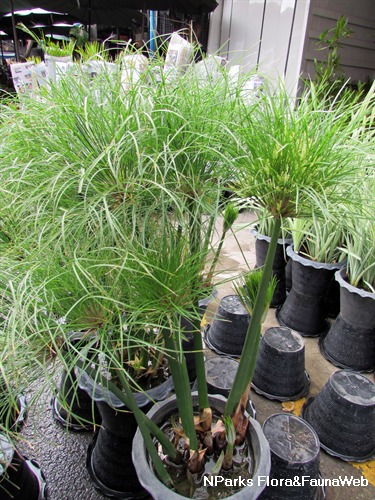
| Plant Shape | Fountain (Palm-like) |
| Maximum Height | 2.5 m to 3 m |
| Maximum Plant Spread / Crown Width | 0.9 m to 1.2 m |
Biogeography
| Native Distribution | Egypt, Sudan, North Africa |
|---|---|
| Native Habitat | Freshwater (Emergent Freshwater) |
| Preferred Climate Zone | Sub-Tropical / Monsoonal |
| Local Conservation Status | Non-native (Horticultural / Cultivated Only) |
Description and Ethnobotany
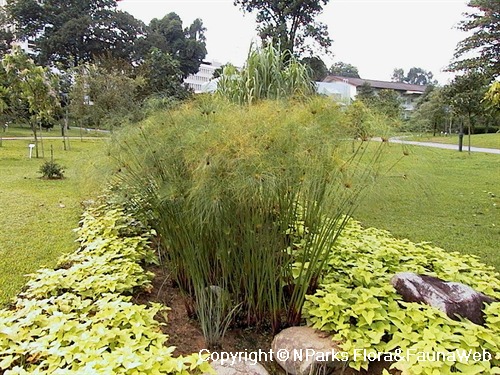
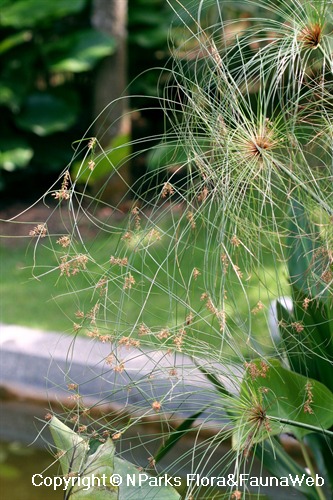
| Growth Form | Emergent aquatic or marginal sedge, up to 3m height. Tall, impressive shrub for large water features with calm water (50cm depth). |
|---|---|
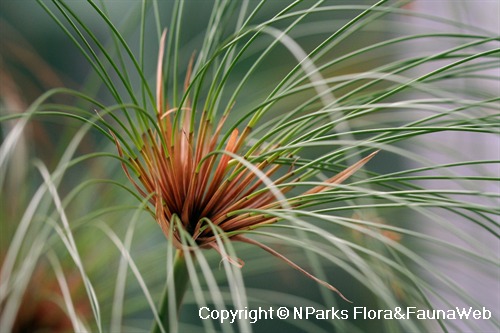
| Foliage | Leaves reduced, at base of culms. |
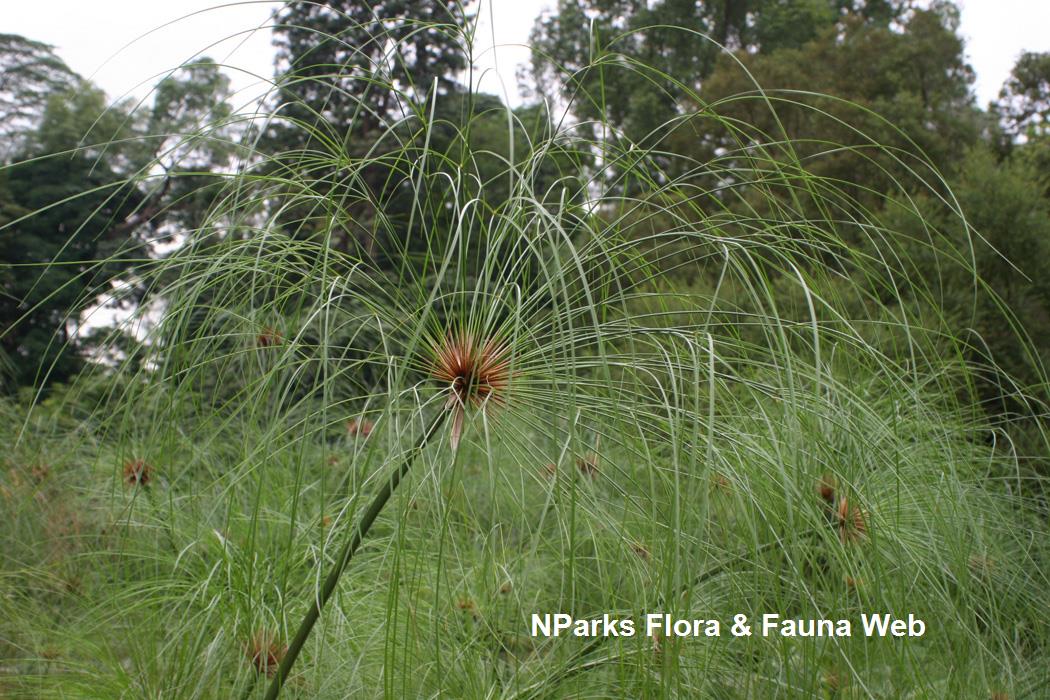
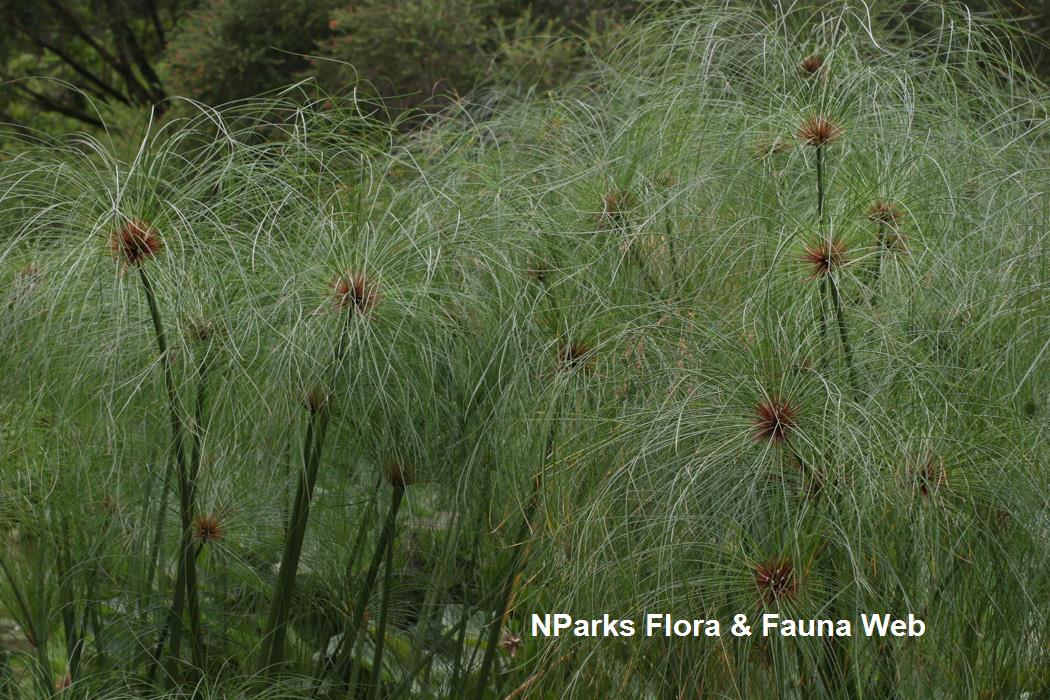
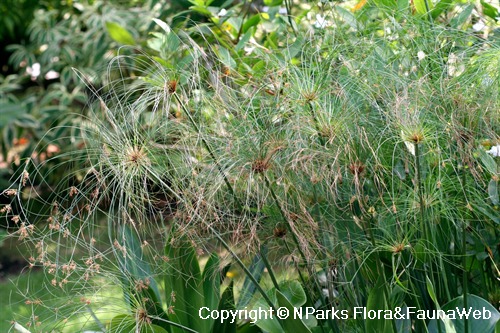
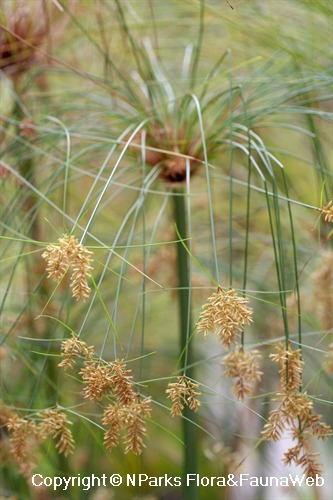
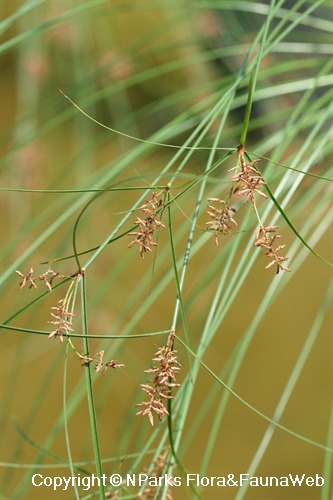
| Stems | Stems triangular in cross-section, main stems topped by wiry heads of shiny green stalks to form flowering heads. |
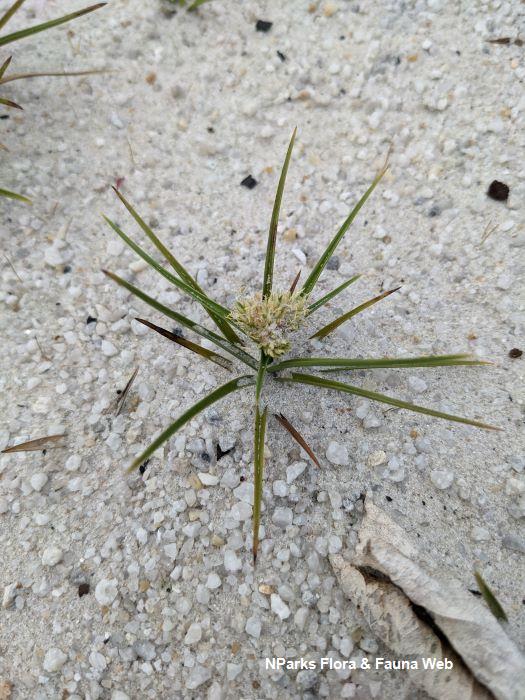
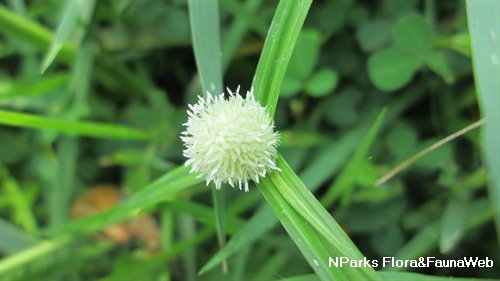
| Flowers | Flowers small, pale brown. Flower heads droop with age. Fruits dark brown, nuts. |
| Cultivation | Propagate by division of woody rhizomes at base of clumps. |
| Ethnobotanical Uses | Edible Plant Parts : Edible Stems Food (Herb or Spice) (Fruit or Vegetable): Starchy rhizomes and flowering culms eaten raw or cooked by north Africans. Medicinal: Ash from burnt papyrus sheets used to treat wounds and ulcers. Timber & Products: Stem piths used to make papyrus sheets by ancient Egyptians. Stems woven into reed mats and baskets (bulrush basket used to hold biblical baby Moses). Flower heads also used to make garlands. Others: Young shoots grazed by livestock. |
Landscaping Features
| Desirable Plant Features | Ornamental Stems, Ornamental Foliage |
|---|---|
| Landscape Uses | Riverine, Swimming Poolside, Focal Plant, Container Planting |
| Thematic Landscaping | Water Garden, Bioswales / Sunken Garden, Naturalistic Garden |
Fauna, Pollination and Dispersal
| Pollination Method(s) | Abiotic (Wind) |
|---|---|
| Seed or Spore Dispersal | Abiotic (Water) |
Plant Care and Propagation
| Light Preference | Semi-Shade, Full Sun |
|---|---|
| Water Preference | Lots of Water |
| Plant Growth Rate | Fast |
| Rootzone Tolerance | Fertile Loamy Soils, Waterlogged Soils (Drains Site), Easy to Grow |
| Maintenance Requirements | Moderate |
| Pruning | Prune to restrict growth. |
| Fertilizing | Plant is a heavy feeder. Fertilize once per month. |
| Potential Problems | Spreads quicky and extensively under favourable conditions. May invade space of other plants, unless pruned back. |
| Diseases | May be affected by mealybugs if grown indoors. |
| Pest(s) | Associated with |
| Propagation Method | Seed, Division |
| Maintenance Requirements Remarks | Centre of clump tends to die back and look unsightly. Practicse division and start new clumps to maintain attractiveness. |
| Propagation Method Remarks | Division may require use of chainsaw to cut through thick woody rhizome. |
Foliar
| Foliage Retention | Evergreen |
|---|---|
| Mature Foliage Colour(s) | Green |
| Mature Foliage Texture(s) | Scaly |
| Foliar Modification | Reduced / Needle-like |
| Typical Foliar Area | Nanophyll ( 0.25cm2 - 2.25 cm2 ) |
| Leaf Area Index (LAI) for Green Plot Ratio | 3.5 (Shrub & Groundcover - Monocot) |
Non - Foliar and Storage
| Stem Type & Modification | Herbaceous |
|---|---|
| Root Type | Underground (Fibrous Root) |
| Specialised Storage Organ(s) | Underground (Rhizome) |
Floral (Angiosperm)
| Flower & Plant Sexuality | Bisexual Flowers |
| Flower Colour(s) | Brown, Cream / Off-White, Green |
|---|---|
| Flowering Period | Free-Flowering |
| Flowering Opening Time | Time-Independent |
| Flowering Habit | Polycarpic |
Fruit, Seed and Spore
| Mature Fruit Colour(s) | Brown |
|---|---|
| Fruit Classification | Simple Fruit |
| Fruit Type | Indehiscent Dry Fruit , Nut / Nutlet |
Image Repository
Others
| Master ID | 627 |
|---|---|
| Species ID | 1922 |
| Flora Disclaimer | The information in this website has been compiled from reliable sources, such as reference works on medicinal plants. It is not a substitute for medical advice or treatment and NParks does not purport to provide any medical advice. Readers should always consult his/her physician before using or consuming a plant for medicinal purposes. |
| Suggest Species |