








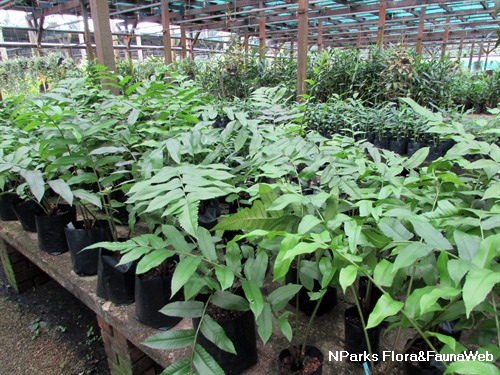
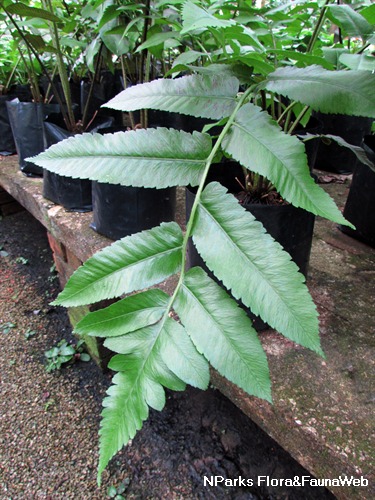
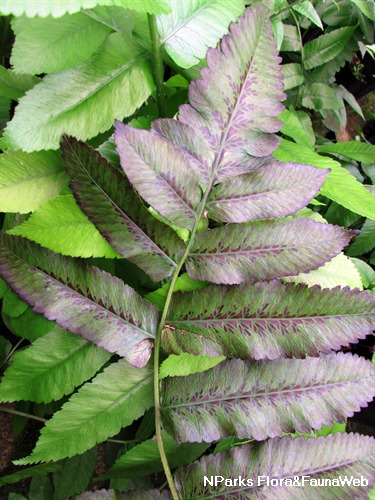
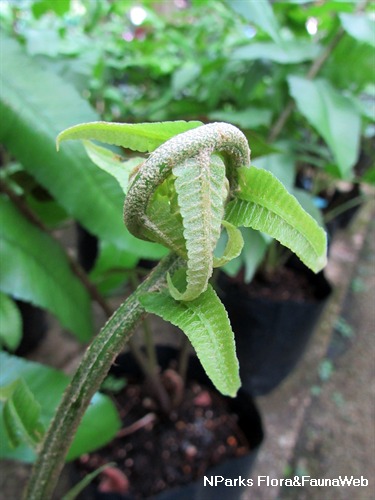

Name
Classifications and Characteristics
| Plant Division | Ferns & Lycophytes (Non-Seed Vascular Plants) (Fern) |
|---|---|
| Plant Growth Form | Herbaceous Plant |
| Lifespan (in Singapore) | Perennial |
| Mode of Nutrition | Autotrophic |
| Maximum Height | 1.8 m |
Biogeography
| Native Distribution | From tropical Africa, throughout Malesia to Polynesia and tropical Australia. |
|---|---|
| Native Habitat | Terrestrial |
| Preferred Climate Zone | Tropical |
Description and Ethnobotany
| Growth Form | It is a rhizomatous fern, up to 1.8 m tall. |
|---|---|
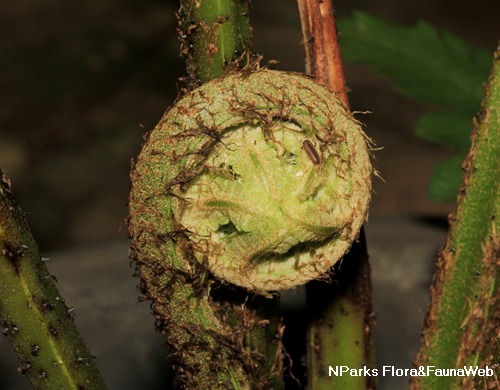
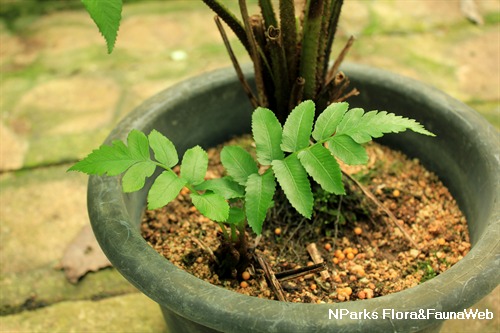
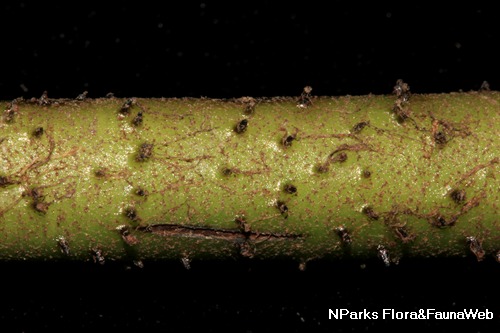
| Foliage | Its pinnate fronds bear up to 15 pairs of shallowly-lobed pinnae, with the largest pinnae nearest the base of the stipe, gradually becoming smaller towards the tip. Each pinnae is oblong in shape, with a pointed tip, about 9-29 cm long and 3.5-7 cm wide. The stipes are covered with protuberances. |
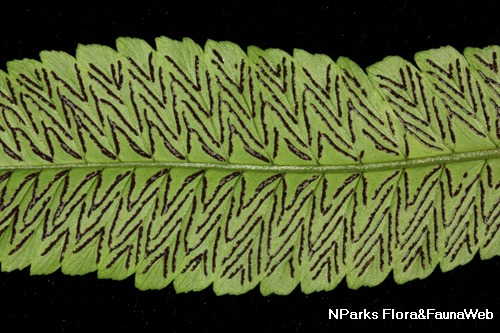
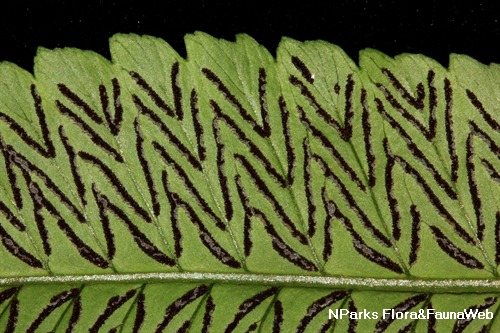
| Reproductive Parts - non-flowering plant | The sori are J-shaped, and found along the veinlets at the underside of the veinlets. |
| Habitat | It grows in lowland forest. It is found locally at Dairy Farm, Bukit Timah Nature Reserve. |
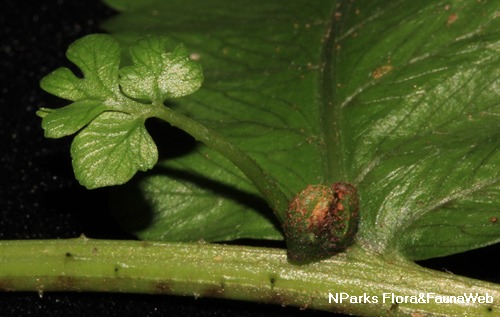
| Cultivation | It can be propagated by spores, division of plantlets arising from base of pinnae, and leaflet cutting. |
| Etymology | The genus Diplazium is duplicate, which means double indusium, referring to the protective cover (indusium) covering the spore clusters on boths sides of the vein. |
Landscaping Features
| Landscaping | It is suitable for growing in shaded to semi-shaded areas for its attractive fronds. |
|---|---|
| Desirable Plant Features | Ornamental Foliage |
| Landscape Uses | Parks & Gardens, Small Gardens, Indoor Plant |
Fauna, Pollination and Dispersal
| Seed or Spore Dispersal | Abiotic |
|---|
Plant Care and Propagation
| Light Preference | Semi-Shade, Full Shade |
|---|---|
| Water Preference | Moderate Water |
| Plant Growth Rate | Moderate |
| Rootzone Tolerance | Moist Soils, Well-Drained Soils, Fertile Loamy Soils |
| Propagation Method | Spore, Leaf Cutting, Aerial Plantlet |
Foliar
| Foliage Retention | Evergreen |
|---|---|
| Mature Foliage Colour(s) | Green |
| Foliar Type | Compound |
| Foliar Arrangement Along Stem | Rosulate / Rosette |
| Foliar Attachment to Stem | Petiolate |
| Foliar Shape(s) | Non-Palm Foliage |
Image Repository
Others
| Master ID | 32082 |
|---|---|
| Species ID | 6488 |
| Flora Disclaimer | The information in this website has been compiled from reliable sources, such as reference works on medicinal plants. It is not a substitute for medical advice or treatment and NParks does not purport to provide any medical advice. Readers should always consult his/her physician before using or consuming a plant for medicinal purposes. |
.jpg)
.jpg)
.jpg)